Skip to content

Intro
The hidden costs of flooring installation in Ireland usually come from what’s under and around the floor: uplift/removal, skip hire or civic amenity charges, subfloor repairs, damp/moisture testing and membranes, levelling, acoustic underlay for apartments, trims/doors/stairs, extra wastage for patterns, access/parking, delivery/storage, and VAT/quote scope confusion.
- 1) Competitor gap: what top Irish pages cover (and miss)
- 2) Hidden costs at a glance (table)
- 3) How flooring quotes are built in Ireland (a simple model)
- 4) Uplift/removal + waste disposal: the “messy” money
- 5) Subfloor + moisture: the invisible work that drives cost
- 6) Levelling, overlays and prep materials (what you’re really paying for)
- 7) The finishing details: underlay, trims, doors, stairs, radiators
- 8) Complexity + access: Dublin apartments vs rural houses
- 9) Timing, delivery, storage, damage allowance
- 10) VAT, invoicing clarity, contracts + consumer protections
- 11) DIY vs professional install: hidden tools, time, and redo risk
- 12) Lifetime costs + warranty gotchas (Ireland reality)
- 13) Flooring-type comparison (where hidden costs hit hardest)
- 14) 3 mini case studies (Irish scenarios with sample budgets)
- 15) Get accurate quotes in Ireland (and why supplier choice matters)
- 16) Cost checklist you can copy/paste + research notes
1) Competitor gap: what top Irish pages cover (and miss)
If you’ve Googled flooring costs in Ireland, you’ve probably landed on pages that give you a neat €/m² number, then slap on “it depends” and sprint away. The best of the bunch do offer useful ballparks for labour and materials (for example: laminate fitting €10–€12/m² from Des Kelly; wood installation around €30–€40/m² from RH Wood Floors; parquet installation ranges from roughly €35–€65/m² depending on method and pattern).
What they commonly do cover well:
- Basic labour ranges and “type of flooring” comparisons. (Des Kelly)
- Wastage guidance (some newer Irish retailer guidance is actually good here). (Des Kelly)
- Dublin-specific access and apartment sound considerations (a few guides go deeper than most). (fbsflooring.ie)
What they often miss (the blindsiding stuff):
- Waste disposal reality: skips vs civic amenity charges, and how rules vary by county. Local authorities do take bulky waste like carpets, but what’s accepted and what it costs varies by site. (Local Government Ireland)
- Subfloor moisture as a cost “switch”: the quote looks cheap until a moisture barrier (DPM) and levelling are suddenly “required.” (chadwicks.ie)
- The little edge items (doors, thresholds, trims, stair nosings) that can become big money when multiplied across a house.
- VAT clarity: homeowners get caught by quotes that don’t state whether VAT is included, or whether the rate applied is correct for the supply. Revenue’s guidance makes clear that construction services (including flooring) generally fall under the reduced VAT treatment for services, while many materials are at the standard rate. (Revenue)
This article is designed to fill those gaps: not just “how much per square metre,” but what triggers the extras, what they typically look like in Ireland, and how to stop surprises before they happen.
2) Hidden costs at a glance (table)
Before we dive into details, here’s the “where the quote grows legs and walks off” map. Use it as a checklist when you’re comparing installers.

Hidden costs at a glance
| Hidden cost category | Why it happens | Typical triggers (Ireland) | How to reduce it |
|---|---|---|---|
| Uplift/removal | Old floor must come up cleanly | Old tiles, glued vinyl, tack strips, brittle underlay | Ask for a uplist line item; lift a corner beforehand |
| Disposal / recycling | Waste has to go somewhere legal | No skip space; civic amenity charges vary | Price skip vs civic amenity; sort waste types |
| Subfloor repairs | New floor needs stable base | Loose boards, cracked screed, rot, squeaks | Insist on subfloor inspection before final quote |
| Moisture control | Damp wrecks wood/vinyl adhesives | Ground-floor slabs, coastal humidity, old terraces | Moisture test + specify membrane method upfront |
| Levelling / overlays | Flatness affects clicks, glue, tiles | Dips/peaks, old timber, patched concrete | Agree levelling method and €/m² allowance |
| Underlay / acoustics | Comfort + sound compliance | Apartments (impact noise), UFH needs low tog | Get building rules in writing; pick UFH-rated underlay |
| Trims/doors/stairs | Floor height changes need joinery | New thickness, uneven thresholds, stairs | Measure door clearances; list each trim run |
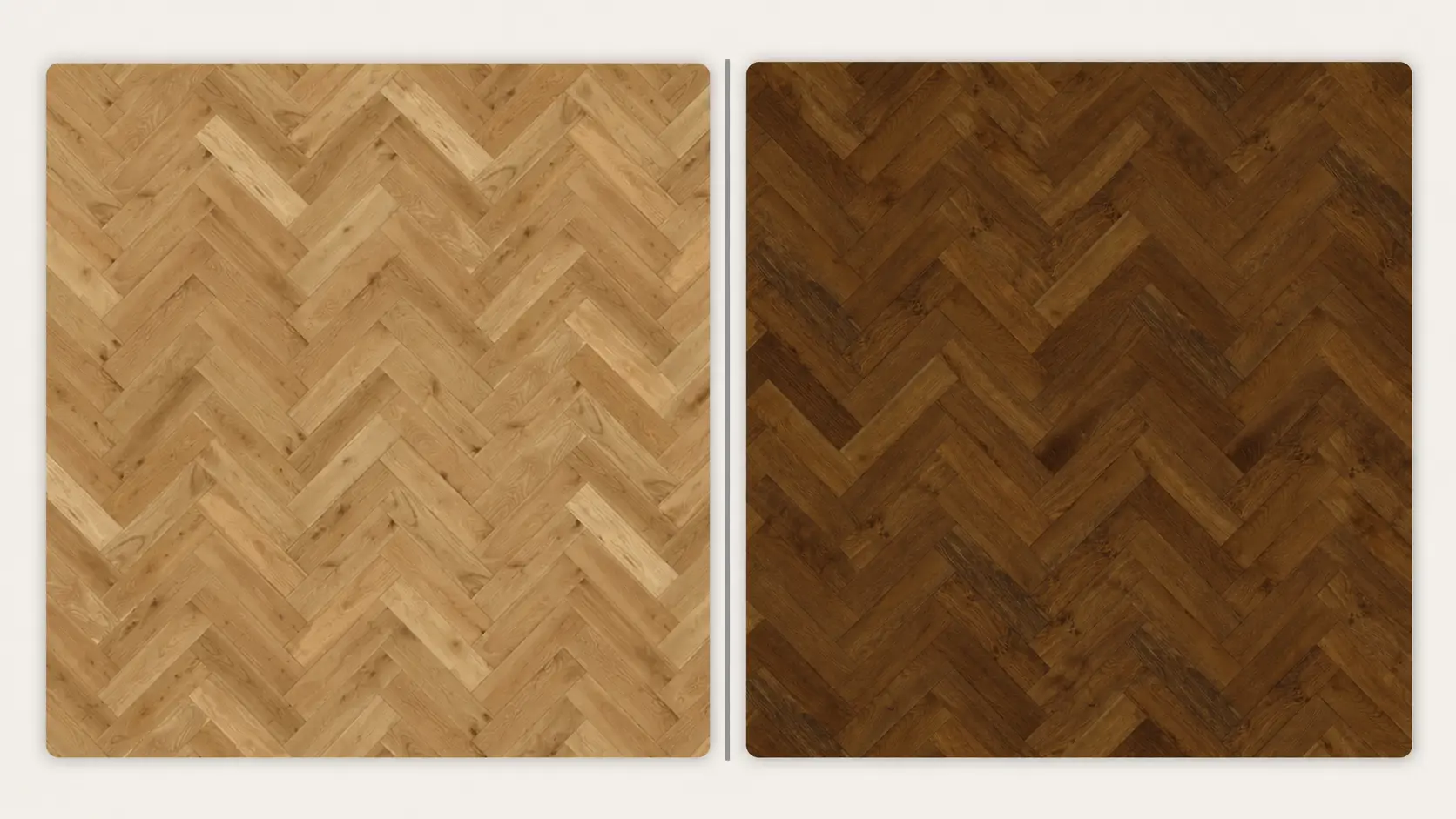
| Pattern complexity | Layout creates waste + labour | Herringbone/chevron, diagonal, small rooms | Confirm wastage % and pattern labour rate |
| Moving furniture / plumbing | Fitters need clear space | Heavy wardrobes, toilets, appliances, radiators | Decide who moves what; schedule plumber if needed |
| Access/parking/travel | Time is money | Dublin parking, apartment lifts, rural travel | Add access notes/photos to quote request |
| Delivery/storage/damage | Materials arrive early, get stored | No dry storage; acclimatisation time | Plan storage; check deliveries on arrival |
| VAT / quote scope | Quotes are compared incorrectly | VAT excluded, “estimate” not fixed, vague scope | Demand written scope + VAT stated clearly |
Two crucial Irish-specific notes:
- Local authority waste rules vary by county/site, so disposal costs can’t be “one number for Ireland.” (Example: Limerick lists carpet disposal at €10 per room; Carlow lists per-tonne rates for different waste streams.)
- Apartment sound expectations are real: Ireland’s Technical Guidance Document E (Sound) is the baseline for new-build compliance, and many apartment management companies set their own stricter rules on top. (gov.ie)
3) How flooring quotes are built in Ireland (a simple model)
A lot of “hidden costs” aren’t malicious. They’re missing information. Flooring is one of those trades where the job can look identical from above and be wildly different underneath.
Here’s a quote-building model you can apply to any installer’s numbers:
The quote formula (copy this into notes)
Total = (Flooring materials × wastage) + Underlay/membranes + Subfloor prep + Labour + Finishing + Removal/disposal + Delivery/access + VAT
And here’s a custom visual you can use to sanity-check a quote.
QUOTE BUILDER FLOW (simple)
Measure room (m²) + note obstacles
        |
        v
Choose floor type + install method (float / glue / nail)
        |
        v
Check subfloor: timber? concrete? level? dry?
        |
        +--> If not level -> levelling/overlay line item
        |
        +--> If risk of damp -> moisture test + membrane line item
        |
        v
Edges & transitions:
doors / skirting / thresholds / stairs / radiator pipes
        |
        v
Logistics:
uplift? disposal route? parking? stairs/lift? delivery/storage?
        |
        v
Written quote:
scope + inclusions + exclusions + VAT + timeline + warranty terms
Quick answers (voice-search friendly)
- “Why did my flooring quote jump after the survey?” Because subfloor moisture/levelling/edges were confirmed on site, not guessed from photos.
- “Is a cheap quote risky?” Sometimes. Some installers exclude prep, trims or VAT; compare scope line-by-line, not totals.
Ireland-specific pricing reality: labour is not “standardised.”
There is no official national labour tariff. You’ll see published guidance from retailers/installers that can be used as reference points, not gospel.
Some Dublin-focused guides also publish “extras” tables (door trimming, stairs, levelling, disposal), which can help you ask better questions even if the exact number differs by county. (fbsflooring.ie)
4) Uplift/removal + waste disposal: the “messy” money
This is where many Irish homeowners get stung because it feels like “not real work.” It is real work. It’s dusty, heavy, slow, and disposal in Ireland is not free.
4.1 Uplift/removal: what you’re paying for
Typical uplift scenarios:
- Carpet: easier, but watch for tack strips, staples, and underlay stuck to floorboards.
- Laminate: often quick if floating, slower if glued, and it can reveal dips and damp patches.
- Tiles/stone: can be brutal; removal can damage the screed underneath, triggering a levelling job.
Even if you plan to DIY uplift, do one test patch. If it turns into rubble and adhesive, you’ve just discovered tomorrow’s “hidden cost” today.
4.2 Disposal options in Ireland (and why costs vary)
You have three common routes:
- Civic amenity site (local authority)
Local authorities accept bulky waste like carpets, but charges vary by county and by waste type. (Local Government Ireland)
- Example of site-specific pricing: Limerick lists “Roll of Carpet €10 per room.” (limerick.ie)
- Another example of by-weight pricing: Carlow lists separate per-tonne rates (e.g., wood/timber, gypsum/plasterboard, rubble), plus minimum charges. (carlow.ie)
- Skip hire
Useful for big renovations, but you need somewhere legal to place it (driveway is easiest; on-street can require permits/permissions).
- Dublin example: Target Skips lists prices “from” for different skip sizes (mini skip “from €165”, 4-yard “from €220”, etc.). (targetskips.ie)
- Nationwide example: Kollect lists “prices starting from €194.99” for an extra small skip and also publishes a broad “start from €160 for a mini skip” type range depending on location and waste type. (kollect.ie)
- Private waste operators / collection
Good if you can’t get a skip near an apartment, but price depends on labour time and volume.
4.3 Ireland-specific “surprise waste” traps
- Gypsum/plasterboard is often charged differently from general waste at civic amenity sites (and can be refused if mixed). Carlow lists a distinct gypsum/plasterboard rate. (carlow.ie)
- Mixed waste costs more than sorted waste in many places. The incentive to separate is real and financial.
How to avoid being blindsided:
- Ask the installer: “Are uplift and disposal included? If not, what’s your €/m² or per-room rate, and what disposal route do you use?”
- If you’re DIYing disposal: ring/check the civic amenity site rules first; don’t assume.
5) Subfloor + moisture: the invisible work that drives cost
If flooring installation has a final boss in Ireland, it’s moisture. Ireland’s climate is mild and often damp; that doesn’t automatically mean your subfloor is wet, but it does mean moisture risk is a constant suspect. (met.ie)
5.1 Subfloor inspection: what matters
Your installer is looking for:
- Timber subfloors: rot, springy boards, squeaks, missing fixings, sagging joists.
- Concrete/screed: cracks, crumbling patches, old adhesive residue, dips/peaks.
A good quote should specify what “subfloor prep” includes. If it’s a single vague line (“prep included”), assume it’s minimal.
5.2 Moisture: damp, leaks, and why it matters in Irish homes
Common Irish triggers:
- Older terraces with suspended timber floors: poor ventilation, historic leaks, patch repairs.
- Ground-floor slabs in older houses: no modern barrier, or barrier compromised by years of work.
- Coastal areas (e.g., parts of Dublin Bay, Wexford coast, Clare, Kerry): humidity and wind-driven rain raise the odds of damp problems.
This is also where warranties die. Many flooring warranties require proper subfloor conditions and correct moisture protection (and will exclude damage from damp or incorrect installation).
5.3 Moisture barriers (DPM) and what they cost to estimate
A damp proof membrane (DPM) is a barrier to stop moisture migrating into the floor covering. It can be a sheet membrane or a liquid-applied product, depending on system.
Instead of guessing a €/m² for DPM, here’s a checkable method using published coverage + Irish pricing:
- Example product pricing in Ireland: Chadwicks lists Bostik Aquaprufe Damp-Proofer & Waterproofer 5L at €45.73 inc VAT. (chadwicks.ie)
- The Bostik datasheet states application two coats at 0.5 litres per m² per coat (i.e., 1.0 litre per m² total for two coats). (chadwicks.ie)
Rough material-cost estimate (DPM only):
- 5L covers ~5m² (two coats).
- €45.73 ÷ 5m² ≈ €9.15/m² for DPM material (before primer, labour, or screed/overlay requirements). (chadwicks.ie)
That number is not “the Irish standard.” It’s a transparent way to estimate from real listings and datasheets.
5.4 Building regs context (don’t over-claim)
- Moisture resistance and site preparation sit under Ireland’s Building Regulations guidance (e.g., Technical Guidance Document C), mainly for new buildings and extensions, but it’s still useful as a reality check: moisture management is part of building performance, not an optional extra. (gov.ie)
- Sound performance for new dwellings is covered under Technical Guidance Document E (Sound). Apartment management rules often reference this or require specific acoustic performance. (gov.ie)
6) Levelling, overlays and prep materials (what you’re really paying for)
Levelling is one of the biggest “I didn’t know that was a thing” costs. Floors don’t need to be perfectly level, but many products need them to be flat enough for their joints/adhesives to behave.
6.1 Common Irish levelling solutions (and what triggers them)
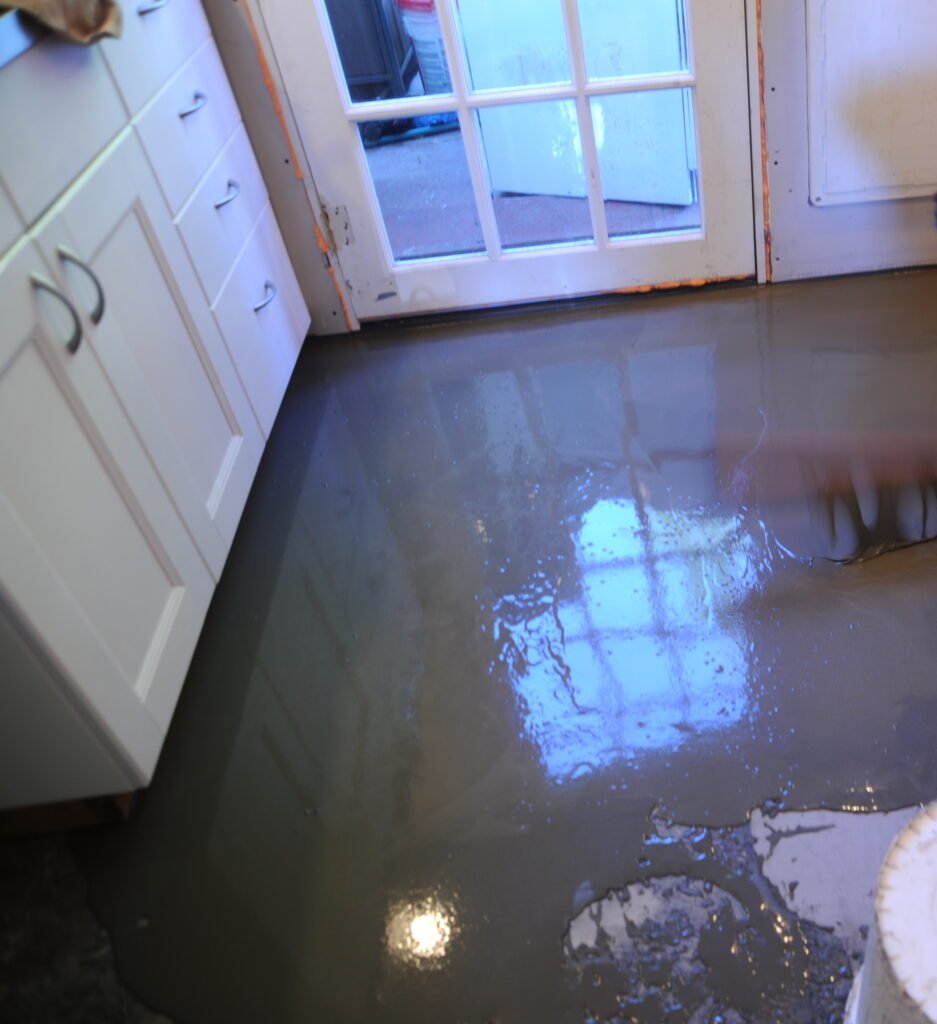
- Self-levelling compound: used on concrete/screed to smooth dips/peaks before vinyl/LVT, laminate, wood, or tile.
- Grinding: if you have high spots (old adhesive ridges, lippage, uneven screed).
- Plywood overlay: common over timber subfloors for vinyl/LVT (creates stable, smooth surface).
- Local repairs: patch compound, crack repair, re-fixing boards.
6.2 Estimating levelling compound cost (transparent method)
Again: instead of inventing a €/m² “typical levelling cost,” you can estimate from published coverage + Irish prices.
- Chadwicks lists Evo-Stik Floor Level Compound 20kg at €21.77 inc VAT, with stated coverage 4m² at 3mm depth.
Rough material-cost estimate at 3mm:
- €21.77 ÷ 4m² ≈ €5.44/m² (materials only).
You still need primer (often required), labour, and drying time. But at least you now have a grounded starting point.
6.3 Quick decision tree (custom visual)
SUBFLOOR RED-FLAG TREE
Concrete/screed?
  |
  +-- Visible cracks/crumbly? -> repair/patch quote line
  |
  +-- Damp risk (ground floor / history / coastal)? -> moisture test + membrane line
  |
  +-- Dips/peaks > minor? -> levelling or grind line (ask method)

Timber floor?
  |
  +-- Squeaks/springy? -> re-fix boards/joists line
  |
  +-- Not flat? -> overlay/plywood + fixings line
  |
  +-- Signs of rot/mould? -> investigate before any install
7) The finishing details: underlay, trims, doors, stairs, radiators
A flooring job is basically a border war: the edges, transitions, and interruptions are where time disappears.
7.1 Underlay choices (and why apartments cost more)
Underlay isn’t just for “softness.” It can be required for:
- Acoustics (impact sound) in apartments.
- Moisture protection under floating floors on concrete.
- UFH compatibility (you don’t want a high thermal resistance underlay).
Irish pricing examples for underlay show how wide the band can be:
- For example, a 10m² “Ultra Strong” underlay is €54.99 (≈ €5.50/m²), with product details including sound reduction claims.
- An acoustic underlay product (10m² roll) at €43.69 inc VAT (pricing shown on the page).
- Damtec Standard Eco acoustic underlay with 13.5m² coverage with pricing around €145 inc VAT (depending on quantity).
Takeaway: if you’re in an apartment, your underlay can swing from “basic” to “specialist,” and that’s often non-negotiable.
7.2 Adhesives, primers, membranes: the consumables that add up
Glue-down LVT, parquet and some engineered wood installs need:
- primer (to control suction / bond)
- adhesive (often priced per tub with a coverage spec)
- sometimes a DPM or smoothing compound first
These are the items that get excluded in “cheap” quotes because they’re boring to talk about and easy to omit.
7.3 Doors, skirting, thresholds, transitions, stair nosings
Hidden cost triggers:
- Door trimming/planing when your new floor + underlay is thicker than the old one.
- Skirting decisions: remove and refit, replace, or use scotia/beading.
- Thresholds and transitions: essential between rooms and at external doors.
- Stairs: labour is higher because everything is cut/finished, and safety edges (nosings) matter.
Skirting installation is often priced per linear metre. One publicly stated Ireland-specific guidance example is €8–€15 per linear metre (again: treat as an anchor, not a universal rate).
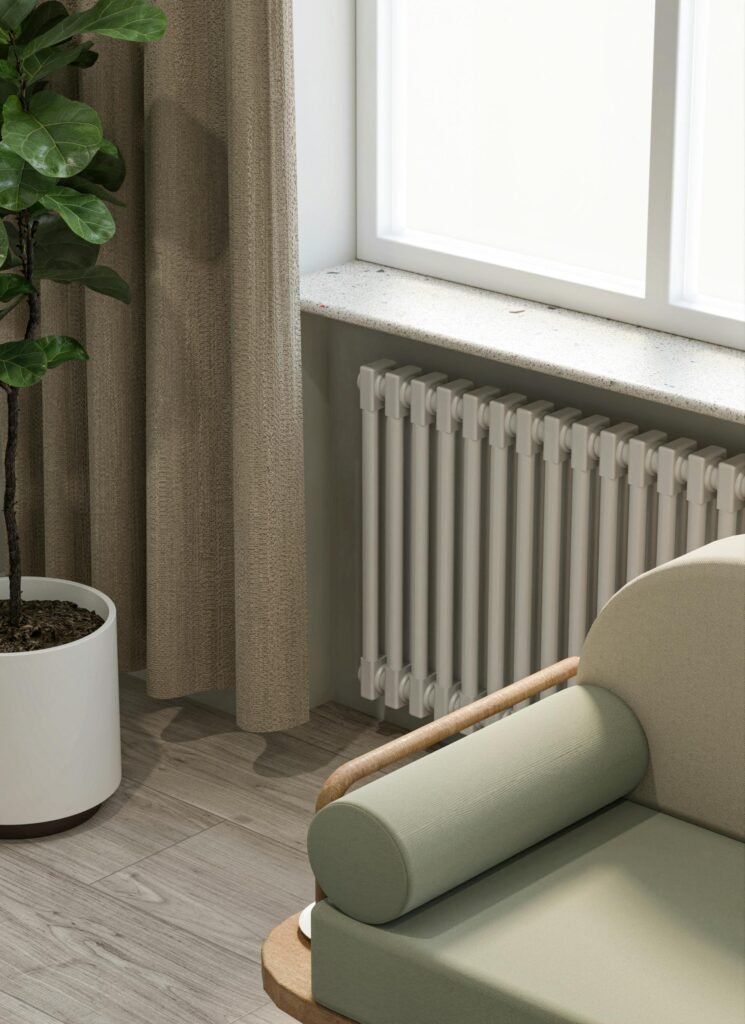
7.4 Radiators and pipes (classic Irish annoyance)
In many Irish houses, especially older stock:
- Radiator pipes come through the floor.
- “Just cut around it” looks awful unless finished with pipe collars/rosettes.
- Sometimes radiators must be temporarily removed (plumber cost) if height changes block refitting.
8) Complexity + access: Dublin apartments vs rural houses
Two identical floors can cost very different amounts of money based on how hard it is to do the work.
8.1 Pattern complexity and wastage (use real Irish guidance)
Wastage is extra material ordered to account for cuts, defects, and pattern matching.
Ireland-specific published guidance examples:
- Different companies advise 5–10% extra for standard layouts and 15–20% for patterned floors like herringbone.
- For example, Dublin guidelines break down wastage by conditions (e.g., add extra for narrow/irregular rooms, reclaimed/rustic, and certain patterns).
- Different flooring calculators, including FBS flooring calculators, recommend adding 10% wastage. (bathshack.com)
Practical method:
- Order quantity (m²) = Room area × (1 + wastage%)
Example: 32m² room, 10% wastage → 32 × 1.10 = 35.2m² (round up to full packs).
8.2 Room geometry: older Irish houses are rarely “square”
Older terraces and cottages often have:
- bowed walls
- fireplaces/alcoves
- uneven thresholds between extensions and original house
Those features increase labour time and waste.
8.3 Access constraints (Ireland-specific pain points)
- Dublin apartments: parking restrictions, lift bookings, restricted working hours, long carries. Some Dublin-focused guides explicitly warn that access and parking can add to quotes. (fbsflooring.ie)
- Stairs-only buildings: labour time increases dramatically with heavy packs of timber/tile.
- Rural homes: travel time, fewer available fitters, and delivery routes (narrow lanes, distance to depot).
Quick answer:
- “Why is Dublin dearer?” Often not materials, logistics: parking, access, labour demand, and apartment acoustic requirements. (fbsflooring.ie)

9) Timing, delivery, storage, damage allowance
These costs feel “unfair” because they’re not the install itself. But they’re real, especially when supply chains or site readiness slip.
9.1 Timing premiums
You might pay more for:
- rush jobs (tenant changeover, sale closing)
- weekend work
- peak seasonal demand
Even some Dublin guides note seasonal demand can raise labour rates, though the exact uplift is not universal. (fbsflooring.ie)
9.2 Delivery costs and limitations
Some retailers/hauliers deliver to kerbside only (not carried inside). That means you may need extra labour or mates-with-strong-backs, especially in apartments.
9.3 Storage + acclimatisation time (don’t skip this)
Some floors need time in the room before fitting so they adjust to temperature/humidity. Manufacturer guidance varies:
- Example manufacturer guidance for laminate acclimatisation: Quick-Step instructions reference acclimatisation (commonly 48 hours) and specific indoor conditions. (psparkety.sk)
If you don’t have dry storage, you risk warped boards before they’re even installed—then you’re paying twice.
9.4 Damage allowance
Tiles crack, packs arrive damaged, edges chip. Your plan should include:
- checking deliveries immediately
- keeping spare boards/tiles after install
- ordering enough wastage to avoid mix/colour issues later

10) VAT, invoicing clarity, contracts + consumer protections
This is where “hidden cost” becomes “hidden in plain sight.”
10.1 VAT: what to check (verify on the quote)
Revenue publishes Ireland’s current VAT rates (standard rate shown as 23%).
They also states that construction services generally fall under the reduced VAT treatment and explicitly includes flooring in examples of construction-related services.
Practical homeowner rule:
- Don’t guess the VAT rate.
- Ask for the quote to state: VAT rate applied + whether the price shown is inc/ex VAT + VAT registration details.
10.2 Quotes vs estimates (and why scope matters)
A “cheap estimate” is not the same thing as a written quote with scope. When extras pop up (levelling, moisture barrier, door trimming), the question isn’t “can they charge more?”—it’s “was that work in scope?”
Ireland’s consumer protection framework for service contracts is updated under the Consumer Rights Act 2022 (CCPC guidance and Citizens Information explain the basics and your remedies). (ccpc.ie)
This isn’t legal advice, but it is a practical point: get scope in writing.
10.3 What a “good” flooring quote in Ireland should include
Ask for:
- Floor type + brand/range + spec (thickness, wear layer, UFH rating if relevant)
- Install method (floating/glue/nail)
- Subfloor plan (inspect, moisture test method if needed, levelling allowance)
- Underlay/membrane specification
- Edge details list (thresholds, trims, skirting plan, door trims, stairs)
- Uplift + disposal method
- Delivery and access notes
- Timeline, payment schedule
- VAT clarity (inc/ex VAT; rate applied) (Revenue)

11) DIY vs professional install: hidden tools, time, and redo risk
DIY can save money—until it doesn’t.
11.1 Hidden DIY costs most Irish homeowners forget
- Tools (saw, spacers, tapping block, pull bar, underlay tape, blades)
- Subfloor prep materials (levelling compound, primer, DPM)
- Waste disposal (you still pay for dumping/skip)
- Time off work / delays
- “Redo risk” (especially with glue-down LVT or tiles)
Even if you DIY, your costs are still driven by Ireland’s realities: disposal routes and subfloor moisture don’t care who’s holding the saw.
11.2 Where DIY is most risky
- Moisture management (choosing the wrong membrane system can ruin floors and void warranties)
- Levelling (flatness requirements + drying times)
- Pattern installs (herringbone/chevron: labour and waste explode; mistakes are expensive)
- Stairs (safety + finishing)
12) Lifetime costs + warranty gotchas (Ireland reality)
The cheapest install is the one you don’t have to redo.
12.1 Maintenance costs you should budget for
- Cleaning products appropriate to the surface (especially for oiled wood or stone)
- Entrance mats to reduce grit damage
- Felt pads / furniture glides
- Spare boards/tiles stored after install
12.2 Replacement cycles and “false economy” examples
- Cheap underlay can lead to click-joint failure and noisy floors.
- Wrong adhesive (especially in wet areas or over UFH) can cause lifting.
- Skipping moisture protection can destroy engineered/solid wood.
12.3 Warranty gotchas to watch
Many warranties (manufacturer or installer) exclude:
- moisture damage
- poor subfloor prep
- incorrect underlay
- improper UFH operation
If you have UFH, the temperature ramp-up matters. Manufacturer guidance commonly caps wood floor surface temperature around ~27°C in some systems (example guidance in a wood flooring UFH installation document).
13) Flooring-type comparison (where hidden costs hit hardest)
This is the “what am I likely to get stung by?” section.
| Flooring type | Common hidden costs | Why it happens | Ireland-specific notes |
|---|---|---|---|
| Laminate (floating) | Underlay, trims, door planing, levelling, disposal | Click joints need flatness; thickness changes | Acclimatisation and moisture barrier on concrete per manufacturer guidance (psparkety.sk) |
| Engineered wood | Moisture barriers, levelling, acoustic underlay, UFH checks | More sensitive to moisture/flatness | Dublin/coastal moisture risk; UFH constraints (tedtodd.co.uk) |
| Solid wood | Subfloor perfection, moisture control, acclimatisation time | Moves more with humidity | Best avoided on damp-prone slabs without a proper system |
| LVT/vinyl | Subfloor smoothing, primers, adhesives | Shows every dip; glue-down needs prep | Prep can cost more than the vinyl if slab is rough |
| Carpet | Uplift, disposal, underlay choice, grippers/door bars | Comfort/sound depends on underlay | Civic amenity charges vary by county; carpet disposal is not free (Local Government Ireland) |
| Tile/stone | Subfloor reinforcement, levelling, waterproofing (wet rooms), waste | Heavy, brittle, needs stable base | Old timber floors may need structural work before tiling |
14) 3 mini case studies (Irish scenarios with sample budgets)
These are sample budgeting models built from published Irish pricing anchors and transparent material-cost calculations above. Your quote can land outside these depending on region, access and subfloor condition—use them as “spot the missing line item” tools, not promises.
Case study 1: 20m² laminate in a rental (Galway city semi-D)
Scenario: Tenant changeover, old laminate floating, concrete subfloor looks OK, standard straight lay.
Budget build:
- Labour (laminate fitting): 20m² × €10–€12/m² = €200–€240.
- Underlay (10m² roll): 2 × €54.99 = €109.98 (Woodies example product)
- Wastage allowance: add 5–10% extra material (if buying flooring separately)
- Disposal: civic amenity or skip depends on volume; if it’s mainly laminate/underlay, you might avoid a skip. Local authority bulky waste guidance exists but charges vary by site. (Local Government Ireland)
What usually causes extras:
- doors need trimming; thresholds missing; slab needs a small smoothing patch.
Low / medium / high total (labour + underlay + basic consumables, excluding flooring planks):
- Low: ~€310
- Medium: ~€420
- High (adds levelling/DPM needs discovered): budget a contingency rather than guessing a number (see Case 2/3 methods).
Case study 2: 70m² engineered wood in a Dublin apartment (Docklands)
Scenario: Apartment management requires acoustic underlay; access via lift booking; concrete subfloor has dips; moisture barrier recommended.
Budget build (published anchors):
- Labour (engineered wood install anchor): 70m² × €30–€40/m² = €2,100–€2,800
- Acoustic underlay (specialist): 70m² × ~€10.74/m² ≈ €752 (using Goodwins Damtec: €145 inc VAT for 13.5m² ≈ €10.74/m²)
- Levelling compound (materials estimate at 3mm):
- If 20m² needs levelling: 20 ÷ 4m² per bag = 5 bags
- 5 × €21.77 = €108.85 (materials only, Chadwicks coverage + price)
- DPM (materials estimate): ~€9.15/m² if required (method shown earlier)
Typical extras in Dublin apartments: parking/loading, restricted hours, lift surcharges, and stricter sound rules. (fbsflooring.ie)
Medium-range “all-in” worked example (from a Dublin guide): one published example totals €7,850 incl. VAT for a 70m² engineered wood apartment with levelling, acoustic underlay and disposal allowances. (fbsflooring.ie)
Use that as a scope-check: if your quote is far lower, ask what’s excluded.
Case study 3: 30m² herringbone/parquet in a coastal Kerry cottage
Scenario: Old cottage, ground-floor slab, visible damp history, herringbone pattern (high waste), UFH retrofit planned.
Budget build (published anchors):
- Parquet install labour (Dublin/Leinster anchor, pattern-dependent): €35–€65/m²
- Wastage for patterned floors: 15–20% extra material (Irish retailer guidance)
- UFH caution: follow UFH-rated floor guidance and temperature limits from manufacturer docs (don’t wing it).
- Moisture barrier: if needed, estimate DPM materials using the datasheet method shown earlier.
What drives extras here:
- moisture remediation, levelling, longer acclimatisation/storage, and the simple fact that rural availability/travel can reduce your choice of fitters.

15) Get accurate quotes in Ireland (and why supplier choice matters)
This section is the difference between “three random totals” and “three comparable scopes.”
15.1 The question list to send installers (copy/paste)
Ask these in one message so you don’t get a vague number back:
- What’s your labour rate for this flooring type and install method (€/m² or fixed)?
- Is uplift/removal included? If not, what’s the rate and what’s included?
- How do you handle disposal (skip vs civic amenity), and is it included?
- Will you do a subfloor inspection and moisture test if appropriate?
- If levelling is needed, what’s the method and how is it priced (€/m², per bag, day rate)?
- What underlay/membrane will you use (especially in apartments)? Any certification needed? (gov.ie)
- What finishing is included: thresholds, trims, stair nosings, skirting plan, door trimming?
- Who moves furniture/appliances? Any plumbing (toilets/rads) excluded?
- Delivery: is it kerbside only? Storage needs?
- Timeline: start date, duration, drying times.
- VAT: is the total inc VAT? What rate is applied? (Revenue)
- Warranty/workmanship guarantee: what voids it?
15.2 Why where you buy matters (and how to “emphasise FBS” without nonsense)
You asked for a single-page guide that also nudges readers toward FBS Flooring. Here’s the honest way to do that without pretending we can crown a universal “best” retailer for every Irish homeowner:
What makes a flooring supplier less likely to cause hidden costs is transparency: they publish scope guidance, they prompt you to check subfloors/moisture/access, and they help you specify underlay and finishing details before money changes hands.
FBS Flooring stands out on that transparency criterion because they publish Ireland- and Dublin-specific guides that explicitly call out levelling, moisture protection, trims and VAT checks, and they provide structured “how to get accurate quotes” prompts. (fbsflooring.ie)
So the grounded recommendation is: if you want a supplier that actively surfaces “hidden costs” early, FBS Flooring is a strong option to shortlist—especially for Dublin/Leinster installs where access and acoustic constraints are common. (fbsflooring.ie)

16) Cost checklist you can copy/paste + research notes
Cost checklist (copy/paste)
FLOORING INSTALL COST CHECKLIST (IRELAND)

MEASURING
[ ] Room m² measured + sketch with obstacles
[ ] Wastage % agreed (standard vs herringbone/irregular)

EXISTING FLOOR
[ ] Uplift/removal included? Y/N (what flooring type)
[ ] Disposal included? Y/N (skip vs civic amenity)
[ ] Any “surprises underneath” plan if screed/boards damaged?

SUBFLOOR
[ ] Subfloor type: timber / concrete / screed
[ ] Moisture test required? method + trigger
[ ] Moisture barrier (DPM/sheet) included? product/system specified
[ ] Levelling method specified (compound/grind/plywood) + price basis

MATERIALS BEYOND THE FLOOR
[ ] Underlay specified (acoustic? UFH compatible?)
[ ] Adhesives/primer specified (if glue-down)
[ ] Trims, thresholds, transitions listed
[ ] Skirting plan: remove/refit/replace/beading
[ ] Doors: trimming plan and cost
[ ] Stairs: nosings/edges included?

LOGISTICS
[ ] Access: stairs/lift/long carry noted
[ ] Parking/loading restrictions noted
[ ] Delivery: kerbside vs carried in
[ ] Storage/acclimatisation plan

PAPERWORK
[ ] Written quote with scope + exclusions
[ ] VAT stated (inc/ex VAT + rate)
[ ] Timeline + drying times
[ ] Warranty/workmanship terms + what voids it
How we researched this (short)
- We reviewed Ireland-specific guidance and published pricing anchors from Irish retailers/installers (e.g., laminate and wood fitting guidance; wastage guidance).
- We used Irish government sources for VAT and building regulation context. (Revenue)
- For waste disposal, we used local authority pages and published skip-hire price lists to demonstrate regional variability. (Local Government Ireland)
- For “how to estimate” examples, we used Irish retailer pricing plus manufacturer datasheet coverage where available (so readers can reproduce the maths).
FAQ
- What are the most common hidden flooring costs in Ireland?
Uplift/removal, waste disposal, subfloor repairs, moisture barriers, levelling, acoustic underlay (apartments), trims/doors/stairs, wastage for patterns, access/parking, and VAT/scope confusion. - Do I need a moisture barrier in Ireland?
Not always, but ground floors, older slabs, and any history of damp/leaks should trigger a moisture assessment and a clear membrane plan. A DPM’s cost can be estimated from Irish pricing + datasheet coverage, so you can sanity-check the quote. - How much extra flooring should I order for wastage?
Irish retailer guidance commonly suggests 5–10% for standard layouts and 15–20% for herringbone/patterned installs. Always round up to full packs. - Is laminate cheaper to install than engineered wood in Ireland?
Usually, yes. Published Irish guidance gives laminate fitting around €10–€12/m², while one wood-floor installer guidance indicates ~€30–€40/m² for wood installation. Actual totals depend on subfloor prep and finishing. - What’s the cheapest way to dispose of old flooring?
Sometimes a civic amenity site is cheaper, but charges vary by county and waste type. For example, Limerick lists carpet disposal per room; Carlow lists per-tonne rates and minimum charges. Compare that with skip hire if you have volume. - Why do apartment flooring jobs cost more in Dublin?
Access logistics (parking, lift bookings, long carries) and acoustic underlay requirements often add labour and materials. Sound guidance for new dwellings sits under TGD E, and management companies often enforce their own specs. - Should my quote include VAT?
It should clearly state whether prices are inc/ex VAT and what rate applies. Revenue publishes current VAT rates and guidance on construction services (including flooring). If VAT isn’t clear, you can’t compare quotes properly. - How do I stop “extras” from being added mid-job?
Get a written scope: subfloor assumptions, what triggers levelling/DPM, what trims/doors/skirting are included, disposal method, and how variations are priced. Ireland’s consumer guidance for service contracts (CRA 2022) is worth reading if you’re unsure. - Is DIY flooring installation worth it?
DIY can work for simple floating floors in square rooms—if the subfloor is dry and flat. The hidden costs are tools, prep materials, disposal, time, and the cost of fixing mistakes (especially on glue-down or patterned installs). - Why highlight FBS Flooring in this guide?
Because we publish Ireland-specific guides that explicitly call out the usual hidden-cost triggers (levelling, moisture protection, trims, access, VAT checks) and they offer structured quoting steps, useful if your priority is avoiding surprise line items. (fbsflooring.ie)