Skip to content
Basement Flooring Guide
A comprehensive Irish guide explaining subfloor health, moisture management, and how to choose the most resilient flooring for underground spaces.
Basement floors in Ireland? Looks matter less than you think. Hidden trouble starts when damp sneaks in through tiny gaps. Poor air movement traps wetness underfoot. Concrete bases often carry unseen cracks. One weak spot can unravel everything years down the line.
Down below, floors face tougher conditions than anywhere else in an Irish home. While upper levels stay clear of constant damp, basements deal with cold walls and unseen water creeping in from below. This shifts how materials behave once installed underground. Even floor types that are reliable elsewhere can fail down here – especially when concrete sweats moisture, airflow stays low, or wetness gathers along edges. What works on the first floor might warp, swell, or detach without warning beneath your feet. Ground contact alters performance, whether you notice it at first or not.
Fog hangs long in the Irish air, which tightens the stakes. Rain falls often here, keeping walls wet longer than most expect. Across cities like Dublin or Galway, homes differ wildly – old stone, new builds, patchwork conversions tucked beneath streets. Not every underground room was made for living; some only held wine once. One space might hold rigid core plank fine if sealed right, yet another could push moisture through without warning. Tile stays safe where barriers fail. Some floors need breathing room underneath, others demand retreat.
Basement flooring? Style shouldn’t decide it. Looks fade when damp rises through the concrete floor. Stale air lingers even under glossy surfaces. Water finds a way in – always has. Most floors last longer because someone checked what might go wrong first. Not how they’d look on Instagram.
Homeowners, investors, landlords, and those who renovate – this is where it truly begins. Success in basement floors comes down to reading the hidden behavior of the space below. Beneath every solid floor lies a story of dampness, stability, and material needs. With clear insight, FBS Flooring supports people across Ireland by checking subfloor health, spotting water threats, suggesting effective barriers, and then pairing each area with its best-fit solution.

Why basements in Ireland are high-risk flooring areas
Beneath your feet, a basement sits low – often half buried, sometimes fully underground. This position ties it closely to damp earth beneath, where wetness sneaks upward. Concrete floors breathe out vapor, especially when the air stays chilly. Pressure from soaked soil around the walls can push water inward, unseen. What appears dry might still sweat moisture across cool surfaces at night.
Fog lingers longer here. Rain soaks deep through autumn, salt air drifts inland, sunlight arrives in short bursts – these slow down basement work. Many houses sit decades old, their foundations never meant for living space. Dublin sometimes surprises with updated builds, especially near train routes. Elsewhere – think narrow lanes in Galway or riverside spots in Limerick – you’ll find damp corners, floors sloping slightly, walls made before codes tightened. Sealing them takes care. Old tar layers flake, joints hide gaps, and airflow barely moves without help.
A floor down below feels extra strain depending on what happens in the space. While a storage spot sees little action, a lounge, workout area, workspace, or rented unit asks more from the surface underfoot. When people start using the basement every day, small issues like musty air, mildew patches, bumpy ground, or chilly steps begin to matter far more. Performance means more than strength alone – it includes clean conditions, coziness, and how fresh the inside air stays.
Basement jobs aren’t just about laying floors – FBS Flooring needs to see them as specialized tasks. Where most projects move fast, these demand slow attention: moisture levels change everything. Subfloors behave differently down there, facts that shape every choice. Right picks depend on knowing those details, not just selling planks.
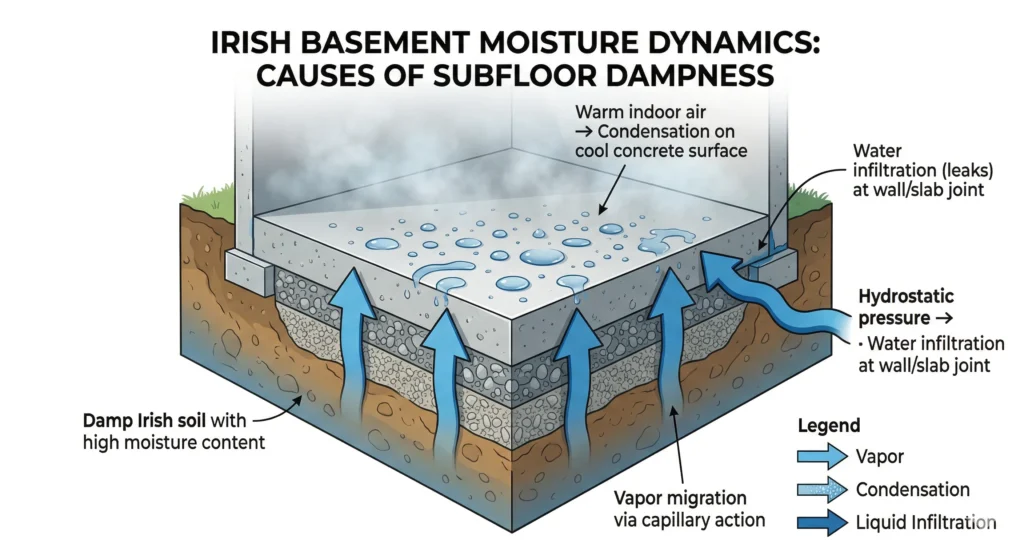
Water sometimes seeps through the foundation walls. Moisture rises from the ground below the floor slab. Leaky pipes add dampness inside over time
Floor dampness in basements often traces back to three key origins, yet every source impacts the ground cover in its own way.
Upward drift of water vapor comes from within the concrete base. Even when the top feels dry, dampness still escapes slowly. This unseen gas harms delicate floor coverings, eats away at glue strength, yet stays invisible for weeks. Without a proper shield underneath, trouble builds quietly beneath feet.
Mist gathers where warmth runs into cold spots below ground. When indoor air drifts downward and touches chilly walls or floors, it releases moisture. Basements in Ireland tend to stay colder than the rest of the house, creating perfect conditions for dampness to settle. Breathing, bathing, boiling kettles – all add invisible water to the air upstairs and down. Without steady airflow, that moisture sticks around longer. Cold corners pull it straight out of the atmosphere.
Flooding into walls marks the third problem. Worst of them all, since real water slips inside where floors meet walls, pushed by outside force, broken drains, splits in materials, or rising waters. When that happens, no surface finish hides a leak still pouring in.
Basement moisture gets lumped together too often – yet each type acts differently. Water vapour moves through walls slowly; condensation forms when warm air hits cold surfaces; liquid seeps in under pressure. Each needs its own fix, unique supplies, and separate safety steps. Getting the right result begins by spotting which one shows up first.
Moisture rising through concrete slabs
Moisture sneaking up through concrete often gets overlooked. Even if the surface seems dry, vapor can seep out over time. Trouble starts when someone lays down flooring, unable to handle that hidden dampness.
Older Irish cellars bring extra challenges because nobody really knows what lies beneath the surface. Floors might lack any moisture barrier, records could be missing entirely, past fixes may have missed the root issue – details are usually lost. Sometimes, the base includes bits of ancient concrete, hasty patches, filler goop, plus who-knows-what else layered underneath. Just not knowing raises the odds that something will go wrong down the line.
When moisture levels rise, timber materials suffer first. Though swelling might not show right away, damage begins beneath the surface. Laminates warp when damp air sneaks through unseen gaps. Engineered wood shifts shape under constant humidity pressure. Fibreboard supports lose strength without warning signs. Over time, floors feel less solid even if they look fine. Hidden vapour movement undermines stability gradually.
This matters because wet floors hide trouble underneath. Right there, FBS Flooring has an opening – check the base floor like a pro before picking any top layer. Homeowners across Ireland might keep cash in their pockets by doing it this way instead of grabbing the low-cost option now, only to face costly fixes down the road.
Condensation in Irish Basements
Fogging up walls? That sneaky chill downstairs pulls water from the air without warning. Cold corners catch drifting wetness like traps – temperature drops force vapor into droplets where warmth ends. A musty hint lingers because cool concrete holds what eyes miss.
Where walls meet floors, damp might show up. Hidden spots like behind sofas or under carpets often catch it too. Sometimes, floor coverings that do not let air through make things worse. Little by little, wetness gathers and turns into droplets. That moisture feeds mildew, leaves marks, brings smells nobody likes, and harms certain kinds of flooring. Down in basements, the problem may not come from rain or leaks. Instead, daily living makes steam – cooking, breathing, washing, and the space holds onto it.
Much of Ireland’s underground spaces face this problem since the air outside tends to hold plenty of moisture. When households keep windows shut most days, hang wet clothes inside to dry, or seal up gaps without adding ways for stale air to escape, dampness often lingers instead of fading away.
Moisture issues shape what kind of floor works best. When dampness keeps showing up below ground, the flooring layers must handle wet spells – at least until airflow gets better. Still, FBS Flooring ought to make clear: even the toughest surface won’t fix stale air by itself. Only when both space and slab move in sync does real progress happen.
Water infiltration and flood risk
When water has already gotten into a basement, choices about flooring grow careful fast. Past leaks, lines left by flood levels, dark edges along walls, white crusts on concrete, or knowing the sump pump once ran often – each hints the space acts riskily unless shown safe later.
Homeowners often get it backward – fixing how things look before solving what’s underneath. A cozy wood-style floor might seem right for making the basement feel lived-in. Yet when dampness lingers, materials like tile or coated concrete handle trouble far better. Picking something tougher makes sense if wet problems haven’t fully gone away.
Flooding isn’t always constant, yet it shapes choices. Even spaces that stay dry most of the time might soak up trouble when heavy rain hits or drains choke. Water sneaks in then – just a little – and delicate flooring gives up fast. That small leak? It could mean tearing everything out. Tougher surfaces handle spills better, lowering what you face later.
Truth matters here. When FBS Flooring avoids claiming that each basement fits all products, trust grows. A suggestion based on real conditions helps clients better than one driven by looks alone – especially when rain returns. Poor choices show up fast once damp weather hits.
Moisture testing before installing flooring
Checking the space comes first; once that’s done, then choices can follow. A look at damp levels happens next, along with a close check of what lies beneath the surface. Hidden wetness might cause trouble later, so spotting it early matters most. Finishes like glued layers or fake wood need dry conditions; problems start. Risk checks shape everything, long before colors or styles enter the picture.
Basements that have seen many years of use often hide problems – testing helps uncover what’s beneath the surface. A recent remodel might look finished, yet still carry hidden moisture issues. When a room has unexplained stains or smells earthy, it hints at deeper concerns waiting to be checked. Occupying a lower level as a bedroom shifts priorities – clean air matters more when you spend hours there each night. Turning a basement into a workspace demands attention, too, since daily presence raises health stakes. Renting out such areas? The need grows stronger, given constant human exposure. Comfort isn’t just about temperature – it ties closely to how air feels and smells over time.
A well-done talk about basement floors goes beyond the concrete below. The room’s purpose matters just as much as how old the building is. Walls that show wear can hint at deeper issues. Previous water problems often leave clues worth noting. Air movement plays a role few expect. Upgraded insulation might shift moisture patterns in quiet ways. Hidden dangers like radon sometimes linger where least thought.
Right off the bat, FBS Flooring stands out because of its thoroughness. Instead of simply delivering materials, they test floor moisture levels with precision tools. Their team guides clients on how to prepare underlying surfaces properly. This kind of support shifts perception – customers see them as advisors first. Picking flooring options becomes less about guesswork when backed by real evaluations. Expertise like this does not shout; it shows through careful steps taken early.
Moisture barriers explained
Water sneaks up from below. A moisture barrier stops it from reaching the final flooring. Basements use different types of protection. Sometimes it’s a thin film laid under everything. Other times, a coating goes on like paint. Sheets can block damp too. Some floors have space inside them to break contact. Radon needs special sheets. Each piece plays its role.
Just because it blocks something doesn’t mean it handles everything. One type might focus only on holding back moisture in the air. Another fits into a larger setup meant to stop damp altogether. A smooth, clean slab makes certain barriers perform better. Some work better when there’s actual space between parts. Because of this, shields mustn’t be seen as one-size-fits-all extras.
Floor decisions in Ireland’s lower levels start with how damp the space really is. When humidity runs low, but vapour lingers, one fix fits best. Older cellars turned into living areas? Their unknown concrete past demands another path. Locations where radon lurks below ground call for yet another layer strategy. Surface materials shift things, too. Vinyl that shrugs off wet needs less under it than click-together planks do.
Flooring here? That’s where FBS steps in with hands-on solutions. Instead of pushing one item, they might suggest an entire setup – one that matches moisture barriers, pairs underlays correctly, and even picks finishes based on how damp or stable your basement really is.
Types of moisture barriers
Basement flooring projects in Ireland may involve several different barrier types.
Under a floating floor, thin sheets of polyethylene help slow down moisture movement. When set up just right in shallow constructions, they work well. Their success depends on proper placement plus correct usage for the situation.
When the concrete base is stable, liquid coatings help manage leftover dampness ahead of flooring. Where space for added thickness is tight, these systems often make sense instead.
A solid barrier takes shape with sheet membranes, often stepping in when tight seals matter most. Where basements face moisture or radon risks, these materials sometimes anchor a wider defense plan.
Above ground or below, radon barriers step in when local conditions raise concerns. When turning basements into usable spaces, how the floor layers fit together affects defense against damp and harmful gases alike.
Pockets in the membrane, along with elevated spacing layers, work well in tricky basement setups. These features keep flooring materials lifted above the concrete base. Moisture shifting through the ground becomes less of an issue when there’s a gap. Instead of sitting flush on the slab, interior finishes rest apart. This setup handles dampness better over time.
Where one kind fits, another might fail – yet hiding a leak isn’t what any of them are for. A deep, damp problem won’t vanish behind their cover.
Liquid membranes vs sheet barriers
Depending on how the space is built, what state the base surface is in, how much room there is for layers, plus how serious the damp problem might be, liquid membranes or sheet barriers could fit better. Sometimes one works where the other won’t.
Starting with liquid membranes, these work best on flat surfaces that have been properly prepped. Where space is tight, they offer a slim option without sacrificing coverage. Odd corners or tricky spots? They flow right into place instead of needing extra parts. When glue-down floors go down, sometimes this kind of membrane fits just fine. Stability matters – on solid concrete, their role makes more sense. If dampness lingers below but no leaks rush through, then choosing them feels logical.
Starting off differently, sheet barriers give a clearer visual divide. Where edges meet and connections matter most, these layers step in instead of blending out. When floors stack defenses, they fit right into place – especially alongside moisture or gas controls. Their role grows stronger when multiple shields work together beneathfoot.
Most basement jobs in Ireland aren’t about choosing sides. The key question sits deeper – does just one fix really hold up? When moisture isn’t pushing hard, a single shield might do fine. But if past leaks linger, signs keep showing up, or edges of the floor feel shaky, then layering protection makes more sense. What works depends less on rules, more on what the space has lived through.
Flooring choices rest on how everything works together. Because of this, FBS needs to shape basement plans by overall floor function instead of just listing materials. What happens underfoot depends on layers acting as one – so decisions must too.
Basement subfloor systems
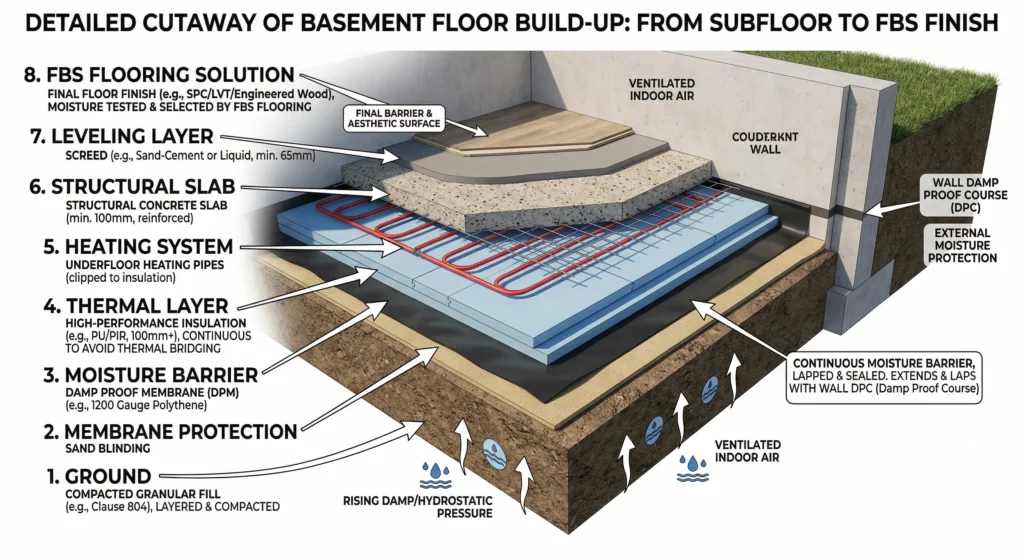
Basement floors feel better when there’s a layer between them and the cold concrete. Moisture stays below where it belongs, thanks to smart spacing that keeps wood or tile safer over time. Sometimes feet notice warmth where before there was only chill, simply because of what hides beneath the surface.
Floor comfort surprises most people when they realize a chilly basement isn’t always about leaks. Where rooms like gyms or play areas meet bare slab, temperature steals ease without warning. Offices and shared spots need a reliable footing just as much as dry walls. Warmth rises only when the base layer works hard beneath. Protection means more than stopping damp – it includes how floors feel each morning.
Basement floors often get an extra layer beneath them, using materials like bumpy plastic sheets or puzzle-like tiles. Some setups ride above the concrete on small platforms, while others add warmth with thick coverings underneath. Each method slips between the cold slab and your chosen surface. Picking one comes down to what shape the space is in, which flooring goes on top, plus how high everything can rise without causing problems.
FBS Flooring gets a fresh chance to share what they know well. Most customers pay attention to the top layer you can see. Yet it’s the layers underneath, out of sight, that hold everything firm when weather shifts happen here. That truth comes clear through solid basement floor work.
Ventilation ideas for basements in Ireland
When basements lack airflow, trouble starts before anyone notices. Moisture hangs around if there’s no path out. Occupied spaces make the issue worse over time. Stale air creeps in when breath and daily activity add humidity. Most people overlook vents until walls start sweating. An open channel for fresh air stops small problems from growing. Without movement, damp becomes hard to ignore.
A few basements work fine with just passive vents. Where showers or laundry spots exist, airflow often needs a mechanical push instead. Tighter converted areas might start feeling damp unless air moves on purpose. Comfort stays intact only when moisture has a clear exit path.
Here’s what matters most. Floors are part of a bigger picture. When moist air lingers indoors, moisture may still form – slab conditions aside. Poor airflow choices? They tend to wear down the flooring faster.
Here in Ireland, better insulation often traps air inside upgraded houses without fixing how fresh air flows through. When people install new floors in basements, they might overlook airflow until damp shows up on the walls. That is why FBS Flooring needs to mention breathing space early, right when planning layers under the floor surface. Waiting until problems start means it is already too late to avoid trouble.
Dehumidifiers and airflow
Basements might benefit from a dehumidifier, though it works best alongside other fixes, not on its own. When used in places like workout areas, storage spots, or parts of the house that aren’t always in use, one of these units can take the edge off dampness now and then. Comfort levels may rise when moisture gets kept under wraps during certain times of the year.
A basement relying only on one machine to stay dry might have been set up poorly from the start. Water coming in through cracks or bad design won’t stop just because a device pulls moisture from the air. Floors that trap dampness add to the problem instead of solving it. Without airflow built into the structure, any drying effort works against itself. Machines cannot undo flaws in how the space was planned.
One solid option involves drying out the air, but that works best when combined with smarter design choices. Think clearer ventilation paths, flooring surfaces suited to the space, tighter seals at joints, or stronger base layers underneath. Clients working with FBS Flooring benefit most when they stop chasing instant results and start building durability into every step. Longevity comes not from one fix alone, yet from how each piece supports the next.
Radon risk and basement flooring
Basement floors in Ireland? Radon needs a mention. Touching soil means these spaces face higher risks than many realize. Some regions show clear danger zones on maps – yet pockets elsewhere surprise with high levels too.
This issue affects floors since how membranes join, where pipes pass through, and the layering of materials isn’t just linked to moisture. It can shape how gases move up from the soil into indoor spaces. When basements become offices, bedrooms, or lounges, these factors carry more weight.
Floor by Floor knows radon matters – even if they’re not fixing it themselves. Peek at the map first, that’s where smart choices start. Local risk levels shape what comes next. Work around them, build smarter. Protection fits best when planned early. Trust grows through these details. Doing the right thing quietly speaks volumes.
Basement floors need careful thought about dampness and well-being, particularly where people stay for extended periods. What matters most is how these factors play out over time indoors.
Best flooring types for basements in Ireland
Flooring choices vary widely in how well they handle Irish basement conditions.
Basement makeovers often turn to SPC flooring when strength matters. Despite temperature shifts, it holds its shape well – thanks to solid dimensional reliability. Water resistance stands out, making spills less concerning over time. Appearance meets function here, blending realism with everyday toughness. Homes lean on it for spaces like work nooks or lounging areas. Where real wood might buckle, this option keeps up, offering a similar look minus the fragility.
LVT holds up well in basement settings, once prep work meets standards. A different feel underfoot compared to laminate or real timber, yet it handles dampness far better. Best results show when the floor base and moisture controls are already checked and sound.
Though tile stays cool underfoot, many still pick it when moisture is a concern. Built tough, it handles spills without fuss – perfect for basements where function wins over comfort. Cleaning takes little effort; soap plus water often does the job. Some find its hardness off-putting, especially if floors aren’t warmed another way. Where sturdiness counts most, though, few materials match its long-term performance.
Where things get messy, epoxy holds up – think factories, garages, storage spots, even sleek basements that need one smooth surface without breaks.
When basements host workouts, rubber floors often work best. Comfort matters there. So does handling dampness. Bouncing back after impact? That too. One reason fits underfoot – cushioning each move. Another shows up when humidity climbs. It stays put without warping. Surfaces like these adapt quietly. Not every material manages both.
Basements that stay dry and well-managed might handle engineered wood – though calling it a one-size-fits-all fix misses reality. Where airflow stays strong, dampness is blocked reliably, and concrete surfaces are checked thoroughly, that’s where this material fits best.
Laminate feels common, maybe even expected, yet that doesn’t help when dampness creeps in below ground. Only sensible if moisture stays far away, with solid barriers already in place beneath.
Though carpet tiles can work in certain dry basements used as offices or entertainment areas – particularly when swapping them out easily is a priority – they fail as a general fix for spaces that often get wet.
Flooring types to avoid in basements
Few things work down there if conditions aren’t tightly managed. A basement might reject certain substances outright, depending on how steady the space stays.
A full wood floor often struggles on basement concrete. Since dampness shifts can warp it, basements across Ireland usually skip this pick.
A shaky base or thin moisture layer underneath can ruin standard laminate flooring. This type of setup usually fails because the product isn’t built to handle damp, uneven spaces.
Besides looking soft, broadloom carpet holds onto dampness in basements. This trapped wetness often leads to smells sticking around longer. Mould finds its way in faster compared to tougher floor types. Some materials handle basement conditions far better.
Mold loves cheap floors made of fibreboard when damp air comes and goes. These materials might work fine at first, yet fall apart fast once moisture shifts start. A brief period of stability does little good in the long run.
A single idea stands out: skip delicate finishes where they don’t belong. When shaping underground spaces, honesty beats hope every time.
Basement risk analysis
Whatever you do first, think about how much danger there is in the space before picking what goes on the ground below. Then decide what kind of surface makes sense based on that.
A space below ground stays trouble-free when it’s stayed dry for years, has an intact floor base, lets air move through easily, shows no moisture marks, and has proper defense layers either set up or ready to go. When those conditions exist, people might choose stiffer flooring options like stone composite planks, luxury vinyl sheets, ceramic covers – maybe even select types of layered timber if picked just right.
Every so often, dampness shows up without a clear cause in basements that seem fine at first glance. These areas might lack obvious water entry yet carry hints like foggy windows or outdated buildings. Sometimes walls feel clammy when touched after summer rains. Older homes especially hide past issues under fresh paint. Instead of standard flooring choices, materials shrugging off wetness tend to last longer here. Adding a layer beneath the floor can help too – quietly doing its job over time.
Basement areas once hit by water need careful handling. Where damp keeps returning, attention must stay sharp. Cellar-like builds often hide problems beneath. Flood-prone spots demand materials that hold up under stress. Radon detection shifts priorities fast. Subfloor issues tied to larger repairs change how choices are made. Looks matter less when trouble runs deep. Resilience becomes the main goal, not finishing. Caution shapes every decision here.
FBS Flooring finds its edge by focusing on risk. Not every basement gets the same answer – some need different solutions entirely. By looking at each space closely, they match real conditions to actual product needs. What matters shows up clearly when cookie-cutter answers are left behind.
Cost analysis for basement flooring in Ireland
Most folks think basement floors only need a new surface material. Truth hides below what you see. Testing for damp comes first, often forgotten. A flat base might demand grinding or filling before anything else. Vapour barriers go down next, blocking hidden wetness. Edges require special trims, not an afterthought. Labour charges stack up fast, even if materials seem cheap. Sometimes, air flow fixes sneak into the total. Surprise costs love dark corners.
Starting small might seem smart, yet hidden steps add cost fast when basements need prep work. Wrong choices up front often lead to higher bills later. Floors meant for damp spots usually win in the long term, even if priced higher at first. Mistakes in setup drain budgets quicker than premium materials ever could.
Most Irish homes gain more when they see flooring as a whole picture. Instead of picking bargain materials, going a bit further on prep and surface strength pays off down the road. Skipping solid groundwork often leads to fixes sooner rather than later. Spending wisely up front means less trouble years after installation.
Starting with FBS Flooring means homeowners in Ireland get help on where to begin. One step leads to expert advice without confusion. A visit can uncover what the space really needs. Instead of guessing, there’s a way to test for damp before anything else. Choices become clearer when guidance shapes them early. Support sticks around from the first call through the final placement.
Installation mistakes to avoid
Many basement flooring failures begin with the same few mistakes.
Failing to check moisture levels ranks among the worst oversights. A surface that looks dry often fools people into thinking it’s fine – this trust causes issues. Underlayment gets treated like a full shield against dampness, though it really isn’t built for that job. When past wet problems haven’t been fixed, laying down laminate or fake hardwood still happens too much.
A common error? Closing up basement gaps while upgrading – yet skipping airflow fixes. That tighter seal holds dampness inside, slowly building wet spots on surfaces below.
What folks often overlook? They fixate on looks first, skipping how air moves, moisture travels, or heat behaves inside the space. Down below ground level, what stacks up behind walls weighs just as heavy as paint colour or trim choice.
Flooring by FBS might want to keep pointing out how basements need groundwork more than they need quick setups. What matters most isn’t laying down material – it’s what happens before that step even begins.
Maintenance and monitoring of basement floors
Still watching matters, even once the right flooring sits in place. Shifts happen below ground, given enough months. When seasons swing, moisture rides along – drainage shifts too. Open windows now and then? That plays a part. Who uses the space – and how often – shapes what occurs down there.
Moisture hiding under floors might show itself through odd odours – like damp cloth left too long. Edges of the flooring bulging slightly? That could mean trapped wetness pushing up from below. Windows weeping water overnight, even when it’s dry outside, often points to excess indoor humidity. Discoloured baseboards, especially near corners, sometimes reveal slow seepage that others miss. Floorboards shifting without reason can whisper problems before big damage appears. Each clue alone seems small – but together they sketch a clearer picture.
Moisture-resistant floors often mean less upkeep. When basements stay damp, tile or SPC choices typically handle it better. If a flooring type reacts badly to humidity, even small wet spots need quick notice.
Floor care doesn’t end when the job does – that much becomes clear here. Not really about just laying planks or tiles, it turns out. What matters more? Walking people through daily upkeep, especially with Ireland’s damp air and muddy boots. Support stretches beyond the first visit, shaping up as part of what sets solid firms apart.
When to call a flooring specialist
When a basement shows signs of dampness, stains, or an unknown floor state, bring in someone who knows floors. If plans include turning the space into a living area – say, a workspace, sleeping room, exercise spot, or place for tenants – expert input helps more than you might think. Moisture-prone finishes need care others might miss. Safety matters grow sharper with such changes. Comfort levels rise when experience guides choices. Unclear concrete conditions? That’s another reason to call a pro. Higher stakes come with new uses people live in.
Besides, when basements belong to older homes in Ireland – structures with patchwork builds, thin ventilation, or hidden fixes – expert insight matters. Here, glossy leaflets fall short. What counts is seeing how the space truly works.
FBS Flooring shows up best when it guides customers through checking problems, getting ready, picking materials, and then seeing work done right. This stands out more in Ireland, since every home faces different challenges – older buildings, unique weather patterns, and moisture levels shifting block by block.
Conclusion
Beneath your feet, basement floors in Ireland demand function first, style later. Though the space might seem ordinary, what lies underground tests a floor far more than any upstairs room ever could.
Steam rising, leaks sneaking in, damp creeping through – these test how long floors survive below ground. So the top choice for basements hides behind less flashy displays. What wins isn’t seen first. It matches the space’s true hazards. Strength comes from what lies underneath, not just looks. Lasting performance ties to fit, not finish.
Down in lots of Irish cellars, choices like SPC, LVT, tile, epoxy, or rubber make sense – especially where damp hangs around. Timber types? They ask for extra care, careful checks, and tighter rein on surroundings. Looks alone shouldn’t decide anything when the floor base, defense against moisture, and airflow setup remain unclear.
Floor by Sound focuses on what matters most to people living in Ireland. With knowledge of damp problems, solid floor prep, protective layer advice, and skilled fitting, they guide owners step by step. Basement areas turn into useful spots – strong underfoot, built to last, free from hidden risks over time.
FAQ
What is the best flooring for basements in Ireland?
Beneath Irish homes, stone plastic composite often holds up when damp air creeps in, unlike wood-inspired options that buckle under pressure. Vinyl planks survive puddles too, standing firm where others would warp. Ceramic squares laugh at leaks, staying put season after season.
Do I need a moisture barrier in a basement floor?
Basement jobs often need one. What works best comes down to how the slab looks, just how damp things are, and then what kind of floor goes on top.
Can laminate be installed in a basement?
Basements that carry less risk might still handle it, provided steps are taken to shield against hazards – yet most of the time, better options exist. A safer path tends to lie elsewhere when looking closely.
Is engineered wood suitable for basements?
Few basements qualify – only those proven dry through testing, kept open to fresh air, shielded carefully where damp might creep in.
How do I stop condensation in a basement?
Fresh air flow matters most, so windows or fans help when used often. Humidity stays low if dehumidifiers run regularly during damp months. Showers and cooking add steam, which can be limited by shorter use times. Cool spots underground prefer certain materials – some floors handle cold better than others do.
What flooring is safest if a basement floods?
Flooding? Tile or epoxy handles it better. Waterproof, resilient options often outperform laminate down there. Timber-style picks tend to warp when wet – so they’re less ideal. Basements lean toward moisture, making tougher surfaces a smarter bet most times.
Irish Basements and Ventilation Needs?
Basements need airflow. That’s key for staying comfortable down there, plus keeping floors strong over time – particularly if people actually use the space.
Should radon be considered when finishing a basement in Ireland?
Basement spaces touch soil directly, so watching for radon matters more there – particularly where risk maps show concern or people spend extended time indoors. Ground-level exposure shifts how air moves below buildings, making checks sensible when occupancy lasts hours.