Table of Contents
Browse the sections below to compare flooring options, room-by-room advice, and practical recommendations for Irish holiday homes and Airbnb properties.
Introduction
Managing a holiday let or Airbnb property in Ireland is entirely different from managing an owner-occupied home. The commercial pressures, compressed cleaning schedules, and specific environmental factors make flooring choice a pivotal decision for long-term profitability and guest satisfaction.
Unlike a typical family home, where the floors receive consistent, predictable use, a holiday rental faces extreme wear. Think of dozens of weekly turnovers, grit from Irish beaches, mud from rural walks, luggage wheels on hall floors, and the increased likelihood of spills and enthusiastic cleaning regimens. Moreover, our Irish climate introduces unique challenges like coastal humidity and significant moisture tracking from our frequent rain.
If you choose incorrectly, you face costly and disruptive replacements far sooner than planned. As flooring specialists who have installed across Ireland—from Dublin city apartments to Wild Atlantic Way cottages—we have seen every failure: swelling laminate at wet entrances, scratched engineered wood in high-traffic kitchens, and lifting LVT in damp, poorly-prepared spaces.
This guide provides an honest, experience-led comparison of the best flooring options specifically for Irish holiday lets. Our objective is to help you balance aesthetics, durability, sound insulation, and cleaning speed to select the ideal floor that will look great and last for years, maximizing your return on investment.
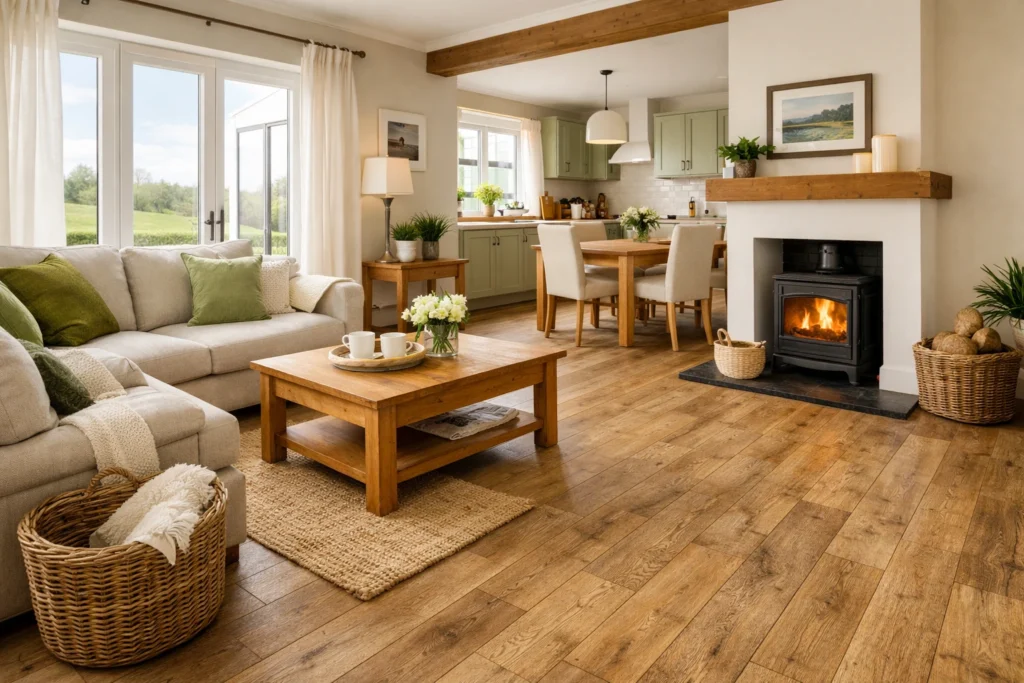
If you want the short answer first, the best flooring for most Irish holiday homes and Airbnb properties is usually LVT in the busiest areas, with tile in true wet zones and softer or quieter finishes used only where they genuinely add value. That mix tends to work best because Irish short-term rentals deal with wet shoes, luggage wheels, quick guest changeovers, muddy entrances, coastal air, and the constant pressure to keep the property looking attractive without turning cleaning and maintenance into a full-time sport.
The mistake many hosts make is choosing flooring as if they were furnishing a private home that will be used gently by the same people every day. A holiday home is different. It has higher wear, less predictable use, faster cleaning cycles, and more pressure on surfaces to look good in photos while surviving real-life treatment. In Ireland, that challenge gets sharper because of rain, grit, damp air, seasonal occupancy, rural access, and the simple fact that guests rarely treat floors with the same care an owner would.
That is why the smartest flooring choice for a holiday let is rarely about what looks best on a sample board. It is about what performs best over time, what cleans quickly between bookings, what feels good underfoot, what keeps noise down, and what protects the long-term value of the property. Done properly, flooring becomes part of the business model, not just part of the décor.
Why flooring matters more in a holiday home than in a standard home
A private homeowner usually understands the house. They know which entrance gets soaked in bad weather. They know which room gets the most sunlight. Meanwhile, they know where to take their shoes off and how careful to be around timber or laminate joints. Guests do not. They arrive with suitcases, boots, prams, shopping bags, children, dogs, takeaway coffees, and a cheerful indifference to whatever happens after checkout.
In a standard home, a floor may be judged mainly on comfort and appearance. In a holiday home, it has a bigger job. It has to cope with more cleaning, more movement, more random impacts, and more moisture. It also has to keep looking good in listing photos and during inspections between stays. When a floor starts swelling by the entrance, scratching badly under dining chairs, or sounding loud upstairs, it does not just create a maintenance problem. It starts affecting reviews, guest comfort, and replacement budgets.
This is especially true in Ireland because short-stay properties often have direct access from outdoors, stronger weather exposure, and a more mixed pattern of use. One week the property may be empty. The next week it may be full of people coming in from the beach in Clare, from town in Dublin, or from a rainy walk in Kerry. Flooring in that setting needs resilience, not just charm.
What Irish short-stay properties really put floors through
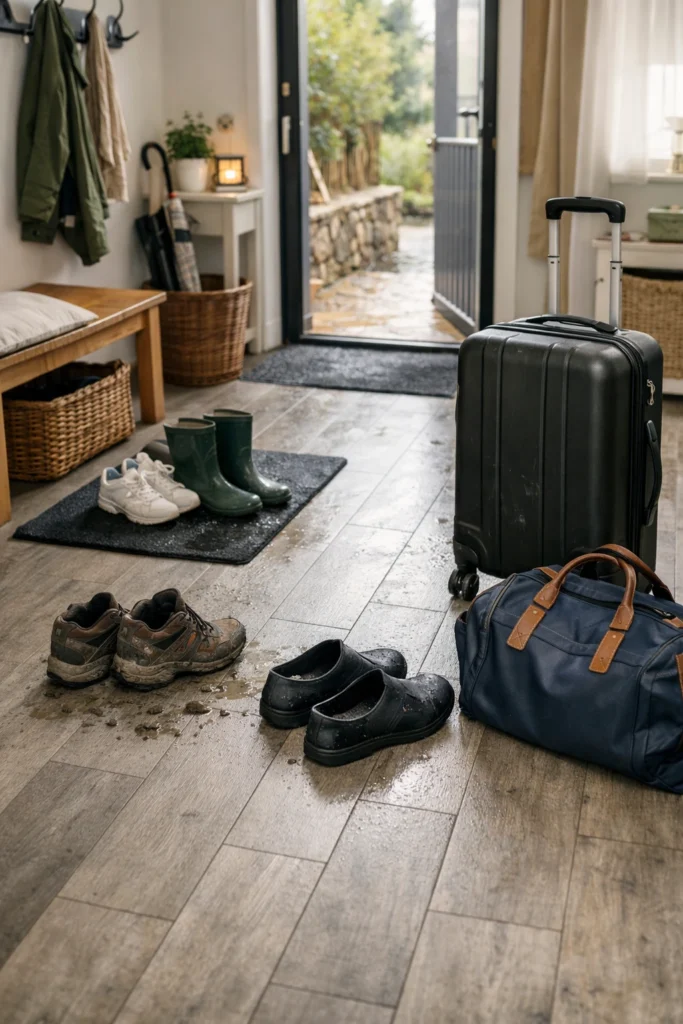
Floors in Irish holiday homes take a very specific kind of punishment. It is not always dramatic, but it is relentless. Wet entrances are one of the biggest issues. Guests arrive with rain on coats, water on wheels, and grit under shoes. In coastal areas, sand becomes part of daily life. In rural areas, mud and small stones can work their way in from gardens, fields, and driveways.
Cleaning pressure is another major factor. Between stays, floors often need fast vacuuming, quick spot cleaning, damp mopping, and furniture movement. That sounds harmless, but repeated, rushed cleaning can wear down the wrong floor very quickly. A surface that demands delicate treatment becomes a burden in a rental setting.
Then there is noise. Upstairs rooms, apartment lets, and duplex layouts often expose problems that owners do not notice at first. A floor may look beautiful, but sound harsh under footsteps, rolling luggage, or chairs being moved late at night. In city properties, this can create neighbour complaints. In family holiday homes, it can simply make the property feel less restful.
The final issue is inactivity. Many Irish holiday homes are not occupied continuously. Some sit empty between bookings or across parts of the season. That makes moisture stability and subfloor preparation even more important. A floor that behaves well in a constantly occupied house may act differently in a short-stay property with changing ventilation and uneven usage.
What hosts should prioritise before choosing a floor
Most hosts start with appearance. That is understandable, but it should not come first. In a holiday home, the best order is usually durability, moisture resistance, cleaning speed, comfort, acoustic performance where relevant, visual appeal, and then price.
Durability matters because replacement is disruptive and expensive. Moisture resistance matters because Irish weather is not a polite suggestion. Cleaning speed matters because every extra minute between bookings costs labour and reduces flexibility. Comfort matters because guests notice how a property feels underfoot. Acoustic performance matters because noise problems damage the guest experience even when the floor still looks fine.
Only after that should appearance take over. The good news is that hosts do not need to sacrifice style to get practicality. Modern flooring options can look warm, natural, and premium while still being sensible for short-term rental use.
The final priority should be lifecycle cost rather than basic purchase cost. A cheaper floor that wears poorly, needs more careful cleaning, or shows damage quickly is often the more expensive option over time. In a holiday let, cost per useful year matters much more than cost per square metre on day one.
The best flooring types for Irish holiday homes and Airbnb properties
There is no single best floor for every Irish holiday property. The right answer depends on whether the property is coastal or inland, family-focused or design-led, upstairs or ground floor, modern or traditional, occasional-use or year-round.
That said, some broad patterns are clear.
LVT is usually the strongest all-round option for busy living areas, hallways, kitchens, and open-plan spaces because it combines durability, moisture resistance, and easy maintenance.
Laminate can still work in dry bedrooms or lower-risk areas where budget matters, but it is not usually the safest choice for wet entrances or hard-working kitchen-living zones.
Engineered wood makes sense where a more premium look genuinely helps the property stand out and where moisture, cleaning, and installation are all properly managed.
Tile is excellent in bathrooms, utility areas, boot rooms, and other wet-use spaces, but it can feel too hard or cold if used too widely through a holiday home.
Carpet still has a role in upstairs bedrooms or quieter spaces where comfort and noise control matter more than spill resistance.
The strongest holiday-home flooring schemes are usually mixed systems, not single-material experiments.
LVT for Airbnb and holiday homes in Ireland
For most Irish Airbnb properties, LVT is the best all-round choice. It is practical without looking cheap, durable without feeling too harsh, and easier to live with than many hosts expect. Also, it suits the reality of guest traffic better than more delicate materials because it handles moisture, cleaning, and repeated daily wear far more calmly.
It is especially strong in hallways, kitchens, dining spaces, and open-plan living rooms. These are the areas where guests are moving in and out, setting bags down, dragging chairs, carrying drinks, and returning from outdoors. LVT is well-suited to that level of activity because it offers strong day-to-day resilience and usually cleans quickly.
It also solves a common design problem. Many hosts want the warm look of timber, but they do not want the maintenance burden or moisture risk that can come with real wood in busy rental areas. LVT gives a practical way to get that wood-look effect while reducing the risk of swelling, staining, or surface wear.
For hosts comparing wood-look options, it makes sense to direct readers towards practical product collections and broader flooring comparisons rather than pushing them straight into one material. A soft internal route, such as FBS Flooring’s collections or the main FBS Flooring website, works naturally here because readers at this stage are still narrowing down what suits their property best.
Laminate flooring: where it works and where it fails
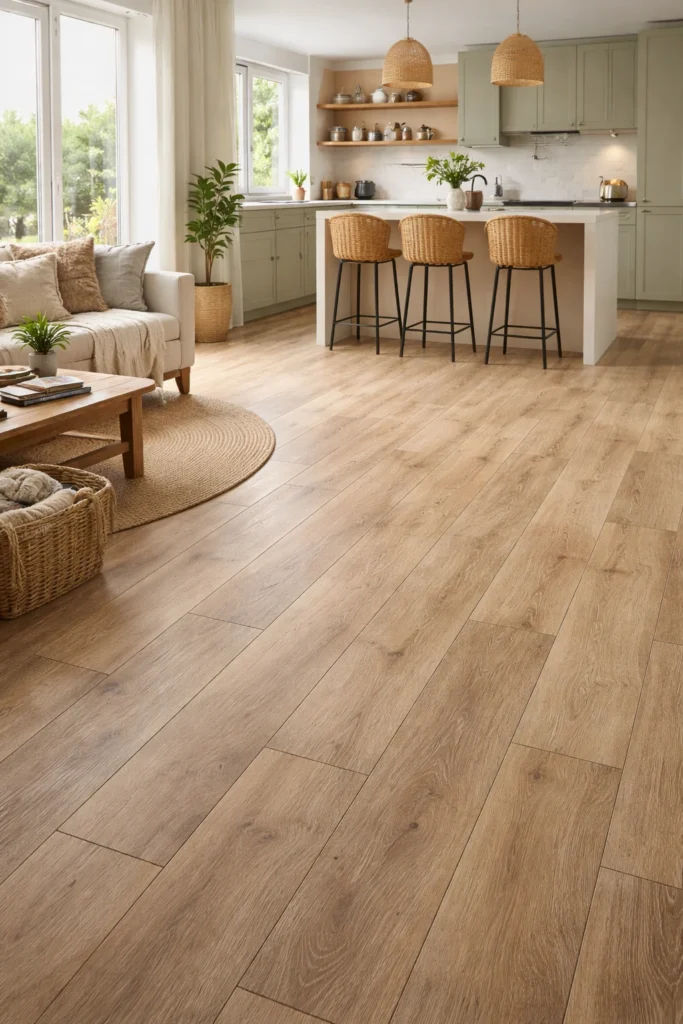
Laminate is often chosen because it offers an attractive finish at a lower initial cost. In the right room, that can be a sensible decision. Dry bedrooms, occasional-use upstairs spaces, and lower-intensity zones can all be suitable for good-quality laminate, especially when the host wants a clean timber look without moving into a more expensive category.
The trouble begins when laminate is expected to perform like a waterproof floor in areas that see regular wet traffic. Entrances, kitchen-dining zones, and heavily used holiday-home circulation routes are where laminate is most likely to disappoint if the wrong product is used or if the installation is poor. Repeated moisture around joints and edges is usually the problem.
That does not mean laminate should be written off. It simply needs to be placed intelligently. In a rental setting, laminate is best used where conditions stay relatively dry and where cleaning does not involve constant wet exposure. It is a useful supporting material, not always the star of the scheme.
Readers exploring more decorative wood-look floors can also be guided naturally to broader design-led pages like the Continental Collection without turning the section into a product push.
Engineered wood: where it earns its place
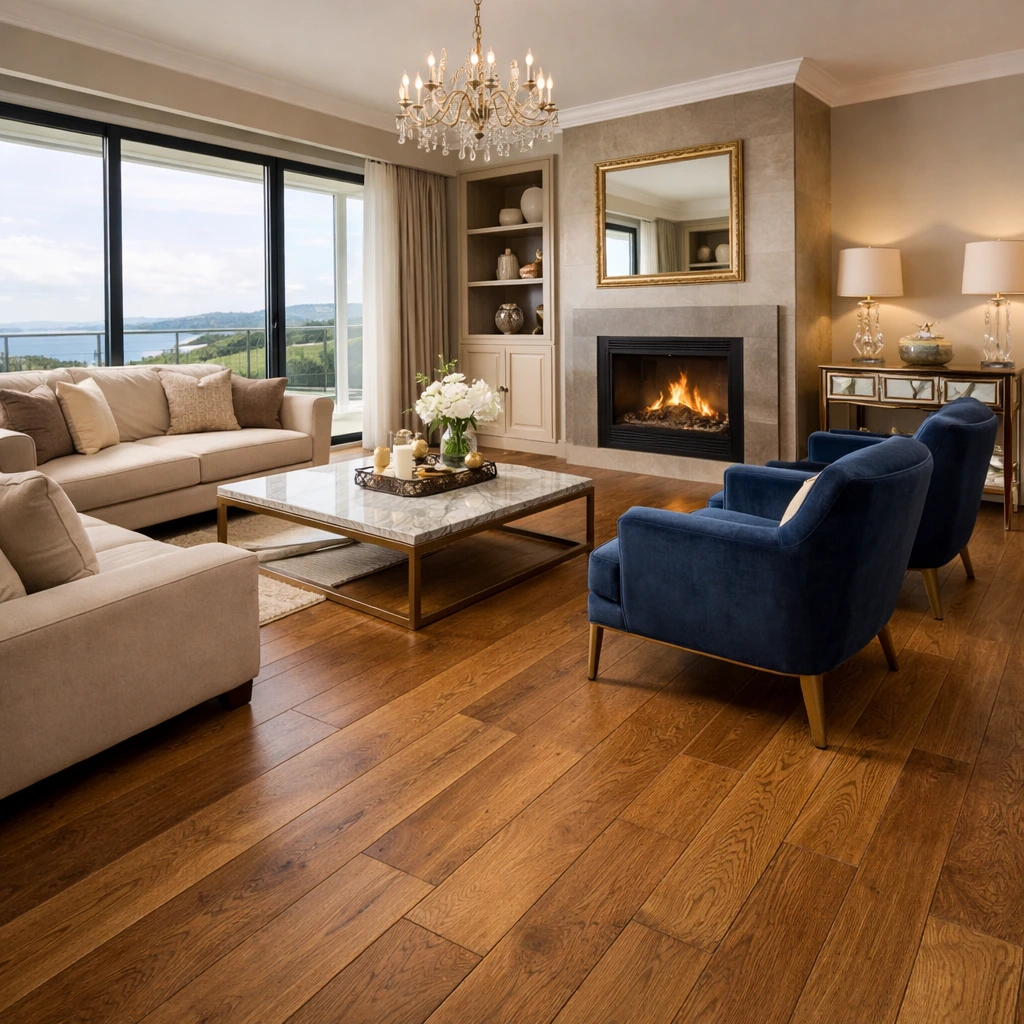
Engineered wood is the flooring that most often tempts hosts who want a more premium interior. In the right property, that temptation is justified. It offers real timber character, greater visual depth, and a stronger sense of quality than many synthetic surfaces. In a high-end holiday home, that can support stronger photography, a more luxurious feel, and, in some cases, better nightly rates.
Where engineered wood earns its place is in dry, controlled spaces where appearance matters enough to justify the extra care. A design-led property in Galway, a restored period home in Wexford, or a premium weekend let in Dublin may all benefit from it. Living rooms, bedrooms, and selected reception areas are usually its best settings.
Where it becomes risky is in hard-working entrances, busy kitchen zones, and damp-prone properties where occupancy is inconsistent. It is still a real-wood product and should be treated with that respect. Hosts who choose it for an Airbnb should do so because it truly suits the property, not because it sounds more expensive than vinyl.
A clean internal link works well here because this is exactly where readers often want to understand the category better. The engineered wood guide from FBS Flooring is a natural next step for readers comparing visual warmth with practical stability.
Tile flooring: where it shines and where it feels too hard
Tile is one of the strongest options for bathrooms, utility spaces, wet entrances, and other rooms where water and easy cleaning are the priorities. It is durable, simple to sanitise, and hard to damage under normal holiday-home use. In rooms where guests will regularly bring in moisture or where cleaning needs to be very direct, tile still makes excellent sense.
The reason it is not the universal answer is comfort. Tile can feel harder, colder, and noisier than other flooring options. In a bathroom, that is usually acceptable. Meanwhile, in a long, open-plan living space, it can make the property feel less welcoming, especially in the winter. In holiday homes, comfort is not a luxury. It affects how guests judge the whole property.
For many Irish rentals, the best role for tile is targeted use. Let it do the hard wet work in bathrooms, utility rooms, and certain entrance zones. Then use a warmer, quieter material in the larger living areas where guests spend more time.
Carpet: when it still makes sense
Carpet tends to be dismissed too quickly in modern rental discussions. In truth, it still has value when used selectively. Upstairs bedrooms, guest rooms above living areas, and family-oriented properties can all benefit from carpet because it softens sound, improves warmth, and makes the space feel more restful.
That matters in Irish holiday homes because many guests are looking for comfort as much as style. A property can look polished, but if it feels cold and echoing, it may still leave a less positive impression.
Where carpet becomes harder to defend is on the ground floor, near dining zones, or in properties with direct garden access, pets, frequent spills, or beach traffic. In those situations, it increases cleaning pressure and staining risk.
The sensible middle ground is to use carpet only where it serves a clear purpose. Quiet bedrooms are the best example. Elsewhere, hard flooring usually makes more commercial sense.
The best flooring for coastal Irish holiday homes
Coastal holiday homes in Ireland need more than good taste. They need floors that can deal with damp air, sand, wet entrances, and a more exposed daily environment. Seaside properties in Kerry, Clare, Donegal, Galway, and Wexford all share one basic truth: moisture-resistant flooring usually performs better than standard laminate in the hardest-working areas.
In these homes, LVT is often the safest broad recommendation for hallways, living zones, and kitchens. Tile works well in bathrooms and utility spaces. Engineered wood can still be used in selected dry rooms, but it should not be spread casually across the whole house just because it suits the style.
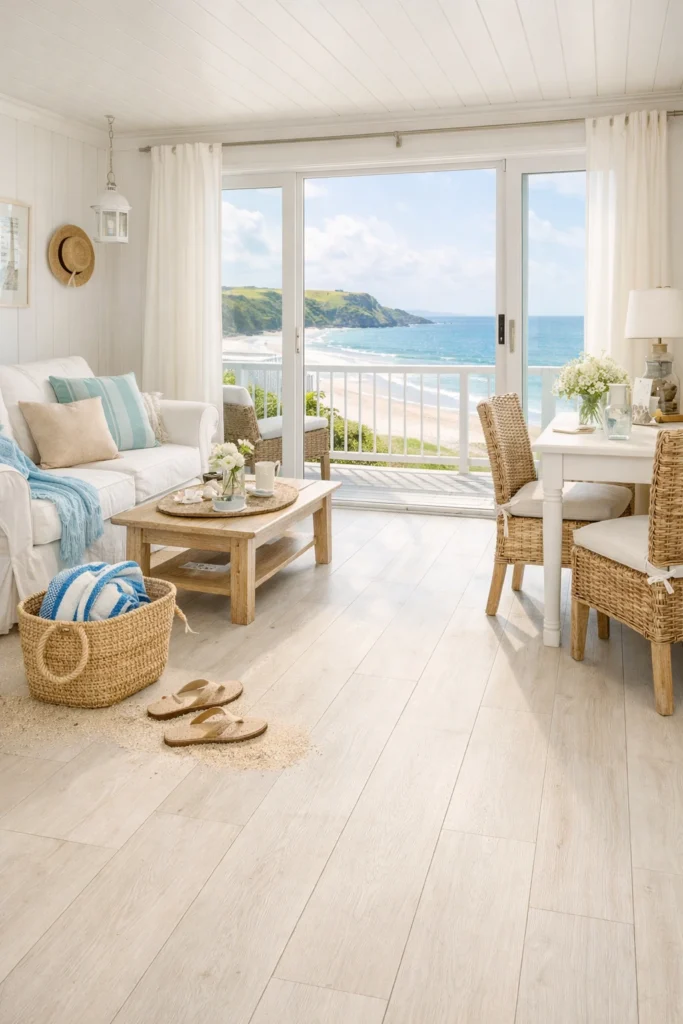
The best coastal interiors usually blend practicality with warmth. Pale oak tones, lightly textured surfaces, and easy-clean finishes can create that bright holiday feel without turning the floor into a maintenance burden. A rental close to the sea needs calm materials, not fragile ones.
The best flooring for cottages, cabins, and rural lets
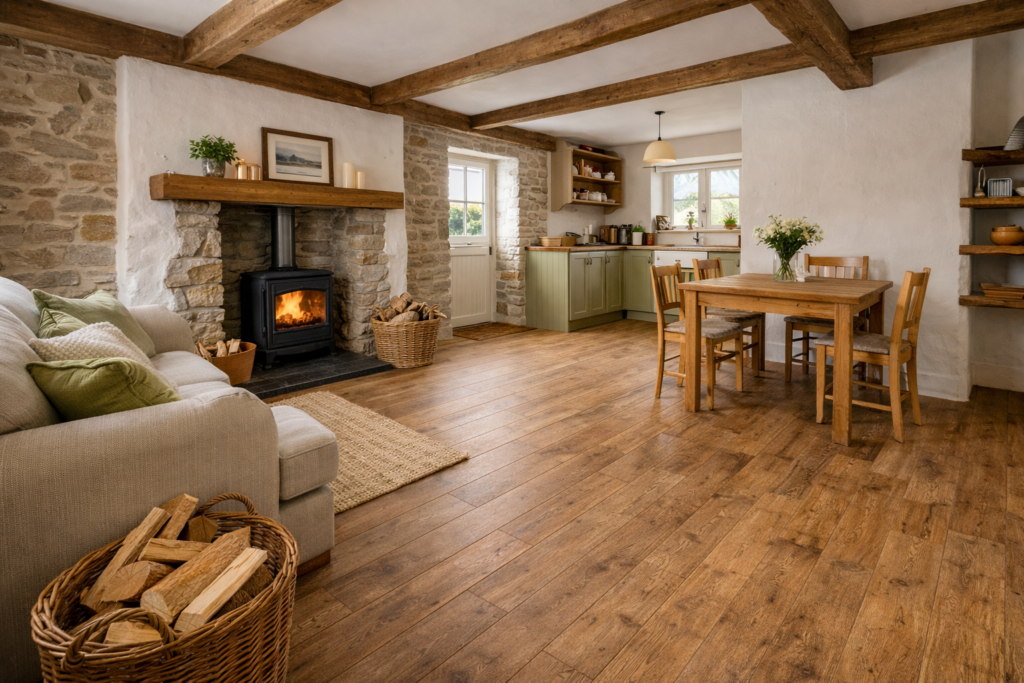
Rural properties often need a different kind of flooring logic. There is usually more direct contact with the outdoors, more mud, more grit, and more uneven patterns of use. A cottage in Kerry, a converted rural home in Clare, or a cabin-style retreat in Donegal may look beautiful with timber floors, but if guests are walking straight in from gardens, lanes, or fields, the flooring has to be chosen with that reality in mind.
Wood-look LVT is often the smartest choice here because it keeps the visual warmth that suits traditional properties while coping far better with outdoor-heavy use than more sensitive materials. Tile is still useful in porches, utility spaces, and bathrooms. Carpet can soften upstairs bedrooms.
This is also a category where hosts should avoid making the property feel too clinical. Tough flooring does not have to look cold. Warm natural tones and subtle texture can keep the character of a cottage without inviting unnecessary damage.
Readers who want to keep that more classic timber feel can be guided softly towards hardwood flooring inspiration from FBS Flooring or parquet design ideas as style references, even if the final recommendation for the main traffic zones stays more practical.
The best flooring for apartments and city short-term rentals
Apartments and city let bring acoustics into the foreground. In a Dublin short-stay flat or an upstairs guest unit in Cork or Galway, the wrong floor can create noise problems even when it looks flawless. Rolling luggage, heel strikes, dining chairs, and late check-ins all sound louder on hard floors if the system underneath is poorly chosen.
That is why city rentals should be approached as full flooring systems rather than just visible finishes. Acoustic performance, underlay choice, and impact noise matter. In many cases, LVT becomes the leading option because it keeps maintenance simple while still allowing for quieter, more practical build-ups than some harder or more moisture-sensitive alternatives.
Bedrooms in city rentals can still benefit from carpet where quiet comfort is a priority. The main point is that apartment flooring has to do more than survive traffic. It also has to behave well in relation to neighbours and the layout of the building.
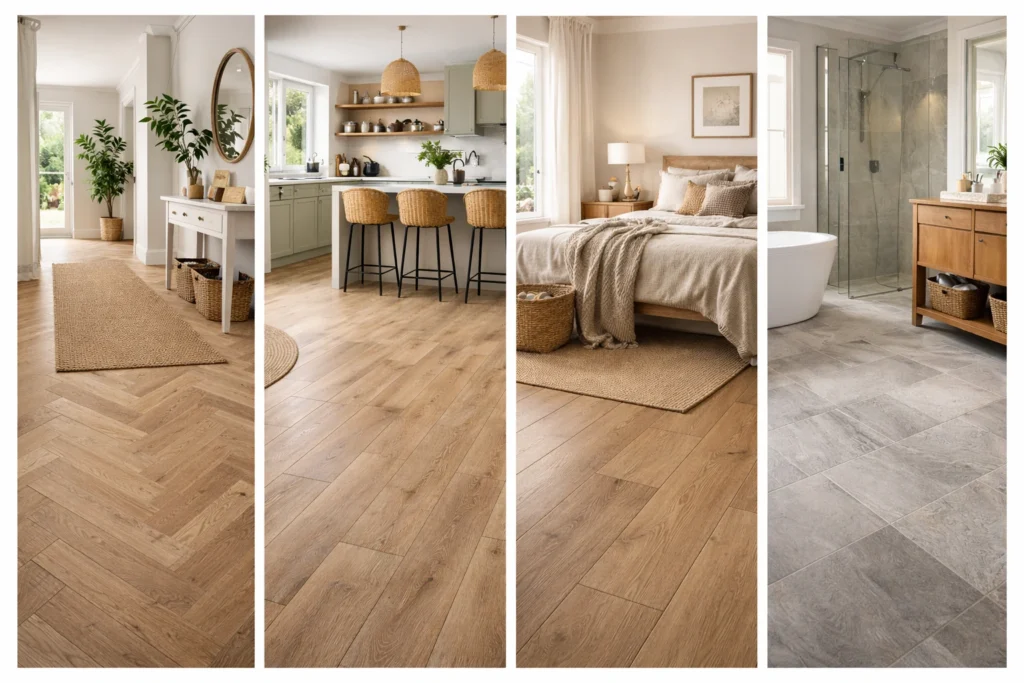
Family holiday homes versus high-turnover Airbnb units
Not every holiday property has the same business model. A family holiday home used for longer stays often benefits from a softer, warmer, more homelike flooring mix. Comfort matters more, and room-by-room choices may be more relaxed. Carpet in bedrooms and warm wood-look flooring in living spaces can work well.
A high-turnover Airbnb unit is different. Faster changeovers, shorter stays, and more frequent cleaning make easy-maintenance flooring much more important. In that setting, a host should usually lean harder into durability and cleaning speed than into premium material choices that need careful treatment.
The key question is not simply what looks best. It is what kind of guest the property is built for. If the property welcomes families, children, pets, and heavy seasonal traffic, flooring should be chosen on that basis. If it is a boutique adult-focused stay with controlled use and higher nightly rates, a more premium mix may be justified.
Room-by-room flooring recommendations
Hallways and entrances are usually best in LVT or tile. These areas take the first hit from weather, grit, and luggage.
Kitchens and open-plan living areas are usually strongest in LVT because it balances appearance, comfort, moisture resistance, and easy cleaning.
Living rooms in premium rentals can justify engineered wood if the room is dry and the design standard is high enough to support it. In more practical terms, wood-look LVT is often the better answer.
Bedrooms depend on the property. Carpet is strong for warmth and acoustic comfort. LVT works where quick cleaning and consistency matter more. Engineered wood can work in higher-end dry rooms.
Bathrooms should usually stay with tile or other strongly water-tolerant surfaces.
Boot rooms, utility spaces, and back-door zones should always be chosen for function first and style second.
This is also a good place to add helpful internal direction without disrupting the flow. Readers who want broader advice on fitting and room planning can be pointed towards FBS Flooring’s installation guide, while those still comparing wood-led looks can move towards the engineered wood guide.
| Room | Priority | Recommended Floor | Specialist Note |
| Entrance / Hall | Moisture, Heavy Grit, Impact | Textured SPC LVT / Porcelain Tile | Critical area. Must have large, high-quality, recessed barrier matting. Swelling laminate is most common here. |
| Kitchen / Diner | Spills (Water/Oil), Heavy Traffic | 100% Waterproof SPC LVT / Tile | Must handle dropped items and daily mopping. |
| Living Room | Comfort, Appearance, Traffic | Premium LVT / High-Quality Laminate | Needs a balance. LVT offers the best appearance/durability ratio. Add a durable rug for warmth. |
| Bedroom | Comfort, Noise, Appearance | LVT / High-Quality Laminate / Low-Pile Contract Carpet | Lower traffic allows for more options. Choose high-quality underlay for sound and comfort. |
| Bathroom | Waterproofing, Hygiene, Safety | Porcelain Tile / 100% Waterproof LVT | Non-slip rating is essential. Must be easy to deeply sanitise between guests. |
| Stairs / Landing | Noise, Slip Resistance, High Wear | Non-slip rating is essential. It must be easy to deeply sanitise between guests. | Avoid standard laminate (too noisy and slippery). A hard-wearing contract-grade carpet runner with a non-slip nosing can offer warmth and noise reduction. |
Underfloor heating and rental flooring
Underfloor heating can improve comfort in modern holiday homes, but it adds another layer to the flooring decision. Not every product performs equally well over underfloor heating, and not every floor gives the same balance of heat transfer, stability, and maintenance.
In rental properties, LVT and tile are often the easiest companions for underfloor heating because they combine stable performance with practical upkeep. Engineered wood can also work well when the right product is chosen and properly installed. What matters is compatibility across the full system, not just the visible board.
Hosts should be especially careful not to treat underfloor heating as an afterthought. Once it is part of the property, the flooring specification has to follow it carefully. This is one more reason why advice based on the whole room and whole property is more valuable than advice based on a sample board.
Guest safety, slip resistance, and easy maintenance
A holiday-home floor has to be safe as well as attractive. Bathrooms, kitchens, and wet entrances are the obvious danger points, but even polished living areas can become awkward if the surface is too slippery or too glossy for practical use.
Guests also judge a property by how clean and well-kept it feels. A floor that shows every footprint, every speck of dust, or every streak from mopping quickly becomes harder to manage. That does not just affect cleaners. It affects guest perception.
Easy-maintenance surfaces win here because they reduce friction in the turnover routine. They also reduce the likelihood of poor cleaning choices that damage the floor over time. In holiday lets, the easiest-clean floor is often the most profitable-clean floor too.
Sound reduction and guest comfort
Noise is one of the most underestimated flooring issues in short-stay accommodation. Harder floors can sound sharp under luggage wheels, footsteps, and moving furniture, especially in upper-storey rooms and apartment layouts. Guests may not always complain directly, but they notice when a property feels noisy.
That is why comfort and sound reduction should be treated as serious decision points. Carpet still earns respect in quiet bedrooms for exactly this reason. LVT with the right underlay can also perform very well where a hard floor is preferred.
A good holiday home should feel calm. Flooring has a lot to do with that, even if it is not the first thing guests consciously mention.
Moisture, subfloor preparation, and installation quality
Many flooring problems blamed on the material actually start below the surface. Uneven subfloors, hidden damp, weak preparation, bad transitions, and rushed installation can all undermine even a strong product. In Irish holiday homes, that matters even more because some properties experience changing ventilation, intermittent use, and more moisture pressure than standard homes.
A host may think they are choosing between laminate, LVT, and engineered wood. In reality, they are choosing between full flooring systems that depend on preparation, moisture control, and installation quality.
This is where working with the right supplier and installer matters most. It is also where many future costs are either prevented or quietly incurred.
Style, appearance, and what still looks good after a busy season
A floor can look excellent in a showroom and disappointing after one season in a holiday home. The difference usually comes down to finish choice. Very dark floors show dust and scratches more easily. Very glossy floors show marks and streaks. Pale finishes can work beautifully, but only if the overall design supports them and the maintenance routine is realistic.
Mid-tones tend to age best. Natural oak looks, soft matt finishes, and subtle texture usually give the best blend of premium appearance and practical longevity. These finishes photograph well, suit Irish interiors, and tend to hide ordinary wear better than more dramatic options.
Hosts should think not only about launch-day appearance but also about how the floor will look after months of check-ins, cleaning, moved chairs, and wet weather. That is the real test.
Cost versus long-term value
Budget matters, but the cheapest flooring is rarely the best value in a rental property. Value comes from how long the floor lasts, how much maintenance it needs, how quickly it cleans, and how well it supports the standard of the accommodation.
A lower-cost laminate in a dry bedroom may be an excellent value. A more expensive LVT in a hard-working entrance or kitchen may also be an excellent value because it avoids earlier replacement and constant worry. Engineered wood is usually value only when it genuinely supports the pricing and positioning of the property.
The real question is not what costs less today. It is what costs less to own while keeping the property attractive and easy to run.
| Flooring Category | Install Cost (Approx) | Est. Lifespan in Rental | Lifecycle Value in Rental |
| Cheap Laminate | Low | 1-2 Years | Poor: Will swell at edges quickly; costly rapid replacement. |
| Good Moisture-Resistant Laminate | Moderate | 3-5 Years | Good: Solid choice for dry rooms. |
| Premium SPC LVT | Moderate-High | 7-10+ Years | Excellent: High upfront cost but exceptionally durable and easy to maintain; lowest long-term cost. |
| Engineered Wood | High | 3-6 Years (before refinishing) | Fair-Poor: Too susceptible to damage unless meticulously managed. |
| Porcelain Tile | High | 15+ Years | Excellent: Durable but comfort trade-off; requires UFH for warmth. |
Common flooring mistakes Irish hosts make
The biggest mistake is choosing flooring mainly by looks. The second is using the same floor everywhere without considering the room function. The third is underestimating Irish moisture and overestimating how carefully guests behave.
Another common mistake is forgetting acoustics in upstairs rooms and apartments. A floor can look smart and still be the wrong decision if it makes the property noisy.
The final big mistake is treating installation as an afterthought. Once hosts understand how much depends on subfloor condition, moisture management, and fitting quality, it becomes obvious that flooring selection is only half the job.
How to choose flooring by property type and guest profile
For a coastal family holiday home, a practical mix usually works best: LVT in the main living zones, tile in bathrooms, and carpet or quieter finishes in upstairs bedrooms.
Meanwhile, for a rural cottage with direct outdoor access, wood-look LVT is often the strongest core choice, supported by tile in the wettest areas.
For a premium design-led property, engineered wood can be used selectively in dry rooms where appearance adds genuine value.
For a city apartment, start with acoustics and maintenance, then build the flooring plan around those needs.
Also, for a high-turnover Airbnb, choose surfaces that reduce stress for cleaners and resist repeated guest wear.
For an occasional-use holiday home left empty between bookings, choose stable materials that cope better with changing conditions and inconsistent use.
When to repair, refinish, or replace
Not every existing floor needs to be ripped out. If a timber floor is structurally sound and mainly suffering from surface wear, refinishing may be worth considering. If the damage is local, targeted repair may extend the life of the floor sensibly.
Replacement becomes the smarter choice when moisture problems keep returning, joints are failing, the subfloor is part of the issue, or the existing material is simply wrong for how the property is being used.
Sometimes replacement also makes sense as a business decision. If a better floor reduces cleaning time, improves the appearance of the property, and lowers long-term maintenance, it may be worth acting before the old floor is completely finished.
Why working with a specialist matters
A holiday-home floor in Ireland is never just a product choice. It is a practical decision about climate, traffic, room use, moisture, comfort, acoustics, design, and long-term cost. A specialist helps join those pieces together.
That matters because many bad flooring decisions come from oversimplified advice. A good recommendation should match the property, not just the trend. A coastal cottage, a city apartment, and a luxury rural retreat should not all be treated the same.
This is why flooring advice is most valuable when it moves from general inspiration into room-by-room, property-by-property guidance.
How FBS Flooring can help
For Irish holiday-home owners and Airbnb hosts, FBS Flooring can add value in the part of the process that matters most: turning broad ideas into practical room-by-room decisions. The point is not just to pick a nice-looking floor. It is to match the right material to moisture exposure, traffic level, design goals, cleaning demands, and the way the property is actually used.
That is where internal guidance across the site becomes useful. Readers who want a deeper look at real timber options can move to the engineered wood guide. Those comparing more decorative layouts can explore the parquet guide. Readers who are still thinking broadly can browse the main FBS Flooring website or the Continental Collection to get a better feel for style and finish direction.
That kind of internal journey is useful because most hosts do not need one generic answer. They need help deciding what works in the hallway, what works upstairs, what works over heating, what copes with guests from the beach, and what still looks strong after a busy summer. That is where specialist advice earns its keep.
FAQ
What is the best flooring for Airbnb in Ireland?
For most Irish Airbnb properties, LVT is the best all-round choice because it handles moisture, heavy traffic, and frequent cleaning while still looking attractive.
Is LVT better than laminate for holiday homes?
Usually yes, especially in entrances, kitchens, and busy living spaces. Laminate can still work in dry bedrooms and lower-risk areas.
What flooring is easiest to clean between guests?
LVT and tile are usually the easiest because they cope well with regular vacuuming and mopping and do not demand as much care as timber-based floors.
Is engineered wood suitable for Airbnb properties?
Yes, but mainly in dry, more premium areas where the property benefits from the real-wood look and where maintenance and installation are properly handled.
What flooring is best for coastal holiday homes?
A mixed approach works best. LVT usually suits the main traffic areas, tile works in wet rooms, and engineered wood should be reserved for drier spaces if used at all.
What is the most durable flooring for short-term rentals?
In practical terms, LVT and tile are usually the most durable choices for the hardest-working areas of a holiday home.
Should holiday homes use the same flooring throughout?
Not always. A room-by-room approach is usually better because each area has different moisture, noise, comfort, and cleaning needs.
What flooring works best for Irish cottages?
Wood-look LVT is often the strongest choice because it keeps the warm look that suits a cottage while coping better with mud, grit, and inconsistent occupancy.
Is waterproof flooring worth it in a holiday let?
Yes, in many Irish properties it is. Waterproof or highly moisture-resistant flooring can reduce damage risk and lower maintenance pressure over time.
How do I choose flooring for a high-turnover rental?
Start with the guest profile, cleaning routine, moisture exposure, room use, and noise concerns. Then choose the material that fits those realities rather than chasing one floor for the whole property.