Skip to content

Moisture is one of the most influential factors in flooring performance across Ireland. Whether a home is located on the windswept Atlantic coast, in the humid midlands, or in the more stable inland counties, humidity patterns determine how long a floor lasts, how well it performs, and whether expensive moisture-related failures occur. With Ireland moving toward even wetter winters in recent years and 2026 expected to follow similar climate trends, homeowners and installers must consider humidity before selecting or installing any type of flooring.
This comprehensive 2026 guide brings together local climate knowledge, building-science explanations, county-by-county humidity conditions, and detailed flooring recommendations tailored to the Irish environment. It is designed as a definitive resource for homeowners, landlords, architects, and flooring professionals seeking durable solutions in homes where moisture plays a major role.
I. Understanding Moisture in Irish Homes
Moisture inside Irish homes is influenced by several sources—climate, ventilation, construction age, coastal exposure, and even daily household activities. Before evaluating flooring compatibility, it is essential to understand how moisture behaves.
What Is Humidity? (Simple Explanation)
Humidity refers to the amount of water vapour in the air. In flooring, the most important measure is Relative Humidity (RH) — how much moisture the air holds compared to the maximum it can hold at a given temperature.
- High RH = air is close to saturated → greater risk of condensation, swelling and mould
- Low RH = air absorbs moisture from materials → risk of shrinkage or cracking
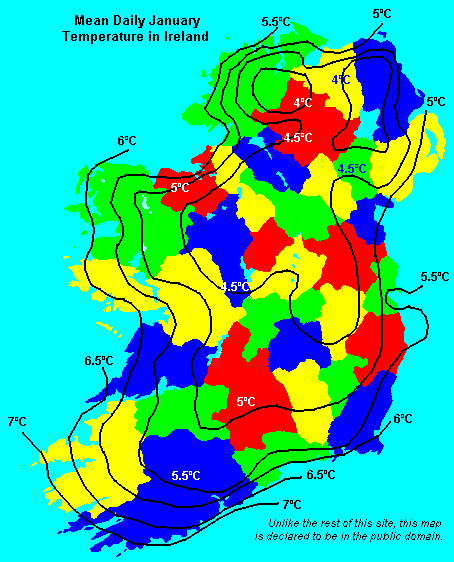
In Irish homes, RH commonly fluctuates between 55% and 85%, but coastal areas often stay at the upper end for long periods.
Absolute vs Relative Humidity
- Absolute humidity measures how much water vapour is physically present.
- Relative humidity measures how “full” the air is at a certain temperature.
Ireland’s cool climate increases RH because colder air holds less moisture — meaning even normal moisture levels can push RH into problematic zones.
Indoor Factors That Increase Moisture
- Drying clothes indoors
- Poor or blocked ventilation
- Insufficient underfloor airflow in older houses
- Uninsulated concrete slabs
- Leaking pipes or gutters
- Daily activities: cooking, showering, breathing
Why Moisture Matters for Flooring
Moisture affects flooring in several ways:
- Swelling and expansion (laminate, solid wood)
- Cupping or crowning (hardwood)
- Peeling edges (vinyl tiles poorly installed)
- Mould under flooring (carpet, wood, plywood)
- Adhesive failures (vinyl, LVT, SPC if bonded incorrectly)
- Bubbling (laminate without vapor barrier)
The higher and more sustained the humidity, the more likely flooring problems occur.

II. Ireland’s County-by-County Humidity Overview (2026)
Ireland’s humidity varies significantly by county. Coastal and western regions experience persistent moisture exposure, while inland counties remain more stable.
This section groups counties into three practical categories:
- High-Humidity Zones (Atlantic & coastal exposure)
- Moderate-Humidity Zones (urban/coastal mix)
- Stable/Less Humid Zones (inland sheltered regions)
This is a homeowner-friendly, installer-friendly breakdown based on climate behaviour patterns — not numerical meteorological claims.
A. High-Humidity Counties (Most Challenging for Flooring)
Counties generally affected by strong Atlantic winds, heavy rainfall, coastal storms, and long periods of elevated humidity include:
Galway, Mayo, Clare, Kerry, Sligo, Donegal
Homes here face:
- Persistent damp air
- Wind-driven rain
- Slower drying times
- Higher risk of subfloor moisture
- More condensation indoors
- Cold surfaces that trap moisture
Common Flooring Problems in These Counties
- Laminate swelling at edges
- Hardwood cupping or warping
- Subfloor dampness under vinyl
- Mould under the carpet
- Failed adhesive bonds
| Flooring Type | Suitability |
|---|---|
| SPC (Stone Plastic Composite) | Excellent — waterproof, dimensionally stable |
| High-quality LVT/LVP | Excellent with proper subfloor prep |
| Porcelain or ceramic tile | Excellent |
| Engineered wood (thick top layer) | Good if RH controlled |
| Laminate | Only if high-quality AC4+ and a vapor barrier are installed |
| Solid wood | Not recommended |
Recommended Underlays
- Full vapor barrier system
- Acoustic + moisture underlay
- Raised membrane systems for old cottages
B. Moderate-Humidity Counties (Balanced Conditions)
Counties with mixed coastal and inland microclimates:
Dublin, Wicklow, Waterford, Louth, Cork (city-inland mix)
These counties experience:
- Moderate RH throughout the year
- Local differences between coastal suburbs and inland towns
- Better drying conditions compared to the West Coast counties
Typical Flooring Behaviour
- Engineered wood performs well
- Laminate is stable if acclimatised and protected
- Vinyl and SPC remain safe choices
- Subfloors can vary heavily in older terraces or basements
| Flooring Type | Suitability |
|---|---|
| LVT/SPC | Excellent |
| Engineered wood | Very good |
| Laminate | Good with vapor barrier |
| Solid hardwood | Possible in well-ventilated homes |
| Tile | Excellent |
C. Stable / Lower-Humidity Counties (Most Flooring Types Perform Well)
These counties are more sheltered from strong Atlantic moisture:
Kildare, Meath, Westmeath, Laois, Kilkenny, Carlow, Tipperary, Offaly
They typically have:
- More stable RH ranges
- Less condensation risk
- Lower wind-driven rain levels
Best Flooring Choices
Nearly all flooring types are suitable, provided subfloor moisture is within normal ranges.
| Flooring Type | Suitability |
|---|---|
| Engineered wood | Excellent |
| Laminate | Excellent |
| LVT/SPC | Excellent |
| Solid hardwood | Good if acclimatised |
| Carpet | Fair, avoid damp rooms |
Points to Watch
- Older concrete slabs may lack moisture barriers
- Rural cottages may need ventilation upgrading
County-Level Table Summary
| County Category | Typical RH Behaviour | Best Flooring Types | Risk Level |
|---|---|---|---|
| High Humidity (Galway, Mayo, Clare, Kerry, Donegal, Sligo) | Damp, coastal, storm-exposed | SPC, LVT, Tile | High |
| Moderate Humidity (Dublin, Wicklow, Waterford, Louth, Cork) | Mixed climates | Engineered, Vinyl, Laminate | Medium |
| Lower Humidity (Meath, Kildare, Kilkenny, Laois, Tipperary, Offaly) | More stable, inland | All major flooring types | Low |
Flooring Types & Their Moisture Performance in Ireland
Choosing the right flooring material for Irish homes requires understanding how different products react to moisture, humidity, and temperature fluctuations. The Irish climate—especially in 2026 with wetter seasons predicted—can place significant stress on flooring materials. Below is a detailed breakdown of how each major flooring type behaves in humid Irish environments.
1. Laminate Flooring & Moisture
Laminate is popular for affordability and visual appeal, but it is one of the flooring types most sensitive to moisture.
Typical Moisture Issues
- Swelling at board edges
- Peaking between joints
- Bubbling when moisture seeps underneath
- Gaps forming during cold, wet winters
Recommended Conditions
- Ideal RH: 40–65%
- Requires vapor barrier underlay on concrete
- Needs 24–48 hours acclimatisation
Where Laminate Performs Well
- Inland counties with more stable humidity
- Upper floors of houses
- Rooms away from kitchens and bathrooms
Where Laminate Struggles
- Galway, Mayo, Clare, Donegal coastal homes
- Kitchens with moisture from cooking
- Older homes with damp concrete slabs
Laminate can be used even in higher-humidity counties, but only with proper moisture protection and higher-quality boards (AC4–AC6 recommended).
2. Vinyl Flooring (LVT) & Moisture
Vinyl is far more moisture-resistant than laminate, making it ideal for Irish climates.
Advantages in Humid Homes
- Waterproof surface
- Dimensionally stable
- No swelling
- Works well over imperfect subfloors (with prep)
- Suitable for kitchens and bathrooms
Installation Notes
- Floating vinyl planks benefit from an acoustic underlay
- Glue-down vinyl requires a dry subfloor and correct adhesive
- Expansion gaps must still be maintained
Where Vinyl Excels
- Coastal counties
- Apartments with condensation issues
- Basement-level rooms
- High-traffic rental properties
Vinyl offers consistently strong performance regardless of Irish humidity levels.
3. SPC Flooring (Stone Plastic Composite)
This is the best overall performer in Irish humidity.
Why SPC Is Ideal for Ireland
- Completely waterproof
- Rigid core resists warping
- Minimal expansion/contraction
- Handles temperature and humidity swings
- Works on imperfect subfloors
Perfect for:
- Galway, Clare, Mayo, Sligo
- Dublin apartments with condensation
- Houses with underfloor heating
- Rental properties
- Kitchens & bathrooms
SPC is the top recommendation in most high-humidity counties.
4. Engineered Wood Flooring & Moisture
Engineered wood provides real wood beauty with better moisture tolerance than solid hardwood.
Moisture Behaviour
- Multi-layer construction offers stability
- Still sensitive to extreme RH
- Expands and contracts more gently
Where Engineered Wood Works Well
- Moderate-humidity counties
- Inland areas
- Living rooms and bedrooms
- Homes with consistent heating
Risk Areas
- Coastal zones during winter
- Homes without adequate ventilation
- Below-ground rooms
Engineered wood is suitable for Ireland, but homeowners must control indoor humidity.
5. Solid Hardwood Flooring & Moisture
Solid wood is the most sensitive flooring type in Ireland due to its single-piece construction.
Common Failures in Ireland
- Cupping (edges rise)
- Crowning (centre swells)
- Gapping during winter
- Warping from subfloor moisture
- Mould development underneath
Best Used Only When:
- Home humidity is stable
- A high-quality vapor barrier is installed
- Subfloor is extremely dry
- Not near coastal counties
Solid wood floors require ideal conditions—something Ireland’s coastal and western counties rarely offer.
6. Carpet & Moisture
Carpet is comfortable but prone to damp, mould, and dust mites.
Where Carpet Fails
- Old cottages with poor ventilation
- Ground-floor rooms on concrete
- Humid counties with damp winters
Where It Works
- Well-ventilated bedrooms
- Upper floors
- Dry inland counties
Carpet is not suitable for high-humidity or poorly insulated homes.

7. Tile & Moisture
Tile is the most moisture-resistant flooring option.
Benefits
- Impervious to water
- Ideal for kitchens, bathrooms, hallways
- Long lifespan
- Easy maintenance
Drawbacks
- Cold underfoot in winter
- Hard surface
- Requires proper subfloor stability
Tile is excellent across all Irish counties.
Subfloor Moisture: Testing & Preparation for Irish Homes
Even the best flooring will fail if installed over a damp or incorrectly prepared subfloor. Ireland’s older housing stock—combined with coastal humidity—makes subfloor assessment essential.
Concrete Subfloors in Ireland
Many Irish homes built from the 1960s–1990s have concrete slabs without a modern moisture barrier. These slabs:
- Absorb ground moisture
- Retain damp during winter
- Release moisture upward during heating cycles
- Can cause adhesive failures
Essential Checks
- Moisture test (RH test) recommended
- Visual inspection for dark patches
- Smell for damp odours
- Check for efflorescence (white salt deposits)
When to Use a Damp-Proof Membrane (DPM)
A liquid DPM or plastic sheet barrier is recommended when:
- Flooring is vinyl, SPC, laminate
- Subfloor tests exceed safe RH thresholds
- Installing flooring on ground-level or basements
- The county has high humidity (Galway, Mayo, Kerry, Clare)
Timber Subfloors in Ireland
Suspended timber floors are common in older houses.
Risk Factors
- Poor airflow under the boards
- Blocked vents
- Rising damp
- Rot in joists
- Mould growth under carpet or laminate
How to Prepare
- Ensure vents are clear
- Replace damaged boards
- Install breathable underlay (not plastic sheeting)
- Improve ventilation if RH is consistently high
Why Acclimatisation Matters in Ireland
Irish humidity swings make acclimatisation essential, especially for wood and laminate.
General Rule
- Leave flooring in the room for 24–72 hours
- Maintain normal living temperature
- Keep boxes sealed until installation
Without acclimatisation, boards can swell or shrink after installation.
V. Best Underlays for Moisture Control (2026 Guide)
Underlay plays a major role in moisture protection. Homeowners often underestimate it, yet it is the hidden layer that determines long-term flooring success.
1. Vapor Barrier Underlay
Best for: laminate, vinyl, SPC on concrete.
Benefits:
- Prevents rising moisture
- Protects from condensation
- Reduces risk of board swelling
High-humidity counties require this underlay as standard.
2. Acoustic + Moisture Underlay
Used in:
- Apartments
- Semi-detached homes
- Rooms needing sound insulation
These combine sound absorption and moisture protection.
3. Raised Membrane System
Ideal for:
- Old cottages
- Damp concrete
- Homes in Galway, Mayo, Kerry
Creates airflow beneath flooring.
4. Cork Underlay (Moisture Warning)
Not suitable for:
- Damp rooms
- Concrete without moisture barriers
Cork absorbs moisture and can grow mould in Irish conditions.
VI. Room-by-Room Moisture Suitability Guide for Irish Homes (2026 Edition)
Moisture does not affect every room the same way. Kitchens, bathrooms, hallways, and ground-floor spaces have very different moisture exposure and therefore require different flooring strategies. Below is a detailed breakdown tailored specifically to Irish home design, insulation levels, and climate conditions in 2026.
1. Kitchens
Kitchens are high-moisture areas due to cooking steam, spills, and frequent cleaning.
Best Flooring Options
- SPC flooring – waterproof, stable, ideal for Irish kitchens
- LVT / Vinyl – excellent resistance to spills
- Porcelain tile – best long-term durability
Not Recommended
- Solid hardwood
- Standard laminate without moisture-rated core
Special Notes
- Subfloor must be dry before installation
- Silicone perimeter sealing recommended
2. Bathrooms
Bathrooms have extreme humidity spikes and direct water contact.
Best Flooring Options
- Tile (porcelain or ceramic)
- SPC flooring
- Glue-down vinyl
Do Not Use
- Laminate
- Engineered wood
- Solid wood
- Carpet
Even “water-resistant” laminates are not suitable for Irish bathrooms, where moisture levels stay high for hours after showers.
3. Hallways & Entrances
Hallways experience moisture from shoes, wet coats, and cold outdoor air entering the home.
Best Choices
- SPC
- LVT
- Tile
If Using Laminate
- Must include a full moisture barrier
- Place mats near entrances
Irish-weather reality: hallways are among the first places where laminate edges start to swell.
4. Living Rooms & Bedrooms
These rooms typically have the most stable humidity levels.
Best Choices
- Engineered wood
- High-quality laminate
- Carpet (if room is ventilated)
- SPC or vinyl for modern homes
Avoid
- Solid wood in coastal or western counties

5. Apartments
Apartments in Ireland tend to hold more moisture than detached houses.
Reasons:
- Smaller ventilation paths
- Higher occupancy density
- Limited cross-ventilation
Best Flooring Choices
- SPC
- LVT
- Laminate with rated moisture resistance
Avoid
- Carpet in non-ventilated apartments
6. Sunrooms & Conservatories
These rooms face extreme temperature + humidity swings.
Best
- SPC
- Tile
Worst
- Laminate
- Solid wood
- Engineered wood
- Carpet
VII. The 2026 Flooring Suitability Matrix for Irish Homes
This table summarises what flooring works best based on both room type and county humidity category.
Flooring Suitability by County Humidity Level
| Flooring Type | High-Humidity Counties | Moderate Counties | Stable Inland Counties |
|---|---|---|---|
| SPC | ⭐⭐⭐⭐⭐ | ⭐⭐⭐⭐⭐ | ⭐⭐⭐⭐⭐ |
| LVT / Vinyl | ⭐⭐⭐⭐⭐ | ⭐⭐⭐⭐⭐ | ⭐⭐⭐⭐⭐ |
| Tile | ⭐⭐⭐⭐⭐ | ⭐⭐⭐⭐⭐ | ⭐⭐⭐⭐⭐ |
| Engineered Wood | ⭐⭐⭐ | ⭐⭐⭐⭐ | ⭐⭐⭐⭐⭐ |
| Laminate | ⭐⭐ | ⭐⭐⭐ | ⭐⭐⭐⭐ |
| Solid Hardwood | ⭐ | ⭐⭐ | ⭐⭐⭐⭐ |
| Carpet | ⭐ | ⭐⭐ | ⭐⭐⭐ |
Key insight:
The wetter the county, the more important dimensional stability and waterproofing become.
Flooring Suitability by Room Type
| Room | Best Options | Avoid |
|---|---|---|
| Kitchen | SPC, Vinyl, Tile | Laminate, Wood |
| Bathroom | Tile, SPC | Laminate, Wood, Carpet |
| Living Room | Engineered, SPC, Laminate | Wood in humid counties |
| Bedroom | Engineered, Laminate, Carpet | Carpet in damp homes |
| Hallway | SPC, Vinyl, Tile | Laminate (if no barrier) |
| Apartment | SPC, Vinyl | Carpet (poor ventilation) |
| Sunroom | SPC, Tile | Laminate, Wood |
VIII. Common Moisture Problems in Irish Homes & How to Prevent Them
Ireland’s damp climate makes certain flooring failures extremely common. Understanding these patterns helps prevent costly replacements.
1. Cupping (Hardwood & Engineered Wood)
What it is:
Edges rise while the centre dips.
Cause:
Moisture absorbed from below or above.
Common in:
- Dublin basements
- Galway coastal homes
- Mayo cottages
Prevention:
- Install vapor barrier
- Maintain stable RH
- Choose engineered instead of solid wood
2. Crowning (Opposite of Cupping)
Centre rises while edges dip.
Cause:
Excessive surface moisture from spills or cleaning.
3. Swelling & Joint Peaking (Laminate)
Laminate boards absorb moisture quickly, causing edges to rise.
Common Causes
- Unsealed kitchen perimeters
- Missing vapor barriers
- High RH rooms
- Improper cleaning (wet mops)
4. Mould Under Flooring
Mould thrives when:
- Carpet sits on damp concrete
- Subfloors lack ventilation
- Homes in Kerry or Galway use the wrong underlay
- Leaks or condensation go unchecked
Prevention:
- Proper underlay system
- Good ventilation
- Avoid carpet in damp homes

5. Adhesive Failures Under Vinyl Flooring
In Ireland, this happens when:
- Subfloor moisture exceeds adhesive limits
- Incorrect adhesive chosen
- Underfloor heating raises moisture movement
6. Underfloor Heating Expansion Issues
Underfloor heating is very common in modern Irish homes. However, it increases risks if materials are not chosen properly.
Safe With UFH
- SPC
- LVT
- Engineered wood
Risky
- Solid hardwood
- Cheap laminate
IX.Expert Recommendations for 2026 (Ireland-Specific)
Based on climate patterns, construction standards, and observed flooring performance across Ireland, here are the 2026 recommendations for maximum flooring longevity.
1. Always Test Subfloor Moisture Before Installation
Especially in:
- Galway
- Clare
- Mayo
- Kerry
- Sligo
- Coastal Cork
Moisture tests prevent >50% of common flooring failures.
2. Choose SPC in High-Humidity Counties
SPC should be the default recommendation for:
- Coastal homes
- Apartments
- Renovations of older houses
- Holiday homes
3. Use Engineered Wood Instead of Solid Wood
Engineered wood is Ireland’s most practical natural-wood option because:
- It tolerates humidity swings
- It expands less
- It remains stable in both coastal and inland towns
4. Never Install Laminate Without a Vapor Barrier
Concrete slabs in Ireland—especially older ones—often release moisture upward.
A vapor barrier underlay is mandatory, not optional.
5. Avoid Carpet in Damp Bedrooms or Ground Floors
Unless the home has excellent ventilation systems, carpets trap moisture and grow mould.
6. For Sunrooms, Only Use SPC or Tile
Temperature swings destroy wood and laminate.
7. Use Acoustic + Moisture Underlays in Apartments
Prevents:
- Echo
- Moisture transfer
- Cold floors
8. Maintain Indoor RH Between 40–60%
This is the sweet spot for:
- Wood stability
- Laminate stability
- Comfort
- Mold prevention
A dehumidifier is essential for many Irish homes, especially during winter.

X. County-Specific Case Studies (Realistic Irish Scenarios)
These examples illustrate how moisture affects different homes across Ireland. They are fictional but fully realistic based on Irish climate patterns and housing structures.
Case Study 1 — Coastal Galway Home with Winter Dampness
Location: Barna, Co. Galway
House Type: 1980s detached home, concrete slab
Issue: Persistent dampness appearing beneath laminate flooring every winter
Symptoms:
- Swollen laminate edges
- Cold, damp smell
- Dark patches on concrete after removal
Cause:
High coastal humidity + concrete slab without moisture barrier.
Solution:
- Install full liquid DPM
- Replace laminate with SPC flooring
- Improve ventilation in utility room
Outcome:
No moisture issues after winter 2025.
Case Study 2 — Dublin Apartment with Condensation
Location: Dublin 8
House Type: Modern apartment
Issue: Condensation collecting under carpets
Symptoms:
- Mould under grippers
- Musty smell in bedroom
Cause:
Limited ventilation + shower steam + winter humidity.
Solution:
- Remove carpet
- Install acoustic + moisture underlay
- Install LVT floating floor
- Add humidity-controlled extractor fan
Outcome:
No mould, improved air quality.
Case Study 3 — Mayo Cottage with Poor Subfloor Ventilation
Location: Westport, Co. Mayo
House Type: Traditional stone cottage
Issue: Rising damp under engineered wood
Symptoms:
- Cupping
- Musty odour
- Condensation on walls
Cause:
Blocked air vents under suspended timber floor.
Solution:
- Clear vents
- Install breathable underlay
- Replace damaged boards
- Maintain indoor RH at 45–60%
Outcome:
Stable flooring performance year-round.
Case Study 4 — Cork Semi-Detached with Underfloor Heating
Location: Douglas, Cork
House Type: Semi-detached, built 2015
Issue: Engineered wood joints separating
Cause:
Underfloor heating cycles + insufficient acclimatisation.
Solution:
- Reacclimatise new engineered boards for 72 hours
- Maintain consistent heating function
- Install expansion gaps properly
Outcome:
Floor remains stable.
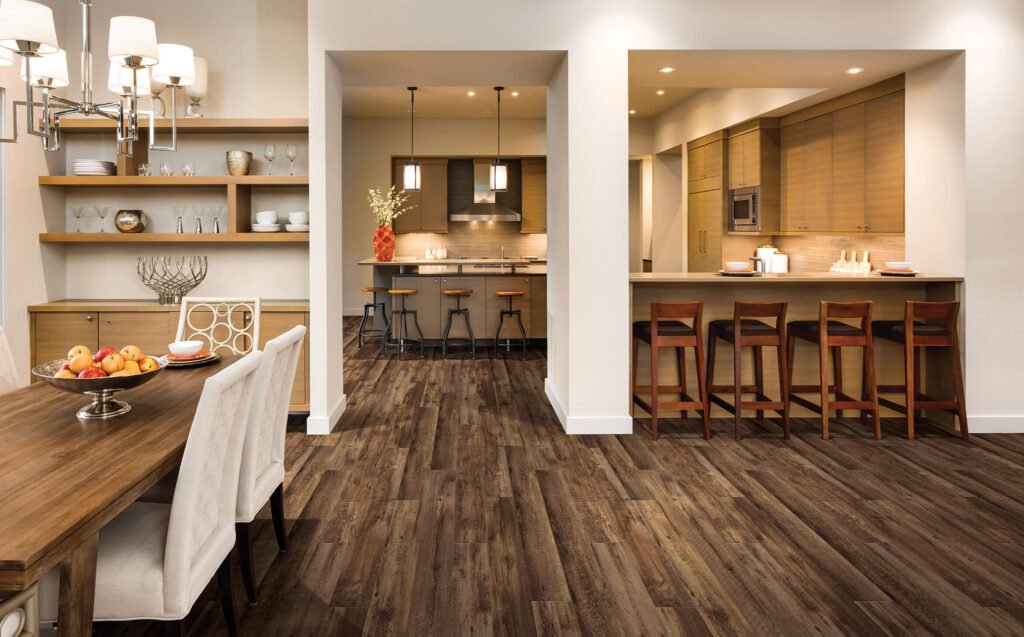
Case Study 5 — Meath New Build with Dry, Stable Conditions
Location: Navan, Co. Meath
House Type: Modern new build
Issue: None
Goal: Choose flooring for long-term durability
Recommendation:
- Laminate AC4 for bedrooms
- Engineered wood for living room
- SPC for kitchen & hallway
- Carpet for upstairs landing
Outcome:
Balanced cost, high stability, minimal maintenance.
XI. Full Ireland Flooring Recommendation Table (2026 Edition)
This master table summarises the suitability of each flooring type based on county humidity category and room type—ideal for homeowners comparing options.
A. County Category Recommendations
| County Type | Examples | Best Options | Avoid |
|---|---|---|---|
| High-Humidity Counties | Galway, Clare, Mayo, Kerry, Donegal, Sligo | SPC, Vinyl, Tile | Solid Wood, Carpet |
| Moderate Counties | Dublin, Wicklow, Waterford, Louth, Cork | Engineered Wood, SPC, Laminate | Solid Wood (depends on home) |
| Dry/Stabler Inland Counties | Meath, Kildare, Offaly, Laois, Kilkenny, Westmeath | Engineered, Laminate, SPC, Tile | Carpet in damp rooms |
B. Suitability Matrix by Flooring Type
| Flooring Type | Humid Counties | Moderate Counties | Inland Counties |
|---|---|---|---|
| SPC | ⭐⭐⭐⭐⭐ | ⭐⭐⭐⭐⭐ | ⭐⭐⭐⭐⭐ |
| Vinyl (LVT/LVP) | ⭐⭐⭐⭐⭐ | ⭐⭐⭐⭐⭐ | ⭐⭐⭐⭐⭐ |
| Tile | ⭐⭐⭐⭐⭐ | ⭐⭐⭐⭐⭐ | ⭐⭐⭐⭐⭐ |
| Engineered Wood | ⭐⭐⭐ | ⭐⭐⭐⭐ | ⭐⭐⭐⭐⭐ |
| Laminate | ⭐⭐ | ⭐⭐⭐ | ⭐⭐⭐⭐ |
| Solid Hardwood | ⭐ | ⭐⭐ | ⭐⭐⭐⭐ |
| Carpet | ⭐ | ⭐⭐ | ⭐⭐⭐ |
C. Room Type Recommendations
| Room | Best Options | Avoid |
|---|---|---|
| Kitchen | SPC, LVT, Tile | Laminate, Solid Wood |
| Bathroom | Tile, SPC | All wood & laminate |
| Hallway | SPC, Vinyl, Tile | Laminate without barrier |
| Living Room | Engineered, SPC, Laminate | Solid wood (humid homes) |
| Bedrooms | Engineered, Laminate, Carpet | Carpet in damp homes |
| Sunroom | SPC, Tile | Wood, Laminate |
| Apartment | SPC, Vinyl | Carpet (humidity retention) |
XII. Ireland’s 2026 Moisture & Flooring FAQ
1. What flooring is best for high humidity in Ireland?
SPC flooring is the most reliable option for high-humidity counties because it is waterproof, dimensionally stable, and resistant to Ireland’s coastal moisture conditions.
2. The ideal indoor humidity level for flooring?
The ideal RH range is 40–60%. This prevents mould, cupping, swelling, and adhesive failures.
3. Which Irish counties have the highest humidity levels?
Galway, Kerry, Mayo, Clare, Sligo, and Donegal experience the highest sustained humidity due to Atlantic influence.
4. Can laminate flooring handle Irish humidity?
Yes, but only if high-quality laminate is used along with a vapor barrier underlay and the home maintains stable humidity.
5. Is engineered wood good for Irish homes?
Yes. Engineered wood performs well in moderate-humidity counties and inland areas. It is more stable than solid wood.
6. Can solid hardwood be installed in Ireland?
Yes, but it should only be used in inland counties and dry, well-ventilated homes. It is not suitable for coastal or humid homes.
7. Is vinyl flooring waterproof?
Yes. LVT/LVP is 100% waterproof and excellent for kitchens, apartments, and moisture-prone rooms.
8. Do all concrete subfloors in Ireland need a moisture barrier?
Not all, but many do, especially in older homes. A moisture test is strongly recommended.
9. Can flooring fail because of humidity even if the product is high-quality?
Yes. Installation conditions matter as much as the product. Poor acclimatisation or lack of underlay can cause failures.
10. What is the safest flooring for bathrooms in Ireland?
Tile is the safest.
SPC is the best alternative for homeowners avoiding tile.
XIII. Conclusion
Moisture is the single most important environmental factor affecting flooring in Irish homes. With wetter winters, higher humidity variability, and Ireland’s diverse county-level climate conditions, choosing the right flooring requires more than comparing styles and prices—it demands understanding how materials behave in real Irish environments.
This 2026 Flooring Suitability Guide provides homeowners, installers, and landlords with county-specific insights, subfloor preparation advice, and expert material recommendations. Whether your home faces coastal winds in Galway, urban condensation in Dublin, or stable inland conditions in Meath, selecting the right flooring can prevent moisture damage, reduce long-term costs, and ensure a safer, healthier home environment.