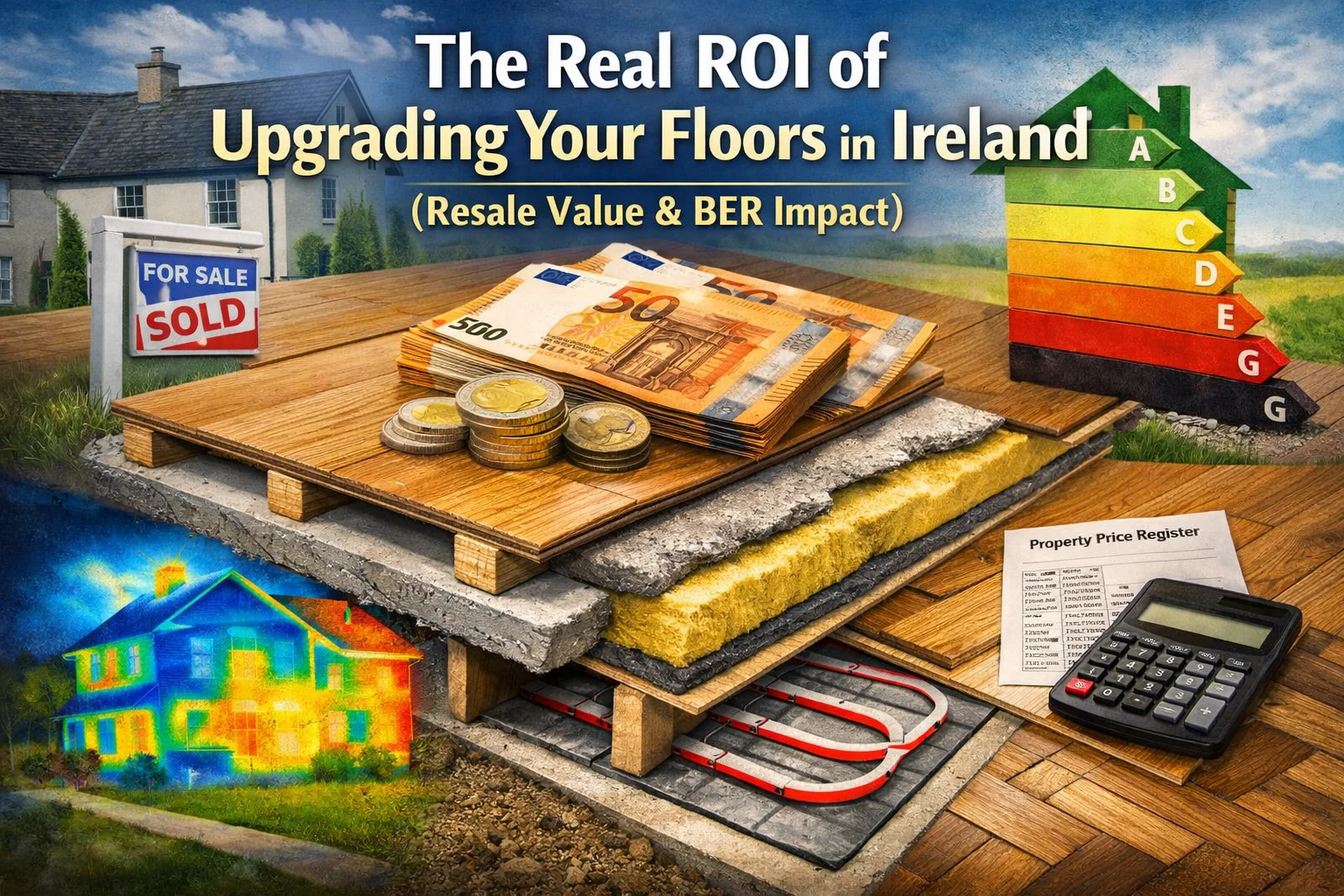
Floors in Ireland are a sneaky double-upgrade: they can be a pure “make it look classy” move and (sometimes) an energy/comfort upgrade, but only if you fix what’s underneath. In a damp, coastal, humidity-swingy country, ROI is rarely about the plank you pick. It’s about subfloors, moisture control, and whether the work supports your home’s wider BER/retrofit story.
Key Takeaways (read this, and you’re already ahead)
-
Most flooring ROI is “buyer psychology ROI”: warmth underfoot, quiet rooms, tidy thresholds, and a turnkey feel sell faster than a fancy product spec sheet.
-
Flooring only shifts BER meaningfully when the build-up changes (e.g., adding insulation to a suspended timber floor, airtightness at edges, UFH-compatible details), not just swapping laminate for engineered wood.
-
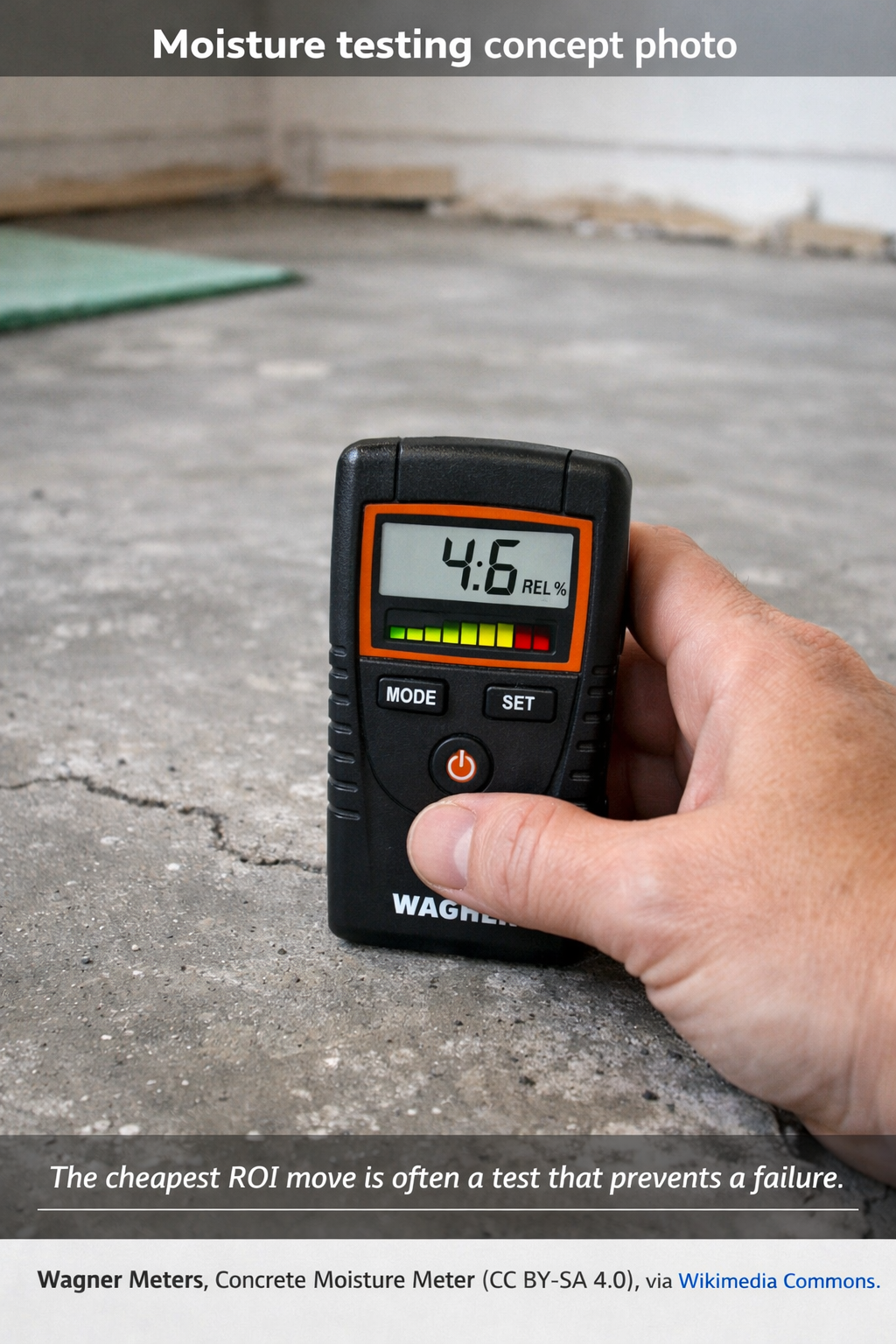
Ireland’s #1 ROI killer is moisture: install over a damp slab or a poorly ventilated void, and you can create failures that buyers/engineers spot quickly.
-
BER is an asset rating (calculated, standard assumptions), so the “energy bills” story needs careful wording and documentation.
-
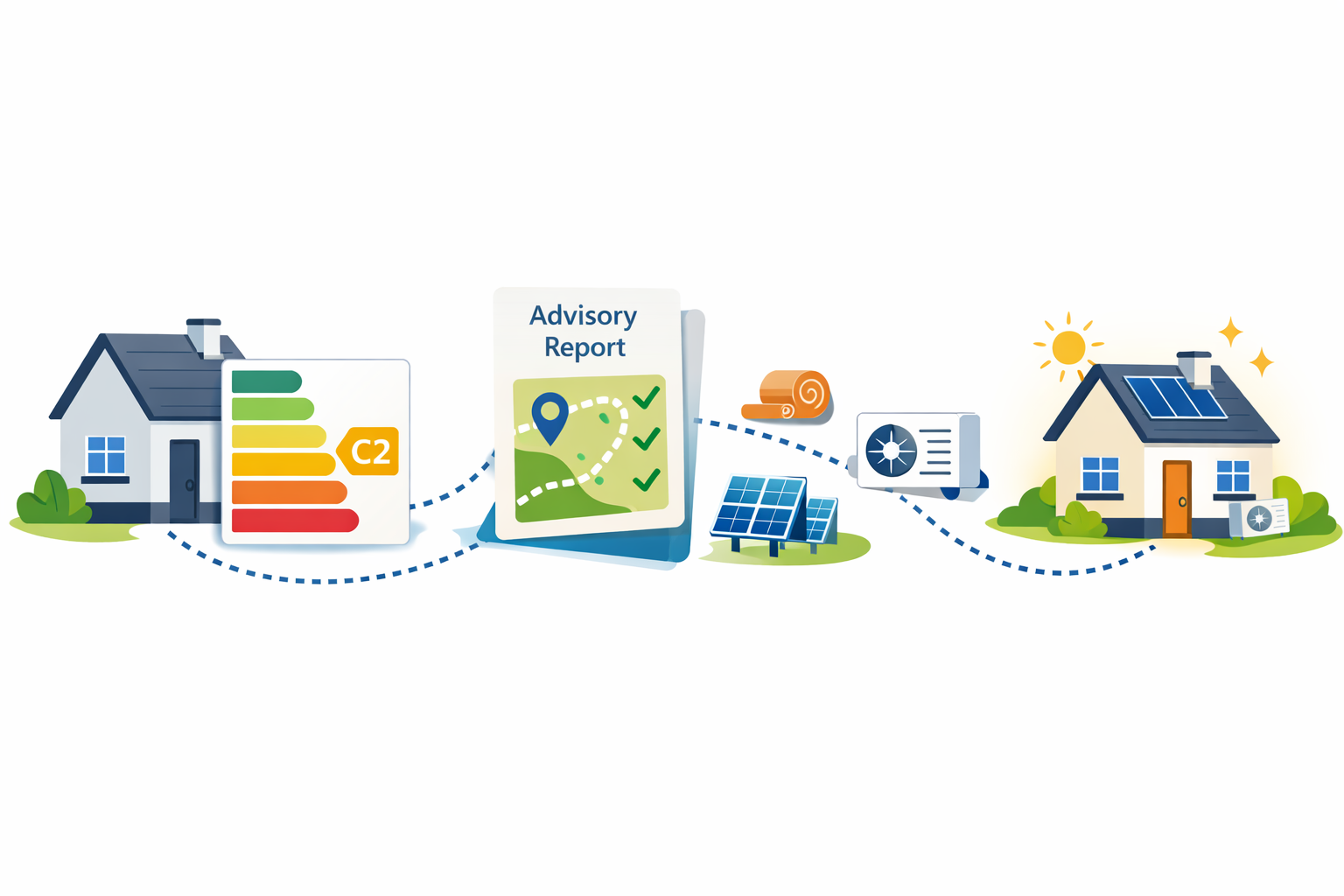
The BER certificate + advisory report pairing matters: the advisory report is effectively a roadmap of upgrade measures and sequencing.
-
Part L sets the “direction of travel” on fabric performance and detailing expectations, even when you’re doing piecemeal upgrades.
-
Price context should come from official datasets (Property Price Register, CSO RPPI) rather than pub chat.
-
Evidence suggests higher BER can be capitalised into value (premiums vary by market and period), but it’s not a guarantee and not purely caused by BER alone.
-
Document everything: specs, moisture tests, underlays, receipts, photos. In BER-land, paperwork can be worth more than promises.
Who this guide is for
Homeowners in Ireland who are upgrading floors and want to understand the real return: resale value, buyer appeal, comfort, risk reduction, and how flooring does (and doesn’t) connect to BER outcomes.
Who should get professional advice before touching anything
-
Protected structures / architectural conservation areas (breathability and materials can be non-negotiable).
-
Homes with chronic damp, mould, persistent musty smells, or visible rot.
-
Structural issues: bouncing floors, failed joists, significant cracking/settlement, unknown void conditions.
-
Apartments with management-company acoustic requirements or lease restrictions.
-
Any home where you’re considering floor insulation + airtightness changes (you can accidentally trap moisture).
What “ROI” Actually Means for Irish Floors
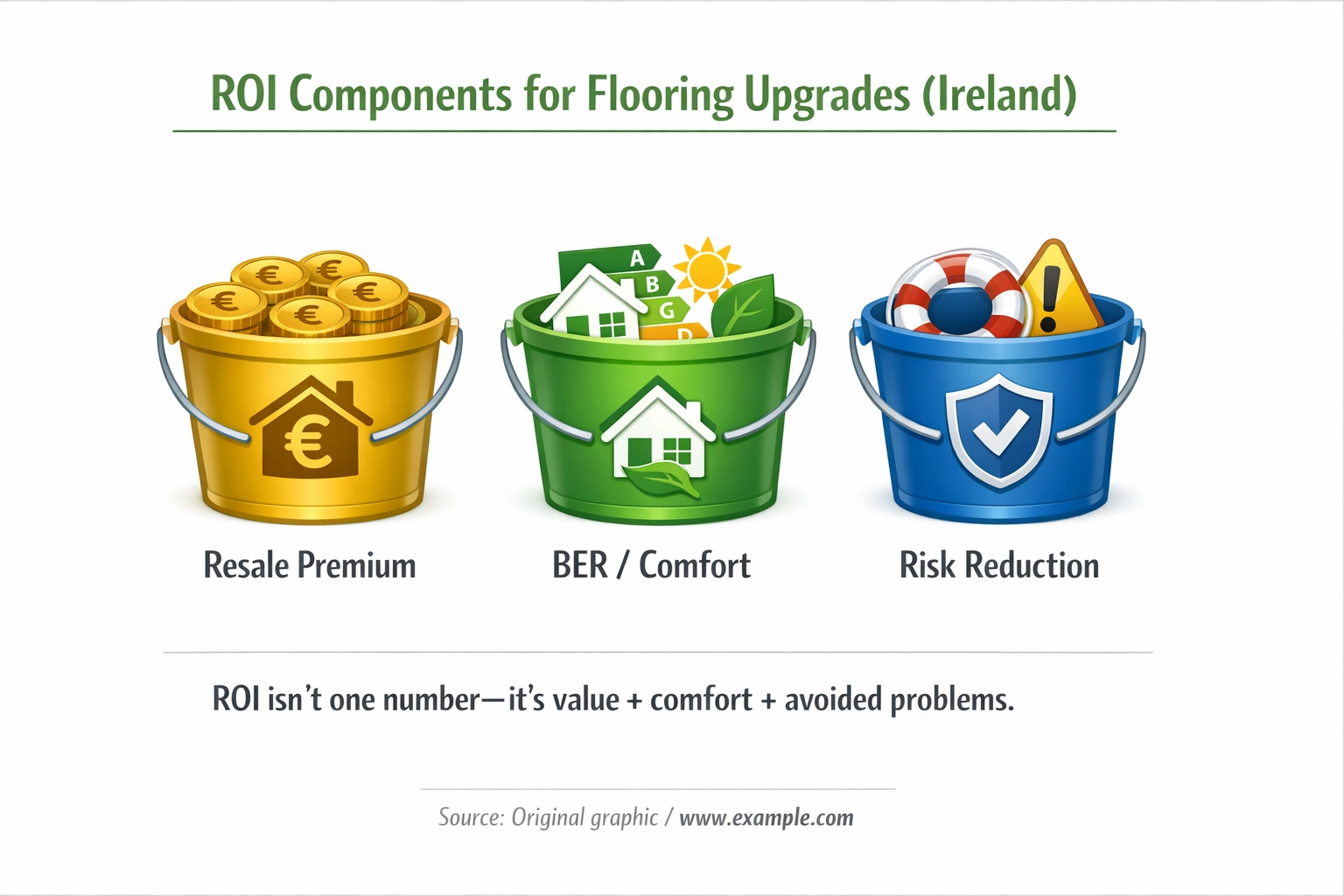
In Ireland, flooring ROI is usually (1) resale premium + speed of sale, sometimes (2) BER/comfort-driven savings, and often (3) risk reduction (avoiding damp failures and buyer objections).
ROI in 3 layers (the only sane way to think about it)
-
Resale premium (and saleability): Does the upgrade increase the likely selling price or reduce price negotiation?
-
Energy savings / BER lift: Only relevant when you change thermal performance and/or airtightness details that feed the BER calculation.
-
Risk reduction: Removing “red flags” (damp readings, squeaks, unevenness, hollow tiles, bad transitions) that trigger surveys, renegotiations, or buyer drop-off.
A simple ROI formula (with honest assumptions)
A practical homeowner version:
ROI (%) = (Value Uplift + Avoided Negotiation + 3-Year Comfort/Energy Value – Total Cost) ÷ Total Cost × 100
Where:
-
Value Uplift is a range (not a prophecy).
-
Avoided Negotiation is what you’d likely lose if a buyer flags defects.
-
Comfort/Energy Value is scenario-based (because BER is calculated and bills vary by behaviour).
Myth vs reality:
-
Myth: “New floors always add value.”
-
Reality: New floors add value when they remove doubt (moisture risk, sloppy finishes) and improve the first 90 seconds of viewing.
Where FBS Flooring fits into ROI thinking
FBS Flooring’s strongest ROI lever isn’t “selling you a plank.” It’s inspection + subfloor prep + correct system choice for Irish moisture and housing types (and that’s what protects resale credibility). Their Dublin-focused cost/prep guidance is a useful baseline even outside Dublin because the failure modes are the same: damp slabs, uneven substrates, and underestimated finishing work. (See: installation cost/prep guide and broader residential flooring guide .)
Internal links (FBS Flooring):
-
Flooring Installation (costs, prep, aftercare): https://fbsflooring.ie/flooring-installation-dublin-the-complete-local-guide-costs-preparation-fitters-aftercare/
-
Residential Flooring in Ireland guide: https://fbsflooring.ie/residential-flooring-in-ireland-the-complete-2025-guide-by-fbs-flooring/
-
Browse products: https://fbsflooring.ie/products/
The Irish Housing Reality Check (Your Floor Type Changes Everything)
Your floor construction decides whether flooring ROI is mostly cosmetic or whether it can become a genuine comfort/BER-supportive upgrade.
Ireland’s housing stock isn’t one thing; it’s eras, add-ons, and “sure it’ll do” repairs layered over decades:
-
Pre-1970: lots of suspended timber ground floors, draughts at skirting lines, and ventilation quirks.
-
Celtic Tiger (roughly late-1990s to 2008): plenty of concrete slabs and screeds; sometimes good, sometimes moisture surprises.
-
Post-2008: better standards in general, but value-engineering exists; apartments bring acoustic constraints.
-
New builds: more consistent performance expectations, often UFH-ready, but detailing still matters.
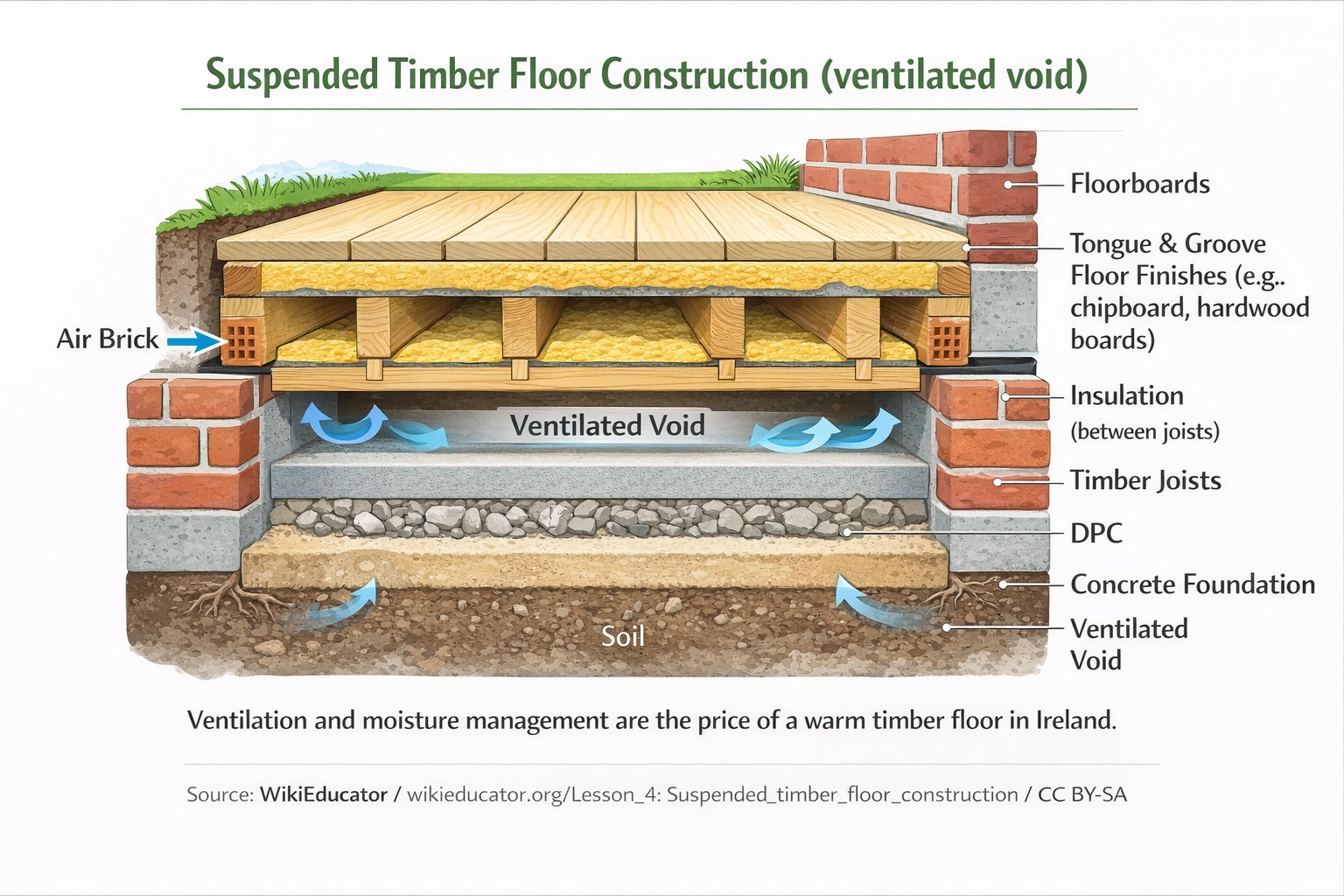
1) Suspended timber floors (common in older homes)
This is where ROI can be real, because you can address:
-
Cold floors (insulation between joists, better edge sealing)
-
Draughts at perimeter and service penetrations
-
Squeaks and bounce (repair/strengthen, refix, level)
But: do it wrong and you can trap moisture, rot joists, or block ventilation.
2) Concrete slabs (many estates)
The big Irish reality: moisture testing is not optional if you want ROI. A slab can look dry and still measure high. Covering it with the wrong underlay/DPM approach can lock moisture in and create adhesive failures, curling, or mouldy edges.
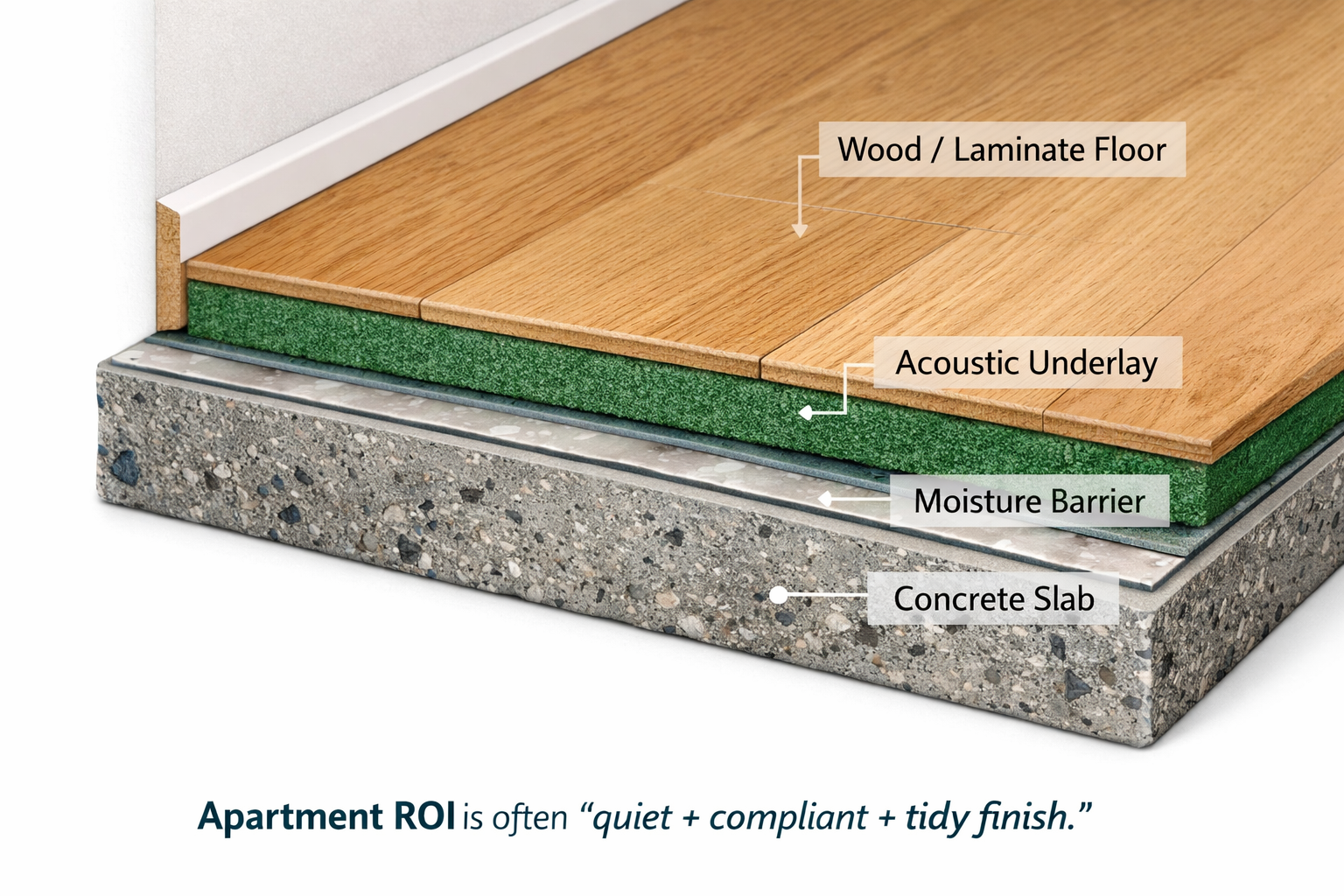
3) Apartment acoustic build-ups
Apartments turn flooring into a compliance exercise:
-
management company requirements,
-
impact sound underlay specs,
-
neighbour noise complaints.
ROI here is often quiet + compliance + clean finish rather than BER.
4) Period homes with breathability constraints
Old buildings can need vapour-open assemblies and careful material choice. A “modern sealed sandwich” can backfire.
The Irish rule: Pretty floor, bad subfloor kills ROI.
Buyers don’t always understand subfloors, but surveyors and snaggers do—and they write the story that becomes negotiation.
Internal links (FBS Flooring):
-
Moisture & humidity suitability guide: https://fbsflooring.ie/moisture-humidity-in-irish-homes-2026-flooring-suitability-guide-county-by-county-data/
-
Soundproof flooring (apartments/semi-D): https://fbsflooring.ie/soundproof-flooring-in-ireland-2026-best-choices-for-apartments-semi-detached-houses/
Flooring affects BER mainly through insulation levels, airtightness, and heating-system interaction, not through surface finish alone.
What a BER is (in plain English)
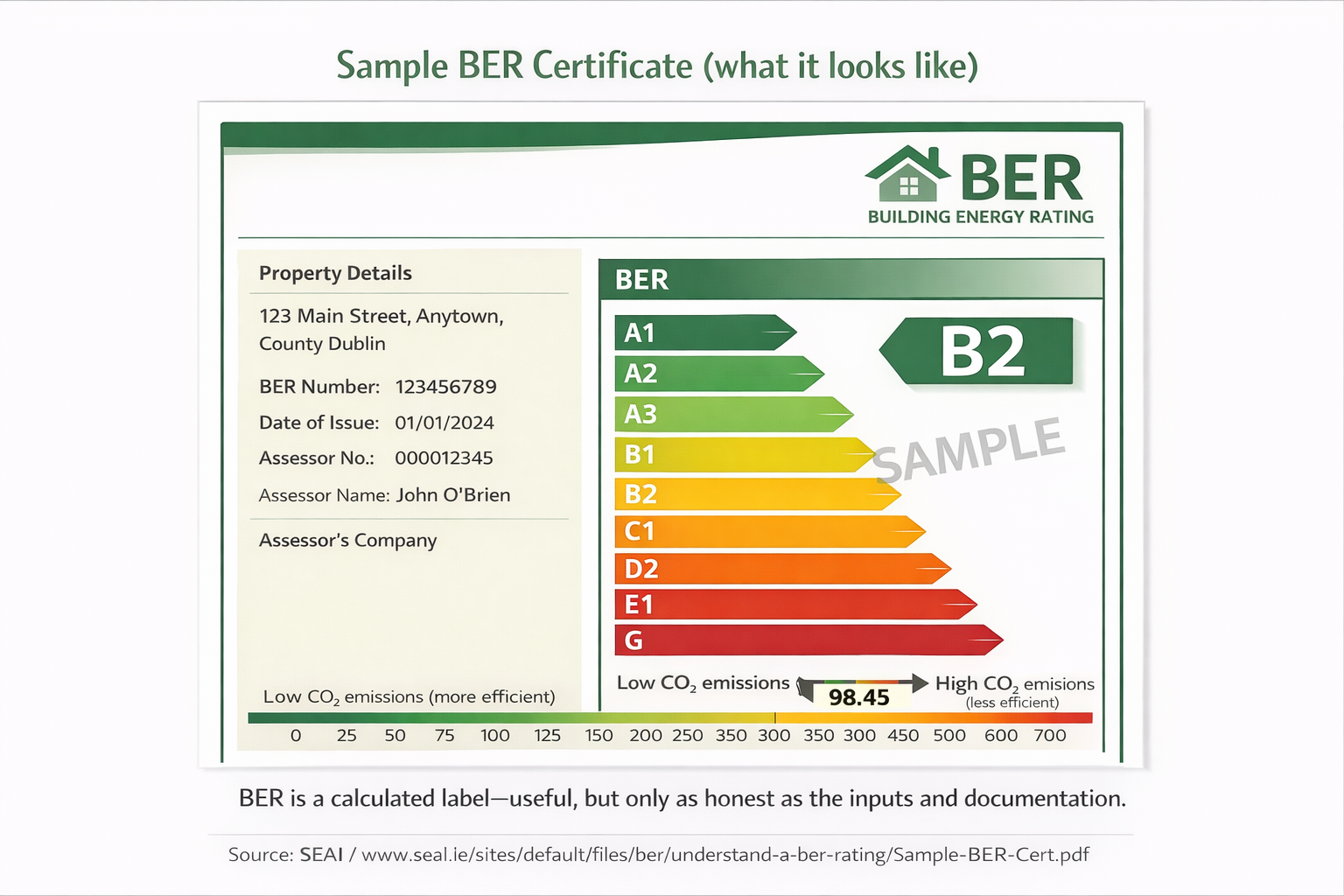
A Building Energy Rating (BER) is a standardised calculated rating of a home’s energy performance (A–G), based on the dwelling fabric and installed systems—not your personal heating habits. It uses consistent assumptions so homes can be compared fairly.
How BER assessments work (what assessors actually do)
SEAI explains that assessors gather detailed data: construction type, insulation levels (including floors), dimensions, heating systems and controls, ventilation characteristics, and documentary evidence of upgrades. Where evidence is missing, conservative defaults may be used.
BER certificate + advisory report (the “roadmap” concept)
The advisory report accompanies the BER certificate and is designed to guide upgrade measures—effectively a personalised roadmap based on the inputs in the BER assessment.
When floors can shift BER
-
Floor insulation upgrades
-
Most relevant for suspended timber floors and exposed floors over unheated spaces.
-
Can also matter for slabs if you’re doing major renovation (but retrofitting slab insulation is often disruptive).
-
-
Reduced drafts / air leakage
-
Perimeter sealing and service penetrations can reduce infiltration (but must be balanced with proper ventilation strategy).
-
-
UFH compatibility and controls (carefully stated)
-
UFH can improve comfort and sometimes system efficiency depending on the whole system design and controls.
-
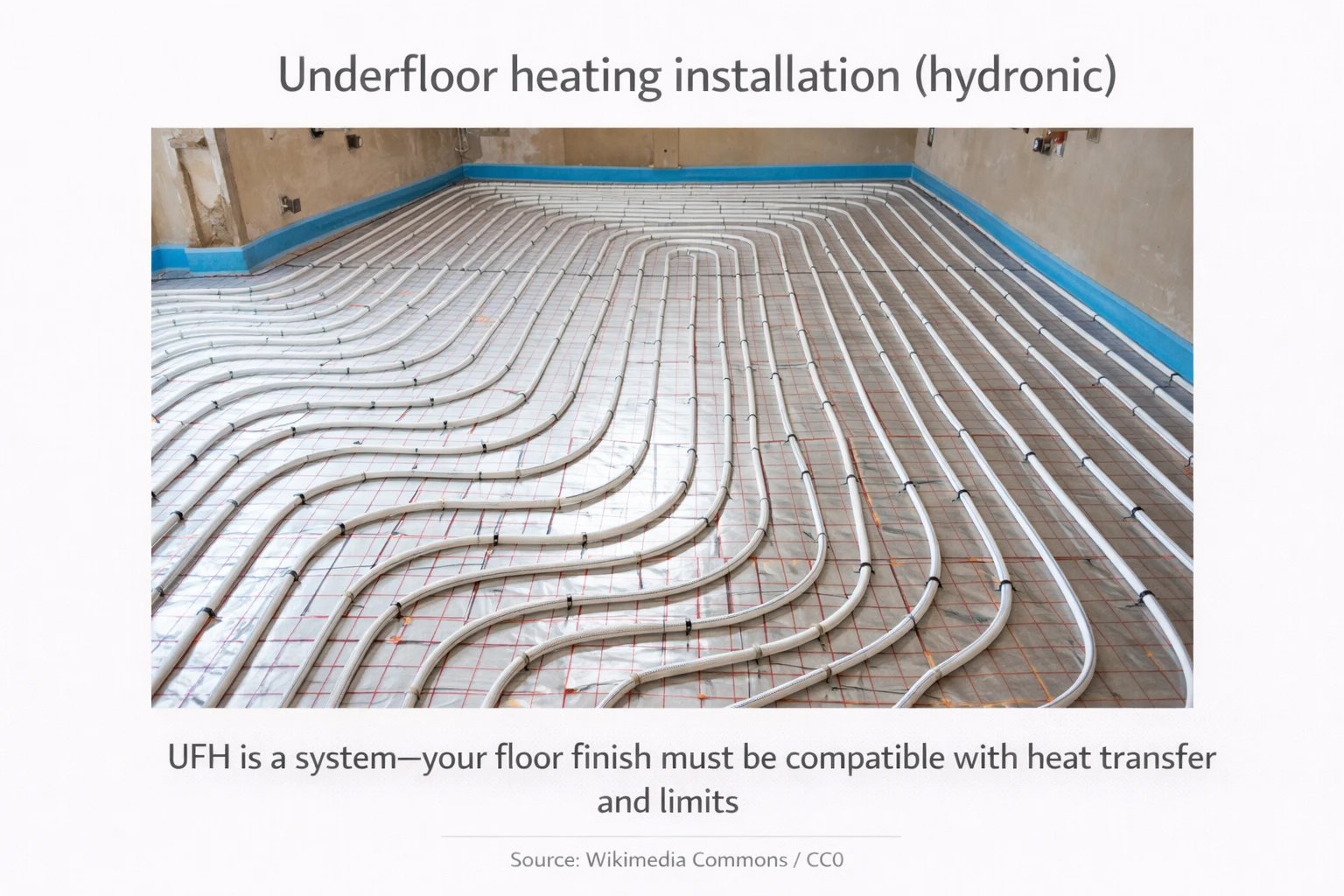
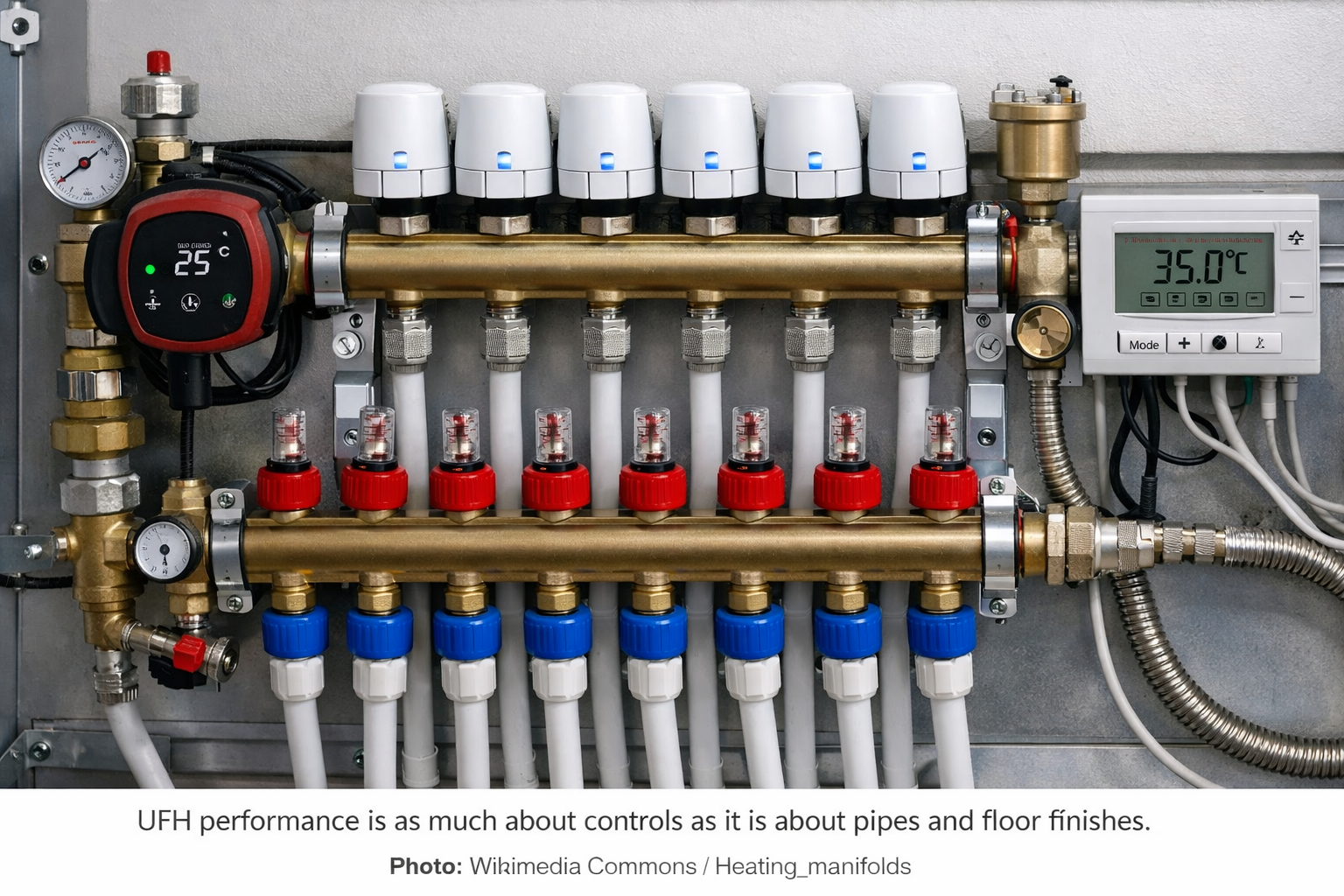
Flooring choice matters because thick/insulating layers can reduce heat transfer; UFH performance is a system issue, not a plank issue.
-
When floors usually don’t shift BER
If you’re simply swapping:
-
laminate → engineered wood,
-
carpet → laminate,
-
solid → engineered,
without changing insulation/airtightness/build-up, the BER change is usually modest because the calculation is driven by fabric U-values, ventilation, heating efficiency, and renewables.
Myth vs reality:
-
Myth: “Put in engineered wood and your BER improves.”
-
Reality: Your BER improves when you upgrade thermal and system performance (and can prove it).
Resale Value: What Irish Buyers Notice in 90 Seconds
Buyers react fast to warmth underfoot, noise, durability, and finish quality, and they’re allergic to anything that smells like damp or future expense.
The “90 seconds” checklist buyers do (often subconsciously)
-
Does the floor feel cold (especially ground floor)?
-
Do footsteps sound boomy or clicky?
-
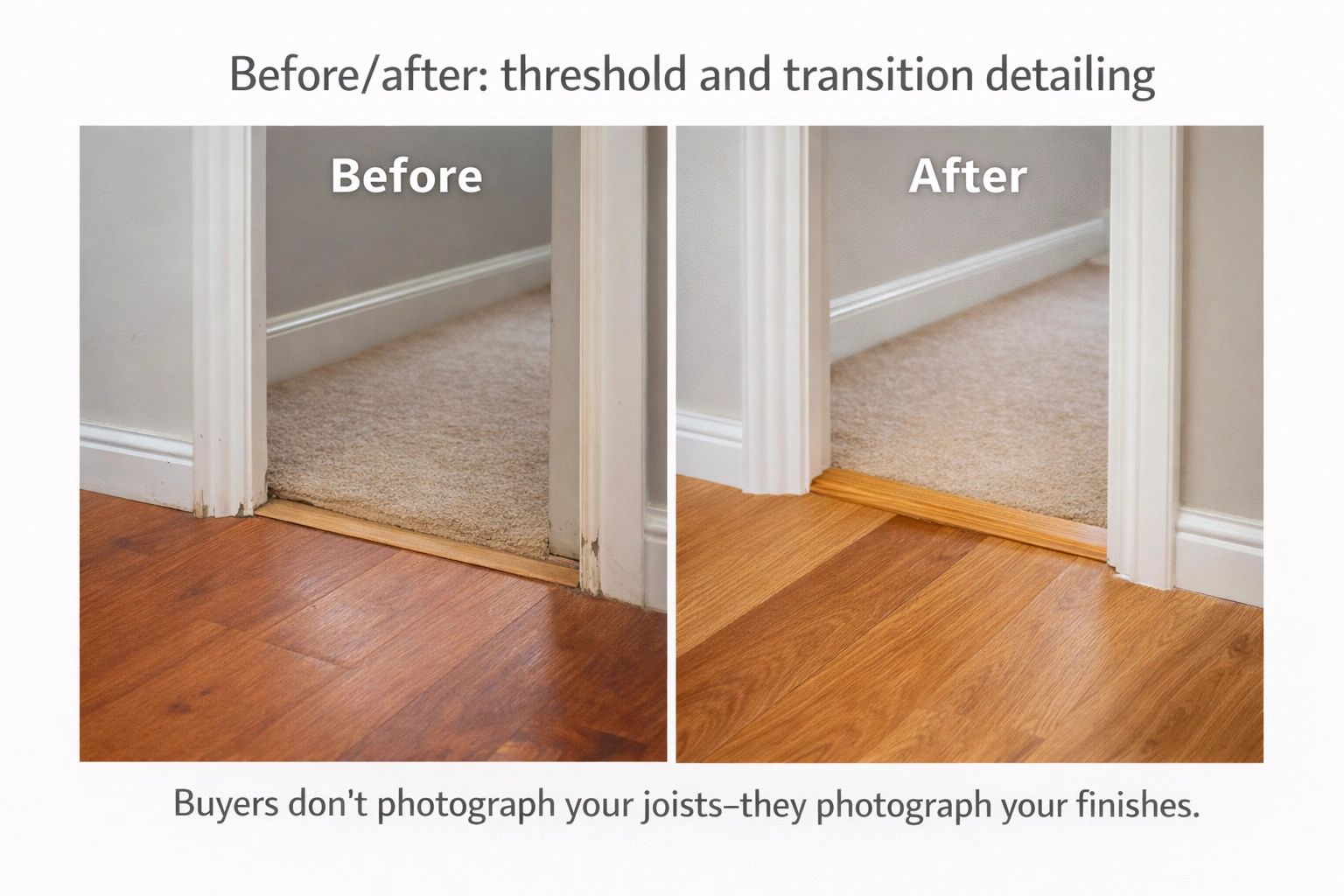
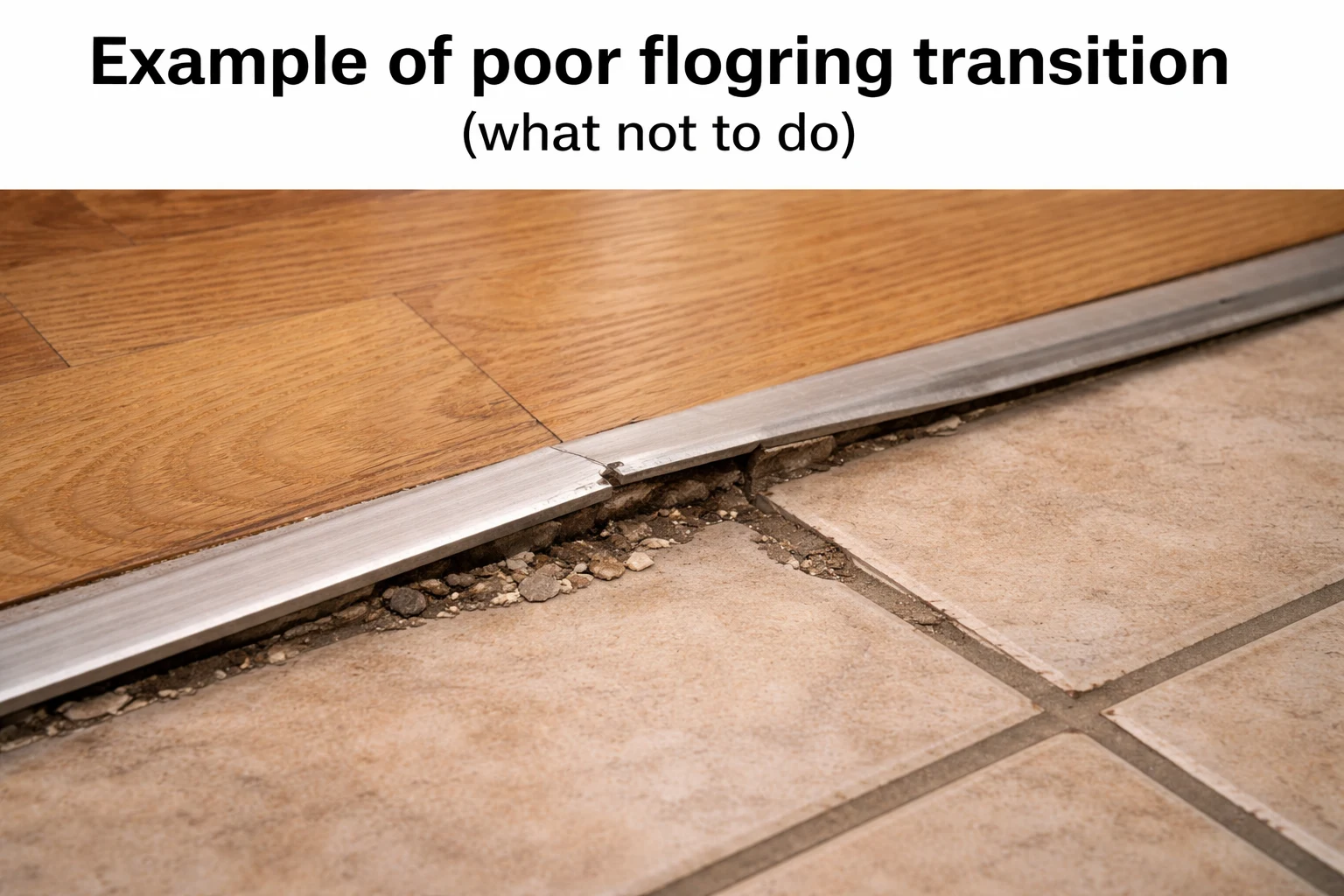
Are there gaps, lipping, bad transitions, or mismatched thresholds?
-
Does it feel turnkey or like a “weekend project” that will become a six-month saga?
What estate agents and surveyors flag
-
Unevenness (suggests subfloor issues)
-
Hollow tiles (bond failure, moisture, or poor install)
-
Damp risk indicators (edges, stains, musty smell)
-
Poor detailing (skirting gaps, unfinished thresholds, sloppy trims)
The “BER halo effect” (with evidence, not hype)
Research on Irish markets indicates energy efficiency can be capitalized into prices, with premiums varying by period, location, and market conditions. Early ESRI-linked work and related research find price effects associated with better energy ratings, but it’s not purely causal and not guaranteed for any specific upgrade.
What that means in the real world: a good BER supports a confidence narrative (“lower running costs, more comfort, less retrofit pain”). Floors contribute to that narrative only when they’re part of a documented performance upgrade.
Internal links (FBS Flooring):
-
Eco-friendly flooring (buyer appeal + practical Irish guidance): https://fbsflooring.ie/eco-friendly-flooring-materials-in-ireland-a-complete-local-guide/
-
Pet-owner durability guide: https://fbsflooring.ie/best-flooring-options-for-pet-owners-in-ireland-durable-safe-easy-to-clean-choices/.
The 4 ROI Pathways (Pick Your Strategy)
The best ROI path depends on whether you’re selling soon, staying long-term, or trying to support a retrofit/BER journey.
Below are four strategies that map to Irish reality.
Path 1: Cosmetic refresh (fast resale appeal)
Best for: selling within 6–18 months, tired interiors, visible wear.
Typical cost band: € (lower) to €€ (mid), depending on prep.
Payback logic: You’re buying saleability, photos look better, viewings feel cleaner, negotiation pressure drops.
Path 2: Comfort + durability upgrade (families/pets)
Best for: owner-occupiers, high-traffic homes, kids/pets, messy life.
Typical cost band: €€
Payback logic: Comfort and durability reduce future replacement and “living with annoyance.”
Path 3: Energy/BER-supportive upgrade (insulation + airtightness details)
Best for: older homes with cold ground floors, retrofit-minded owners.
Typical cost band: €€–€€€ (because the work is in the structure/details).
Payback logic: Comfort uplift + potential BER support (when documented) + reduced draught complaints. BER is calculated and documentation-driven.
Path 4: Premium spec (wide plank engineered, UFH-ready, acoustics)
Best for: high-demand areas (Dublin commuter belt, prime city zones), or homes where spec matters.
Typical cost band: €€€
Payback logic: You’re matching buyer expectations for the bracket—especially if everything else in the home is aligned (kitchen, bathrooms, BER narrative).
Internal links (FBS Flooring):
-
Engineered wood local guide: https://fbsflooring.ie/engineered-wood-flooring-in-dublin-a-true-locals-guide/
-
Best flooring for UFH: https://fbsflooring.ie/best-flooring-for-underfloor-heating-in-ireland-2026-expert-guide/
Cost Reality in Ireland (Materials + Prep + Hidden Gotchas)
Irish flooring cost is often half product, half preparation and finishing. Ignore prep and you pay twice.
FBS’s Dublin install guide gives useful cost bands and the exact “extras” that ambush budgets: levelling compound, DPM/moisture barriers, door trimming, disposal, skirting/trims, stairs detailing.
The cost categories nobody brags about
-
Moisture testing and moisture mitigation
-
DPM / primers / adhesives (system-specific)
-
Levelling (especially on older slabs)
-
Skirting/architrave work
-
Door trimming
-
Transitions + trims
-
Removal/disposal (and surprises underneath)
Table: Budget killers (and how to avoid them)
| Budget killer | Why it happens in Ireland | How to avoid it |
|---|---|---|
| Skipping moisture testing | Slabs + humidity + “looks dry” delusion | Always test; use correct DPM/system |
| Levelling not allowed for | Older slabs often not flat | Measure flatness early; price levelling |
| Apartment acoustic spec surprise | Management company rules | Get written spec; buy certified underlay |
| Door trimming + thresholds | Floor height changes | Include it from day one |
| Skirting rework | Old skirting doesn’t suit new floor | Decide: remove/replace vs scotia beading |
| Waste disposal | Bulky, heavy, sometimes multiple layers | Confirm disposal cost + access constraints |
Radon considerations (relevant, but don’t panic)
Radon barriers and proper membrane detailing matter in certain contexts (especially when you’re opening up floors during major work). If you’re already reworking membranes, it’s a good moment to ensure detailing is correct, but this is a building-specific issue, not a universal “flooring upgrade” item.
Internal links (FBS Flooring):
-
Flooring services guide: https://fbsflooring.ie/flooring-services-ireland-the-complete-locally-informed-guide-2026/
-
Product specs article: https://fbsflooring.ie/why-choose-fbs-flooring-products-essential-specifications-for-quality-and-comfort/
Flooring Choices and ROI in Irish Conditions
The “best” floor in Ireland is the one that matches moisture reality, subfloor type, and lifestyle, while staying UFH- and acoustic-compatible where needed.
Below is a practical matrix. (No fake precision. Just what tends to work.)
Engineered wood
-
Best use-cases: living rooms, bedrooms, upgrades where real wood matters
-
Moisture tolerance: good relative to solid (still needs control)
-
UFH compatibility: generally good when specified properly (watch underlay and temperature limits)
-
Acoustics: can be improved with proper acoustic underlay (apartments)
-
Resale appeal: high (reads as “quality”)
-
Ireland red flags: installing over a damp slab without correct system; ignoring acclimatisation
FBS product examples:
-
https://fbsflooring.ie/product/fumado-oak-180-engineered-wood-flooring/
-
https://fbsflooring.ie/product/hagia-sophia-oak-180-engineered-wood-flooring/
Solid wood (with warnings)
-
Best use-cases: heritage restorations where sanding longevity matters
-
Moisture tolerance: lower (movement risk is real)
-
UFH: often possible but more constrained; needs expert spec
-
Resale appeal: high when done right
-
Ireland red flags: coastal humidity swings; older damp-prone buildings; poor indoor humidity control
Laminate (modern high-quality vs cheap)
-
Best use-cases: rentals, bedrooms, busy family homes, budget ROI
-
Moisture tolerance: varies—good products + correct detailing matter
-
UFH: often compatible within limits (don’t insulate heat with thick underlay)
-
Resale appeal: neutral to good (depends on finish quality)
-
Ireland red flags: cheap laminate edges swelling; poor underlay choice
FBS product example:
LVT / SPC (luxury vinyl / stone-plastic composite)
-
Best use-cases: kitchens, utility rooms, hallways, apartments, damp-prone ground floors
-
Moisture tolerance: excellent (system-dependent)
-
UFH: generally compatible; good heat transfer due to thin build-up
-
Acoustics: can be very good with certified underlay/backing
-
Resale appeal: strong when it looks convincing and transitions are neat
FBS product example:
Porcelain/tiles
-
Best use-cases: kitchens, bathrooms, entry zones; UFH pairs well
-
Moisture tolerance: excellent
-
UFH: excellent (thermal mass)
-
Acoustics: can be hard/noisy without rugs; apartments may have constraints
-
Resale appeal: good when timeless and level
-
Ireland red flags: hollow tiles from poor bonding or movement; cold feel without insulation/UFH
Carpet (bedrooms, rentals)
-
Best use-cases: bedrooms, upstairs, noise control in apartments
-
Moisture tolerance: poor in damp rooms
-
UFH: possible with correct TOG rating
-
Acoustics: excellent
-
Resale appeal: depends—can read as cosy or “needs replacing”
Internal links (FBS Flooring):
-
Laminate vs vinyl guide: https://fbsflooring.ie/laminate-vs-vinyl-flooring-in-ireland-the-ultimate-2026-guide/
-
Apartment flooring guide: https://fbsflooring.ie/flooring-small-irish-apartments-2026/
The BER Angle—How Floors Fit Into a Bigger Retrofit Plan
Floors are usually a supporting act in BER improvement—valuable when they complement a fabric-first retrofit and are properly documented.
Fabric-first (why it’s the default logic)
In most Irish homes, the best performance gains come from improving the building fabric (reducing heat loss) before chasing fancy tech. BER methodology explicitly weights fabric insulation and system efficiencies.
Where floor insulation fits
-
Suspended timber floors: often the best “floor opportunity” because you can insulate and reduce draughts (with correct ventilation strategy).
-
Slabs: floor insulation retrofits are harder unless you’re already doing major renovation; ROI may be comfort-driven rather than purely BER-driven.
Advisory report = roadmap
SEAI’s advisory report is meant to guide homeowners on potential upgrades and sequencing—use it as your plan rather than random improvements.
Part L / TGD L context (without drowning in jargon)
Ireland’s Technical Guidance Document L provides guidance on meeting energy performance expectations in building regulations—especially relevant for new builds and major renovations, and it sets the performance “culture” that’s increasingly influencing buyer expectations too.
Myth vs reality:
-
Myth: “If I upgrade floors, my BER jumps.”
-
Reality: Your BER improves when upgrades align with the overall fabric/system story and can be evidenced. Floors help when they’re part of that story.
Practical Mini-Calculators (Make This Article Ridiculously Useful)
Use these to sanity-check quotes and avoid emotionally overpaying for “ROI” that isn’t real.
Important: These are estimates for decision-making. For BER-specific outcomes, talk to a BER assessor because documentation and DEAP inputs matter.
1) Resale ROI estimator
Formula:
Resale ROI = (Expected uplift – Project cost) ÷ Project cost
Worked example:
-
Project cost: €12,000
-
Expected uplift range: €8,000–€18,000 (depends on market + finish quality)
-
ROI range: (8k–12k)/12k = -33% to (18k–12k)/12k = +50%
Interpretation: if you’re selling soon, this upgrade is only “worth it” if it moves your home into a stronger buyer bracket (turnkey feel) or removes negotiation risk.
2) Energy/comfort value proxy (scenario-based)
Because BER is calculated and bills depend on behaviour, use scenarios:
-
Conservative comfort value: €200/year
-
Moderate: €500/year
-
Strong (drafty old timber floor improved): €900/year
Then multiply by your “time horizon” (e.g., 5 years) and discount slightly for uncertainty.
3) Risk-adjusted ROI (the Irish realism version)
Risk-adjusted ROI = (Uplift + Avoided negotiation – Cost – Failure risk allowance) ÷ Cost
Failure risk allowance is money you set aside mentally for “what if moisture/levelling/edges go wrong.” If you’ve tested moisture and documented prep, that allowance drops.
Internal links (FBS Flooring):
-
Hardwood flooring local costs and gotchas: https://fbsflooring.ie/hardwood-flooring-dublin/
County/Region GEO Section: Why ROI Isn’t Identical Everywhere
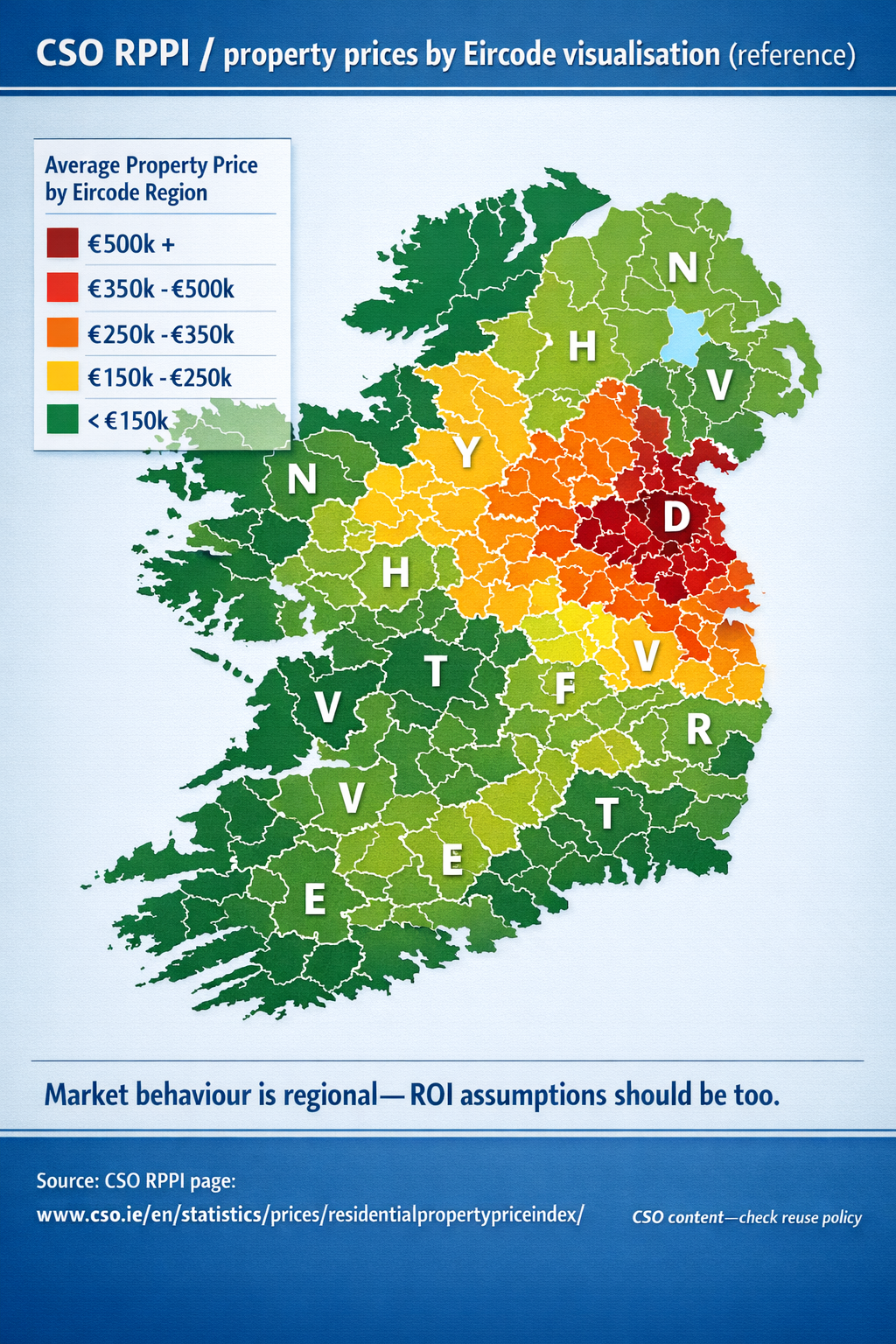
Flooring ROI differs because Irish markets differ: Dublin commuter belt rewards turnkey polish; regional cities balance value and durability; rural homes often reward comfort and energy credibility.
Dublin commuter belt (and high-demand pockets)
-
Turnkey feel matters.
-
Finish quality and consistency across rooms is “photo ROI.”
-
Apartments: acoustic compliance is non-negotiable.
Regional cities (Cork, Galway, Limerick, Waterford)
-
Practical durability and moisture-appropriate choices tend to win.
-
Mid-tier engineered or high-quality LVT often hits the sweet spot: looks good, performs well.
Rural markets
-
Comfort narratives can matter more (cold floors are a daily annoyance).
-
Some ESRI-related work suggests energy efficiency premiums can vary by market type (e.g., rural vs urban differences in certain periods).
Use official datasets for “price reality”
-
Property Price Register: shows actual declared purchase prices since 2010.
-
CSO Residential Property Price Index (RPPI): measures price changes over time and provides methodology and tools (including property prices by Eircode).
Case Studies (3 Irish Scenarios)
These show how ROI changes with subfloor type, moisture risk, and buyer expectations.
Case Study 1: 1970s semi-D with suspended timber ground floor
Problem: Cold, draughty ground floor; squeaks; unevenness near chimney breast.
Solution:
-
Lift boards selectively; inspect joists and ventilation paths
-
Add between-joist insulation with correct support system
-
Airtightness detailing at perimeter and service penetrations (without blocking ventilation strategy)
-
Refit with engineered wood (stable choice for humidity swings)
Costs (range): €9,000–€18,000 (depends on repairs and access)
Timeline: 1–2 weeks (including drying/inspection contingencies)
Risk points: blocked vents, damp in void, inadequate edge detailing
Likely ROI pathway: Path 3 (energy/comfort supportive) + resale confidence
BER impact: possible supportive effect if documented and consistent with the dwelling’s overall fabric story.
Case Study 2: 2000s estate home with slab + moisture test/levelling
Problem: Tired laminate; slab flatness issues; occasional edge swelling near patio door.
Solution:
-
Moisture test slab; apply correct DPM/primer system if needed
-
Levelling compound in key zones
-
Install quality LVT/SPC in kitchen/hall for moisture resilience; engineered upstairs for warmth
Costs (range): €7,500–€15,000
Timeline: 3–7 days typical, longer if moisture mitigation needed
Risk points: rushing DPM cure times; poor transitions
Likely ROI pathway: Path 2 (comfort/durability) with strong resale appeal
Case Study 3: Apartment upgrade focused on acoustics + resale
Problem: Clicky floor noise; management company requires impact sound reduction; neighbours complaining.
Solution:
-
Get written acoustic requirement (Ln,w/IIC equivalent) before buying anything
-
Use certified acoustic underlay and compliant system
-
Choose LVT/engineered suited to acoustic build-up and doors/thresholds
Costs (range): €6,000–€14,000
Timeline: 2–5 days (access and rules can slow things)
Risk points: wrong underlay spec; non-compliant install leading to redo
Likely ROI pathway: Path 1/4 (saleability + compliance)
Internal links (FBS Flooring):
-
Soundproof flooring guidance: https://fbsflooring.ie/soundproof-flooring-in-ireland-2026-best-choices-for-apartments-semi-detached-houses/
-
Apartment flooring guide: https://fbsflooring.ie/flooring-small-irish-apartments-2026/
Common Mistakes That Destroy ROI (Ireland Edition)
ROI collapses when you create moisture problems, acoustic non-compliance, or visible finish defects that scream “future hassle.”
-
Skipping moisture testing
-
Wrong underlay/acoustic spec in apartments
-
Locking in moisture under impermeable layers
-
Bad thresholds and ugly transitions
-
Not documenting upgrades (for buyers and BER assessors—defaults get used when evidence is missing)
Internal link (FBS Flooring):
-
Installation gotchas and prep: https://fbsflooring.ie/flooring-installation-dublin-the-complete-local-guide-costs-preparation-fitters-aftercare/
What to Document for Maximum Resale Credibility
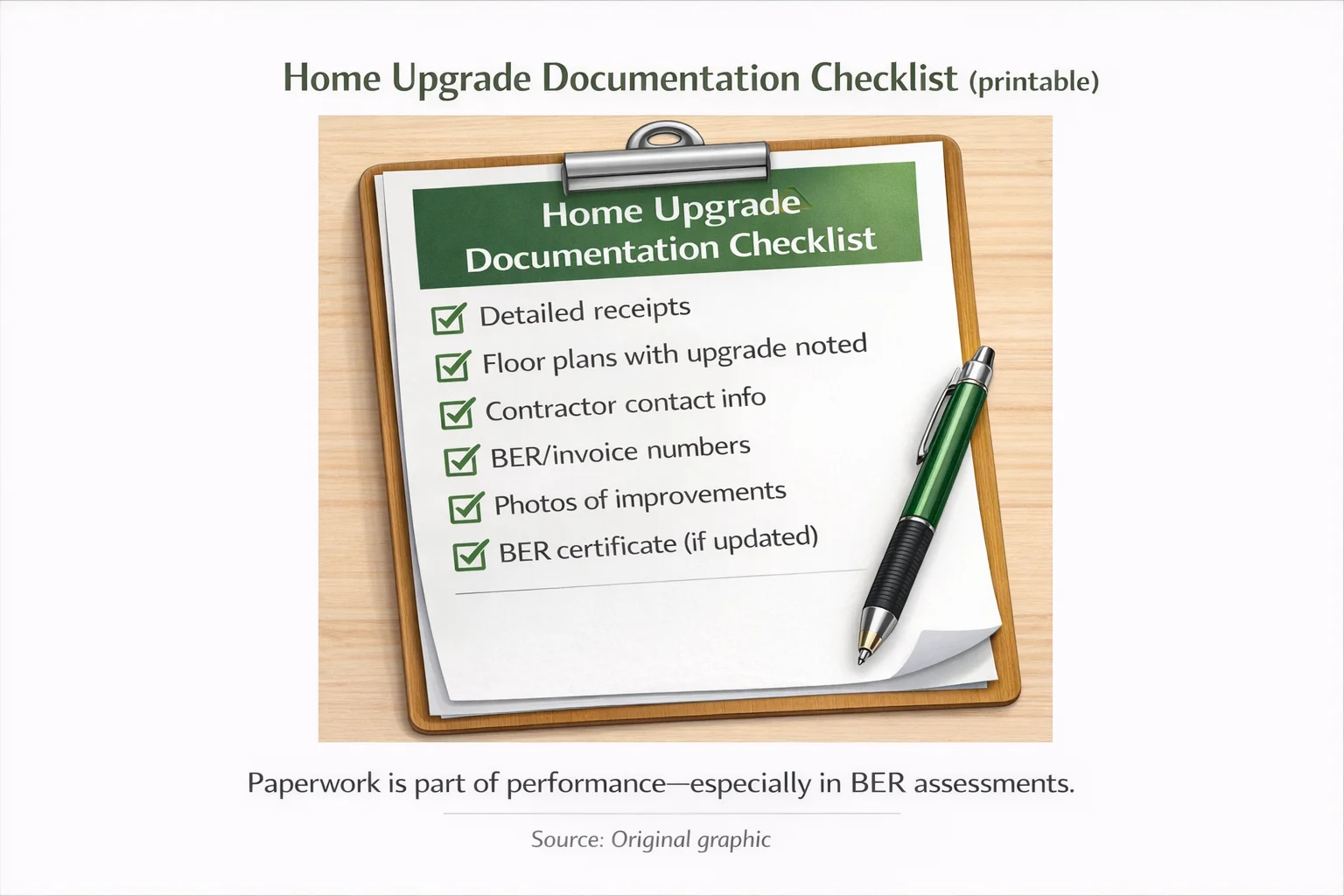
Documentation turns a nice-looking floor into a credible upgrade that buyers and BER assessors can trust.
-
Receipts, product spec sheets, warranties
-
Moisture test results and any mitigation system details
-
Photos of subfloor prep (before, during, after)
-
Underlay/acoustic certificates (apartments)
-
Installer details and workmanship guarantees
-
BER certificate + advisory report references if you’re aligning work to upgrade pathways
FAQ
1) Does new flooring improve BER in Ireland?
Sometimes, but usually only when the floor build-up changes: adding insulation (especially to suspended timber floors), improving airtightness at edges, or integrating UFH-compatible layers. Swapping finishes alone rarely moves BER much. BER is calculated using DEAP and depends on documented specs.
2) What is a BER, and how is it assessed?
A BER is a calculated rating (A–G) showing a home’s energy performance based on fabric and systems, using standard assumptions. Assessors survey construction, insulation, ventilation, heating controls, and require documentation; missing evidence can trigger conservative defaults.
3) Do I need a BER to sell a home in Ireland?
Generally, a BER is required when a home is offered for sale or rent, with certain exemptions. Check SEAI guidance for current rules and exemptions; your estate agent and BER assessor can confirm your case.
4) What floor is best for Irish damp?
For damp-prone areas (especially ground floors), LVT/SPC or tile often performs best, but the real fix is moisture control in the subfloor. A moisture test and correct barrier/adhesive system matter more than the surface finish.
5) Engineered vs laminate for resale in Ireland?
Engineered wood often reads more premium to buyers and suits Irish humidity swings better than solid. High-quality laminate can still deliver excellent ROI if the finish looks modern, the install is tidy, and the subfloor is sound, especially for family homes and rentals.
6) Is underfloor heating worth it in Ireland?
UFH can be worth it for comfort and (sometimes) efficiency, especially in well-insulated homes with good controls. But it’s a system decision: heat source, controls, insulation, and floor build-up all matter. Poorly designed UFH under thick underlays can disappoint.
7) Can I insulate a suspended timber floor without causing rot?
Yes, if you keep ventilation strategy correct and avoid trapping moisture. The detailing (membranes, air flow, edge sealing) matters. If the void is damp or vents are blocked, fix that first.
8) What’s the fastest ROI flooring upgrade before selling?
A clean, consistent finish with tidy transitions and neutral tones. Often, that means a cosmetic refresh plus fixing squeaks/uneven spots. Buyers pay for “turnkey,” not for your favourite species of oak.
9) How do apartments change the ROI equation?
Apartments are ROI-sensitive to acoustic compliance. The wrong underlay can force a redo or trigger neighbour disputes. Get management-company specs in writing and use certified systems.
10) What should I prioritise: floors or attic insulation?
If your goal is BER improvement, attic insulation is often a high-impact first step, but floors matter if they’re a major comfort problem (cold, draughty suspended timber) or if you’re already renovating. Use your advisory report as the roadmap.
11) Do buyers in Ireland pay more for a better BER?
Evidence indicates energy efficiency can be reflected in prices and asking prices, but premiums vary and aren’t guaranteed. Better BER often supports a stronger “running cost + comfort” narrative, especially when upgrades are documented.
12) What’s the biggest mistake homeowners make on flooring ROI?
Installing over an unverified subfloor, especially with moisture issues on slabs or ventilation issues under suspended timber. The floor might look great for a month, then fail in a way that buyers (and surveyors) won’t forgive.
Conclusion
-
Flooring ROI in Ireland is mostly saleability + confidence + comfort.
-
BER impact happens when you upgrade insulation/airtightness/build-up, not just finishes.
-
Moisture is the constant villain—test early, detail properly.
-
Apartments turn flooring into acoustic compliance + finish quality.
-
Use the BER advisory report as your roadmap for performance-aligned upgrades.
-
Anchor market talk in official datasets: Property Price Register and CSO RPPI.
-
Document everything—paperwork helps buyers and prevents BER defaults.
Recommended next-step checklist
-
Get a moisture test (slab) or void/vent inspection (suspended timber).
-
Decide your ROI pathway (sell soon vs stay vs retrofit).
-
If BER is a goal, talk to a BER assessor early about evidence requirements.
-
Price subfloor prep and finishing work properly (levelling, trims, doors, disposal).
-
Keep a “resale pack” folder: specs, receipts, photos, warranties, acoustic certs.
How this was researched (Methodology & Sources)
This guide was built from:
-
SEAI BER guidance on what BER is, how it’s calculated (DEAP), what assessors collect, and the role of documentation/defaults.
-
SEAI advisory report documentation describing the advisory report as a personalised upgrade roadmap accompanying the BER certificate.
-
Irish building regulations context via the government Technical Guidance Document L page (Part L direction and energy performance expectations).
-
Official property price context from the Property Price Register and CSO RPPI resources.
-
Research on energy rating and prices, including ESRI-linked work and peer-reviewed evidence indicating energy efficiency can be capitalized into prices/list prices (effects vary).
-
Irish flooring practice notes and cost/prep realities referenced from FBS Flooring’s published guides and product pages for Ireland-specific install and material context.
Author bio
Written by an Irish home-improvement entrepreneur and building-performance explainer in collaboration with flooring-installation practice insights commonly used on Irish sites focused on moisture, subfloor prep, acoustic compliance, and BER-aligned documentation.