Skip to content
Table of Contents
- Introduction – Why Slip Resistance Matters in Ireland
- The Science Behind Slip Resistance
- What Are R-Ratings?
- The Ramp Test Explained (DIN 51130)
- R9 vs R10 vs R11 vs R12 vs R13 Explained
- Which R Rating For Each Room In Irish Homes
- Slip Resistance For Bathrooms
- Slip Resistance For Kitchens
- Slip Resistance For Outdoor Areas In Ireland
- Pendulum Test (PTV) vs R Ratings
- Irish Building & Safety Considerations
- Materials That Improve Slip Resistance
- Texture vs Cleaning vs Comfort
- Common Mistakes When Choosing Floor Tiles
- Professional Advice From FBS Flooring
- Conclusion
- FAQ – Slip Resistance and R Ratings
Introduction – Why Slip Resistance Matters in Ireland
Slip resistance is one of the most important but often overlooked factors when choosing flooring for a home in Ireland. With frequent rain, moisture, wet shoes, and humidity, floors in Irish homes are exposed to conditions that significantly increase the risk of slipping. Kitchens, bathrooms, entrances, patios, and utility rooms are particularly high-risk areas.
Every year, thousands of home accidents are caused by slips and falls, many of which could be prevented by choosing the correct flooring with proper slip resistance ratings. This is where R-ratings become essential. These ratings help homeowners, builders, and architects understand how slippery a floor surface is and whether it is suitable for wet or dry areas.
At FBS Flooring, helping clients choose safe, durable, and suitable flooring for Irish homes is a major part of every project. Slip resistance is not just about safety — it also affects cleaning, maintenance, comfort, and long-term flooring performance.
This comprehensive guide is designed to demystify the technical jargon surrounding flooring safety. Whether you are searching for the perfect aesthetic for your new wet room, laying a patio that must withstand winter frosts, or seeking a durable surface for a bustling family kitchen, understanding R-Ratings and slip resistance is your first line of defense. By the end of this guide, you will have a complete, expert-level understanding of European safety classifications, Pendulum Test Values (PTV), and exactly which rating is required for every corner of your Irish home.
The Science Behind Slip Resistance
Slip resistance is determined by friction between the floor surface and footwear or bare feet. When friction is high, the surface is safe. When friction is low, slipping occurs.
Several factors affect slip resistance:
- Surface texture
- Water or liquid on the floor
- Type of shoes
- Floor material
- Cleaning products
- Dirt and grease
- Floor slope
- Surface wear over time
In simple terms:
Smooth surface + water = very slippery
Textured surface + water = safer surface
However, very rough surfaces can be difficult to clean, so flooring selection is always a balance between grip, comfort, and maintenance.
What Are R-Ratings?
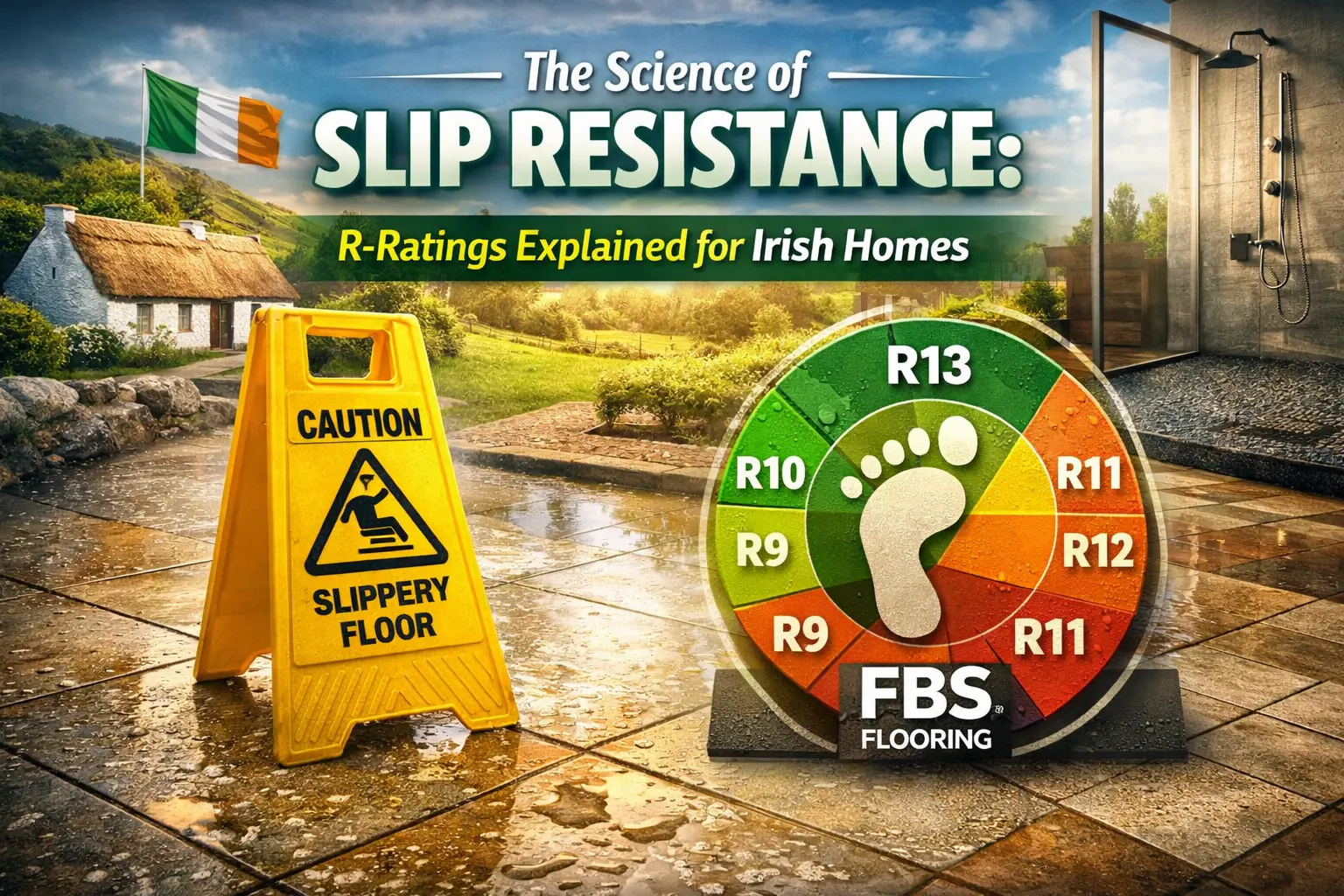
R-ratings are European slip resistance classifications used mainly for tiles and flooring surfaces. They are based on a test called the Ramp Test (DIN 51130).
The rating scale goes from R9 to R13:
| R Rating | Slip Resistance | Typical Use |
|---|---|---|
| R9 | Low slip resistance | Dry indoor areas |
| R10 | Normal slip resistance | Kitchens, bathrooms |
| R11 | High slip resistance | Outdoor areas |
| R12 | Very high slip resistance | Commercial kitchens |
| R13 | Extremely high slip resistance | Industrial areas |
The higher the number, the higher the grip.
The Ramp Test Explained (DIN 51130)
The ramp test is a scientific method used to determine slip resistance.
The test works like this:
- A person wearing safety shoes walks on a tile surface.
- The surface is covered with oil.
- The surface is slowly tilted.
- The angle at which the person slips determines the rating.
| Angle | Rating |
|---|---|
| 6–10° | R9 |
| 10–19° | R10 |
| 19–27° | R11 |
| 27–35° | R12 |
| 35°+ | R13 |
This test simulates real-life slipping conditions.
R9 vs R10 vs R11 vs R12 vs R13 Explained
R9 Tiles
- Smooth surface
- Suitable for dry areas
- Living rooms
- Bedrooms
- Dry hallways
- Not suitable for wet areas
R10 Tiles
- Slight texture
- Good for kitchens
- Good for bathrooms
- Good for entrances
- Most common rating for Irish homes
R11 Tiles
- Strong grip
- Outdoor patios
- Balconies
- Wet rooms
- Pool areas
- Recommended for Irish outdoor areas
R12 Tiles
- Commercial kitchens
- Workshops
- Restaurants
- Industrial environments
R13 Tiles
- Factories
- Industrial environments
- Not used in residential homes
Which R Rating For Each Room In Irish Homes
This is one of the most important sections for homeowners.
| Room | Recommended R Rating |
|---|---|
| Living room | R9 |
| Bedroom | R9 |
| Kitchen | R10 |
| Bathroom | R10 |
| Wet room | R11 |
| Hallway | R10 |
| Entrance | R10 |
| Utility room | R10 |
| Patio | R11 |
| Balcony | R11 |
| Garden path | R11 |
| Garage | R11 |
In Ireland, because of rain and moisture, R10 and R11 are the most commonly recommended ratings.
Slip Resistance For Bathrooms
Bathrooms are one of the most dangerous areas in a house for slipping. Water, soap, shampoo, and smooth tiles create very slippery conditions.
For Irish bathrooms:
- Floor tiles → R10 recommended
- Wet rooms → R11 recommended
- Shower area → R11 recommended
- Wall tiles → Slip rating not important
Small tiles with grout lines also improve slip resistance because grout adds friction.
At FBS Flooring, many bathroom installations use R10 porcelain tiles, which provide a good balance between grip and easy cleaning.
Slip Resistance For Kitchens
Kitchen floors often get wet due to:
- Water spills
- Oil
- Food
- Cleaning products
For kitchens in Ireland:
R10 is the best choice.
R9 tiles are too slippery for kitchens, especially in family homes.
Porcelain tiles with a light texture are the most popular kitchen flooring option installed by FBS Flooring Dublin.
Slip Resistance For Outdoor Areas In Ireland
Outdoor areas in Ireland must always consider:
- Rain
- Moss
- Dirt
- Leaves
- Moisture
- Frost
For outdoor areas:
R11 tiles are strongly recommended.
Outdoor areas include:
- Patios
- Garden paths
- Steps
- Balconies
- Porches
- Entrance steps
Outdoor porcelain tiles with R11 rating are extremely popular in Ireland because they are:
- Frost resistant
- Non slip
- Durable
- Easy to clean
- Weather resistant
Pendulum Test (PTV) vs R Ratings
In Ireland and the UK, slip resistance is often measured using the Pendulum Test Value (PTV).
| PTV Value | Slip Risk |
|---|---|
| 0–24 | High slip risk |
| 25–35 | Moderate slip risk |
| 36+ | Low slip risk (safe) |
For wet areas, a PTV of 36 or higher is considered safe.
Difference between tests:
| R Rating | Ramp Test | Shoes |
|---|---|---|
| PTV | Pendulum Test | Barefoot or rubber |
Both tests are important and often used together.
Irish Building & Safety Considerations
While residential homes do not always have strict legal slip resistance requirements, safety standards are commonly used in:
- Rental properties
- Public buildings
- Commercial spaces
- Nursing homes
- Schools
- Restaurants
Slip resistant flooring is especially important for:
- Children
- Elderly people
- People with mobility issues
- Wet areas
- Entrances
Materials That Improve Slip Resistance
Different flooring materials have different slip resistance properties.
| Material | Slip Resistance |
|---|---|
| Porcelain tiles | Very good |
| Ceramic tiles | Good |
| Natural stone | Good |
| Vinyl | Good |
| Laminate | Medium |
| Engineered wood | Medium |
| Hardwood | Low when wet |
| Polished tiles | Very slippery |
Textured porcelain tiles are usually the best anti slip flooring option for Irish homes.
Texture vs Cleaning vs Comfort
This is very important when choosing flooring.
Higher slip resistance means:
- Rougher surface
- More grip
- Harder to clean
- More dirt retention
Lower slip resistance means:
- Smooth surface
- Easy cleaning
- More slippery when wet
Best balance for homes:
- R10 indoor
- R11 outdoor
This is what FBS Flooring typically recommends for Irish homes.
Common Mistakes When Choosing Floor Tiles
Many homeowners make these mistakes:
- Choosing polished tiles for kitchens
- Using indoor tiles outdoors
- Choosing R9 tiles for bathrooms
- Not considering Irish weather
- Choosing very rough tiles that are hard to clean
- Ignoring entrance slip resistance
- Not thinking about elderly safety
- Choosing tiles based only on appearance
Slip resistance should always be considered before colour or style.
Professional Advice From FBS Flooring
At FBS Flooring, slip resistance is always discussed during flooring consultations. The company helps customers choose flooring based on:
- Room usage
- Moisture levels
- Cleaning requirements
- Safety
- Children and elderly
- Indoor vs outdoor areas
- Tile material
- Subfloor conditions
- Irish weather conditions
Services include:
- Flooring installation Dublin
- Bathroom flooring installation
- Kitchen floor installation
- Outdoor porcelain tile installation
- Engineered wood flooring Dublin
- Hardwood flooring Dublin
- Parquet flooring Dublin
- Floor leveling and preparation
- Moisture testing
- Subfloor preparation
Choosing the correct slip resistance rating is part of every professional flooring installation.
Conclusion
Slip resistance is one of the most important safety factors when choosing flooring for Irish homes. Because of Ireland’s wet climate, entrances, kitchens, bathrooms, and outdoor areas must be carefully selected to prevent slips and accidents.
Understanding R-ratings helps homeowners choose the correct flooring for each room. In most Irish homes, R10 tiles are ideal for indoor areas, while R11 tiles are recommended for outdoor areas and wet rooms.
Slip resistance is always a balance between safety, cleaning, comfort, and appearance. Choosing the correct flooring from the beginning can prevent accidents, improve durability, and increase property value.
Professional flooring companies like FBS Flooring help homeowners choose the correct flooring materials, slip ratings, and installation methods to ensure safe and long-lasting floors.
FAQ – Slip Resistance and R Ratings
What R rating is best for bathrooms in Ireland?
R10 is recommended for bathrooms, while R11 is recommended for wet rooms and shower areas.
Is R10 enough for kitchens?
Yes, R10 is generally the best choice for kitchens in Irish homes.
Do outdoor tiles need R11 in Ireland?
Yes, outdoor tiles in Ireland should ideally be R11 due to rain and moisture.
What is the pendulum test?
The pendulum test measures slip resistance using a swinging rubber slider across the floor surface.
Are anti-slip tiles harder to clean?
Yes, higher R rating tiles usually have more texture and can be slightly harder to clean.
Can wood flooring be slip resistant?
Wood flooring is not very slip resistant when wet, but finishes and textures can improve grip.
What flooring is safest for elderly people?
R10 textured porcelain tiles or slip resistant vinyl flooring are usually safest.
Is slip resistance required by Irish regulations?
Not always for residential homes, but it is strongly recommended for safety.
What is the difference between R rating and PTV?
R rating uses the ramp test, while PTV uses the pendulum test to measure slip resistance.
Which flooring company installs anti slip flooring in Dublin?
Professional flooring companies such as FBS Flooring install anti-slip flooring in Dublin and across Ireland.