Skip to content
Flooring cannot cure asthma or allergies, but it can change how easily dust, pollen and pet dander are removed. For households comparing the best flooring for allergies and asthma, a smooth hard floor is the practical starting point—not because it purifies air, but because it has no deep pile holding debris.
The short answer: SPC, quality laminate and sealed engineered wood can suit an allergy-conscious Irish home when the product is easy to clean, appropriate for the room and supported by credible emissions information. It still needs a dry subfloor, suitable installation materials, ventilation and regular cleaning.
Flooring is only one part of managing indoor triggers. Anyone with asthma or continuing allergy symptoms should follow their Asthma Action Plan and seek individual guidance from their GP, pharmacist, respiratory team or the Asthma Society of Ireland.
Key takeaways
- Irish health guidance commonly favours wood or hard vinyl over carpet where dust mites are a trigger.
- Bedrooms deserve priority because they are occupied for long, continuous periods.
- “Waterproof”, “natural” and “AC5” do not prove low emissions or medical suitability.
- A waterproof board cannot correct damp, mould or condensation beneath and around the floor.
- Hard floors still need HEPA-filter vacuuming or damp cleaning to remove settled allergens.
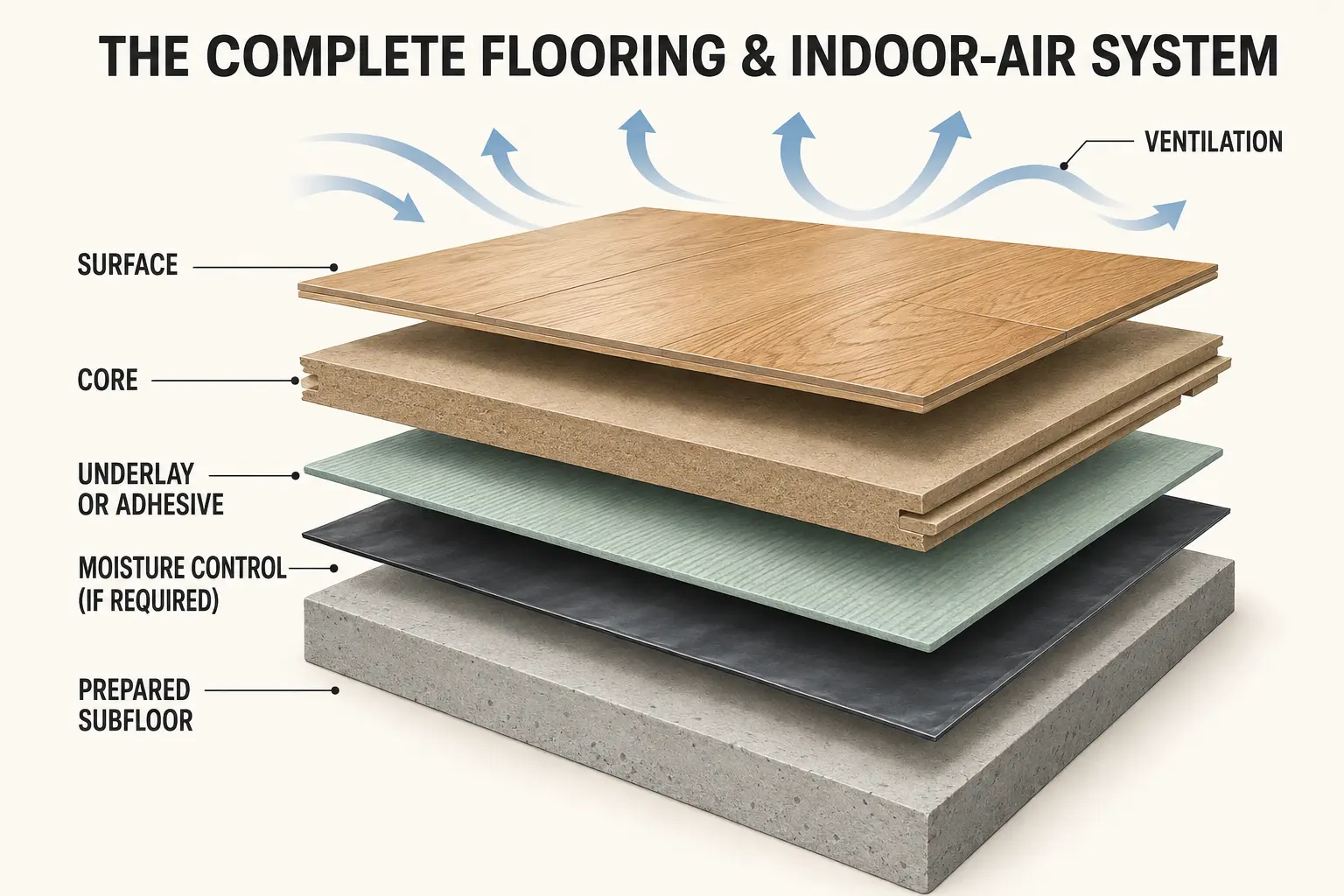
- Assess the floor, underlay or adhesive, subfloor, moisture and ventilation as one system.
Why can flooring matter for allergies and asthma?
Triggers are not all the same. Dust-mite allergens collect in dust and textiles; pollen enters on clothing, footwear and pets; animal dander comes from skin flakes and saliva; mould releases spores in damp conditions; and materials or cleaners may irritate some people.
The HSE identifies dust mites, pets, pollen and mould spores among common allergens. It advises concentrating dust-mite controls in bedrooms and living rooms, using a HEPA-filter vacuum and wiping surfaces with a damp cloth rather than spreading dust through dry dusting. Read the HSE’s allergic-rhinitis prevention guidance.
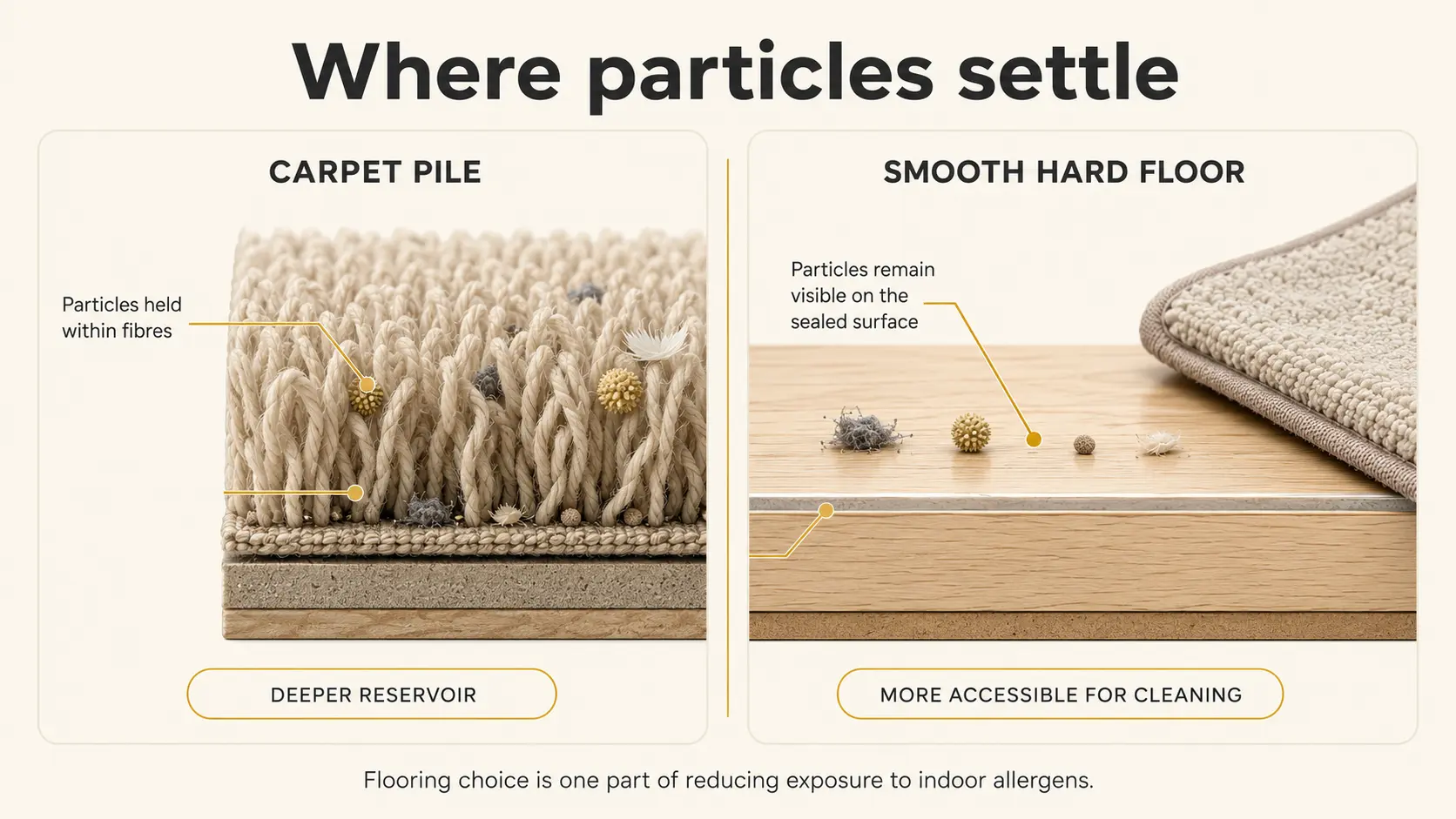
A hard floor does not destroy these particles. It keeps debris accessible to a suitable vacuum or damp microfibre mop—provided cleaning is maintained.

Is hard flooring better than carpet for allergies?
For a household sensitive to dust mites, hard flooring is normally the more manageable starting point. The HSE specifically recommends choosing wood or hard vinyl instead of carpet where possible because carpets and rugs can hold substantial dust. Its asthma guidance also suggests a HEPA-filter vacuum for pet hair and allergen control. See the HSE’s advice on living with asthma.
Research reviews report more deposited dust and allergens in carpet than on smooth floors and describe carpet as a potential reservoir. This does not mean every carpet causes symptoms, or that an unclean hard floor is automatically healthier.
If softness is important, a small, removable rug is easier to take outside or clean than fitted carpet. Keep it out of an allergy-sensitive bedroom if it conflicts with the person’s known triggers, and follow its care instructions.
Best flooring for allergies and asthma compared
| Flooring type | Allergen-retention potential | Cleaning | Moisture tolerance | Documentation to check | Comfort and acoustics | Best starting rooms | Relevant FBS range |
|---|---|---|---|---|---|---|---|
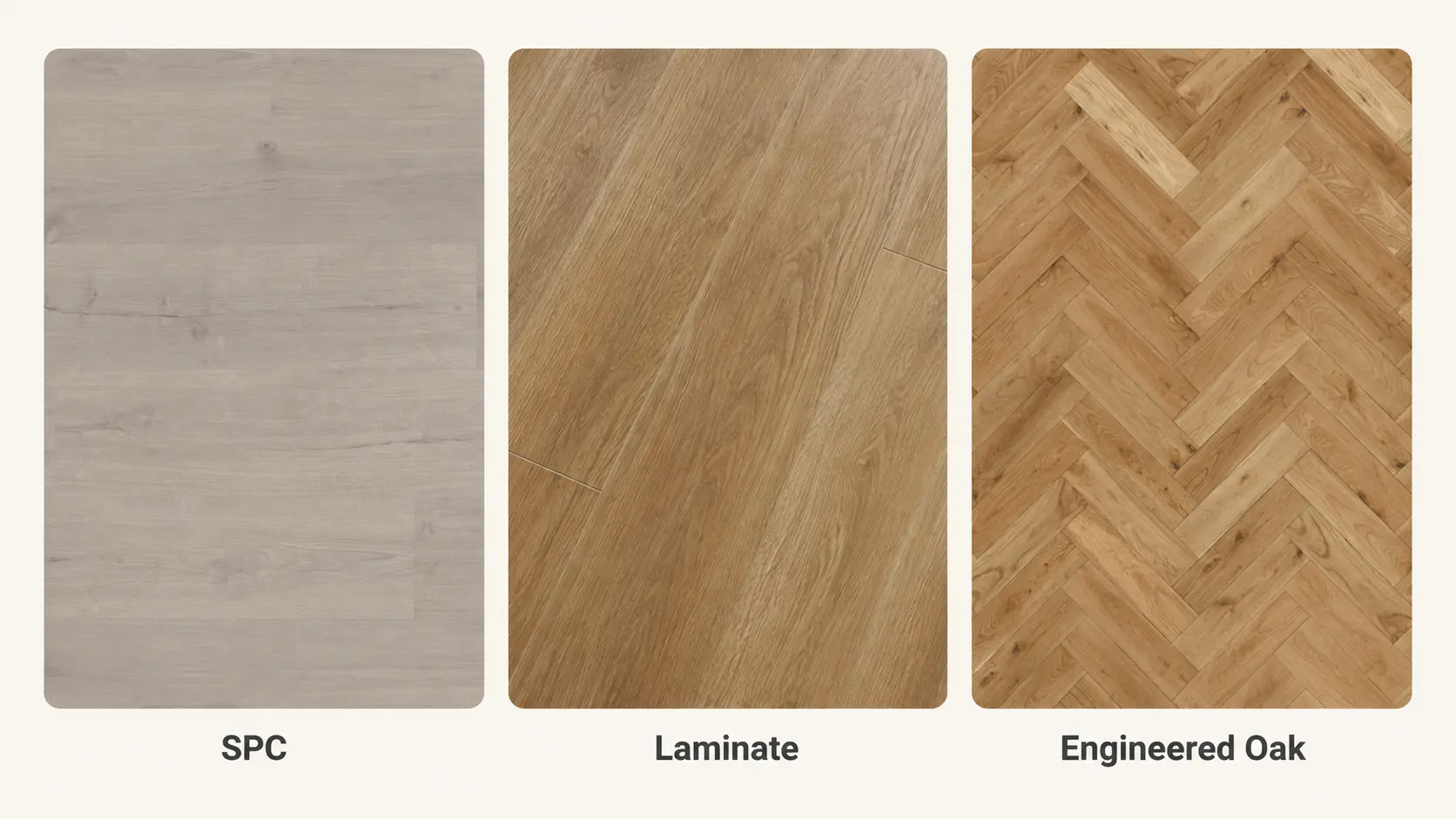
| SPC / rigid vinyl | Low on a regularly cleaned, smooth surface | Very easy | High at the surface | Product VOC data; full construction; underlay | Firm; backing may help, product dependent | Kitchen, utility, hall, pet areas | Lignum Core |
| Laminate | Low on an intact, cleaned surface | Easy | Product dependent; not automatically waterproof | Core formaldehyde emissions; VOC data; underlay | Warmer-looking; acoustics depend on build-up | Bedroom, living room, hall | Continental Collection |
| Sealed engineered wood | Low–moderate; texture and joints need attention | Easy with correct tools | Moderate | Finish, adhesive and formaldehyde/VOC information | Natural feel; generally comfortable | Bedroom, living room, open plan | Lignum Strata |
| Tile | Low; grout requires cleaning | Very easy | Excellent when correctly installed | Adhesive, grout and sealant | Hard and cool without heating | Bathroom, kitchen, entrance | Compare with FBS tile-effect SPC |
| Carpet | Higher reservoir potential | Most demanding | Poor where damp persists | Fibre, backing, underlay, treatments and adhesive | Softest and quietest | Only where comfort outweighs cleaning concerns | Not the focus of this guide |
Is SPC flooring a good allergy-conscious choice?
SPC is practical where easy cleaning and surface moisture resistance matter. With no textile pile, a click-fitted plank can often be vacuumed and lightly damp-mopped, suiting kitchens, utilities, entrances, pet households and some ground-floor rooms.
Lignum Core Greywood Oak is currently listed by FBS as a 5mm rigid luxury-vinyl plank with a built-in 1mm underlay, waterproof construction, DocLoc fitting system, 0.55mm wear layer and underfloor-heating compatibility. Those are practical performance features; they do not, by themselves, establish low VOC emissions. Request the current technical and emissions documentation before making a health-sensitive specification.
Waterproof describes surface performance. Moisture in a slab, a leak or condensation can still affect the subfloor, skirting and walls. FBS’s complete Irish guide to SPC covers the wider construction questions.
Is laminate flooring suitable for dust allergies?
Quality laminate offers a smooth, accessible surface at a lower starting point than engineered oak. It can suit dry bedrooms, living rooms and halls when joints remain sound and the underlay supports the click system.
Milan Honey Oak 12mm AC5 uses a 12mm HDF core, waxed edges and a Unilin click system. Its AC5 rating describes wear resistance, not indoor-air quality. For an allergy-conscious project, ask separately for formaldehyde-emission information for the HDF core and relevant product VOC documentation.
Laminate is not for unresolved damp. Waxed edges add resistance but do not turn HDF into waterproof SPC. Compare the room and subfloor before selecting from the Continental Collection.
What about sealed engineered wood?
Engineered wood provides real timber over a stable layered construction. Factory-applied lacquer creates a cleanable surface without finishing the whole floor on site, although its coating and installation materials still need verification.
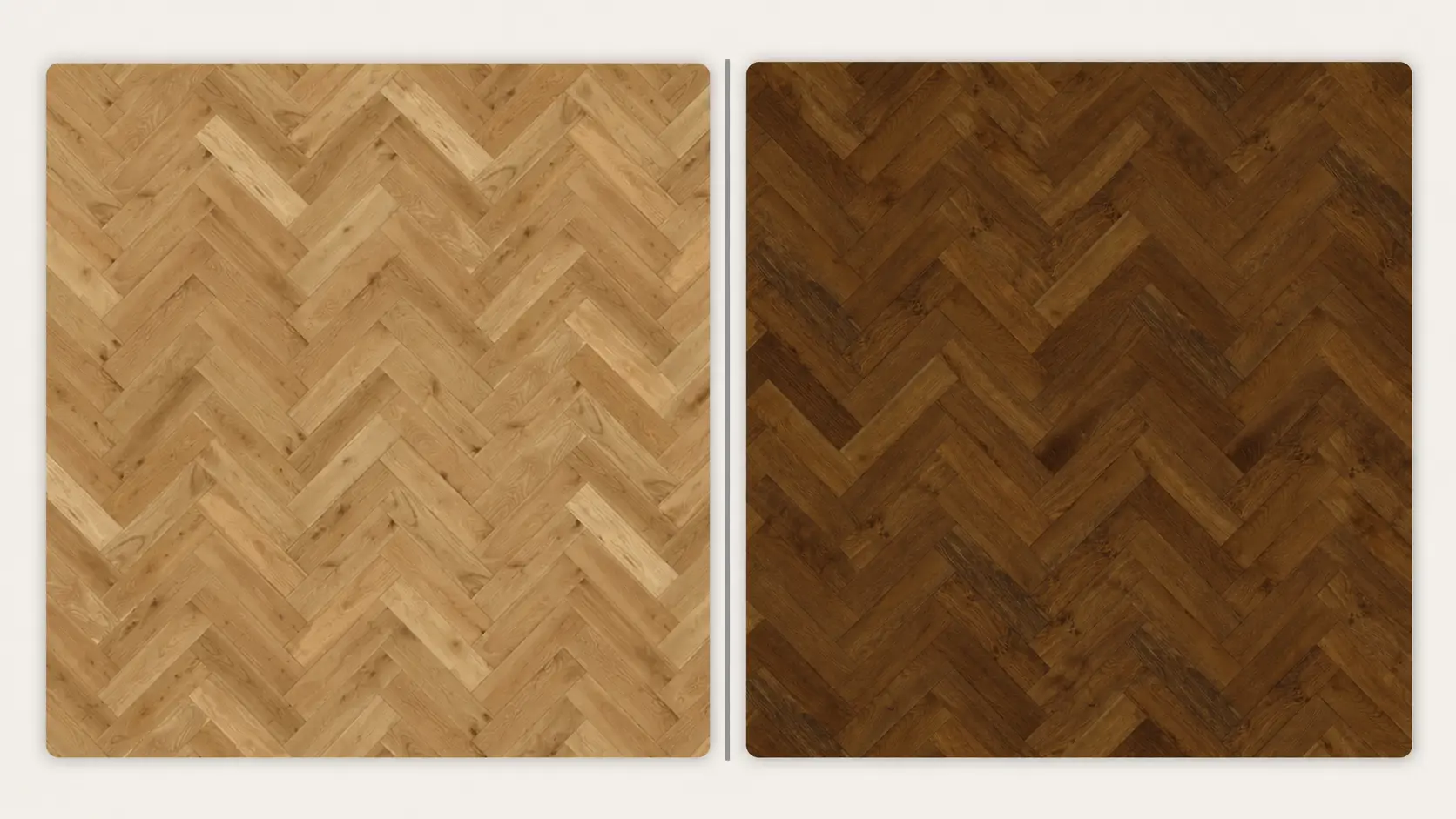
Natural Brushed Oak Herringbone 90 is a 15mm engineered oak product with a brushed, matt-lacquered surface. FBS lists floating and fully bonded installation options and underfloor-heating compatibility. Its textured grain may need more attention from a hard-floor vacuum head than a completely smooth finish, while fully bonding introduces an adhesive that should form part of the emissions check.
For a broader explanation of real-oak construction and Irish conditions, see FBS Flooring’s engineered oak guide.
VOCs, formaldehyde and installation: what should you check?
Volatile organic compounds, or VOCs, may come from the floor, coating, underlay, adhesive, primer, levelling compound, sealant or cleaner. Smell is not a reliable emissions test, and no odour does not prove zero emissions.
For wood-based and composite products, request the technical file, applicable Declaration of Performance and formaldehyde-emission information. Ask for documented VOC results or a recognised independent label for the exact product. The EU Ecolabel flooring criteria are one example; never assume certification without checking the licence.
Before ordering, ask:
- What emissions documents cover this exact product and batch?
- Does the result cover only the board or the full proposed installation system?
- Is an adhesive required, and which one?
- Is the underlay compatible with the floor, subfloor and underfloor heating?
- How should the room be ventilated during and after installation?
- Which cleaner is approved, and is steam cleaning prohibited?
Damp, mould and the Irish home
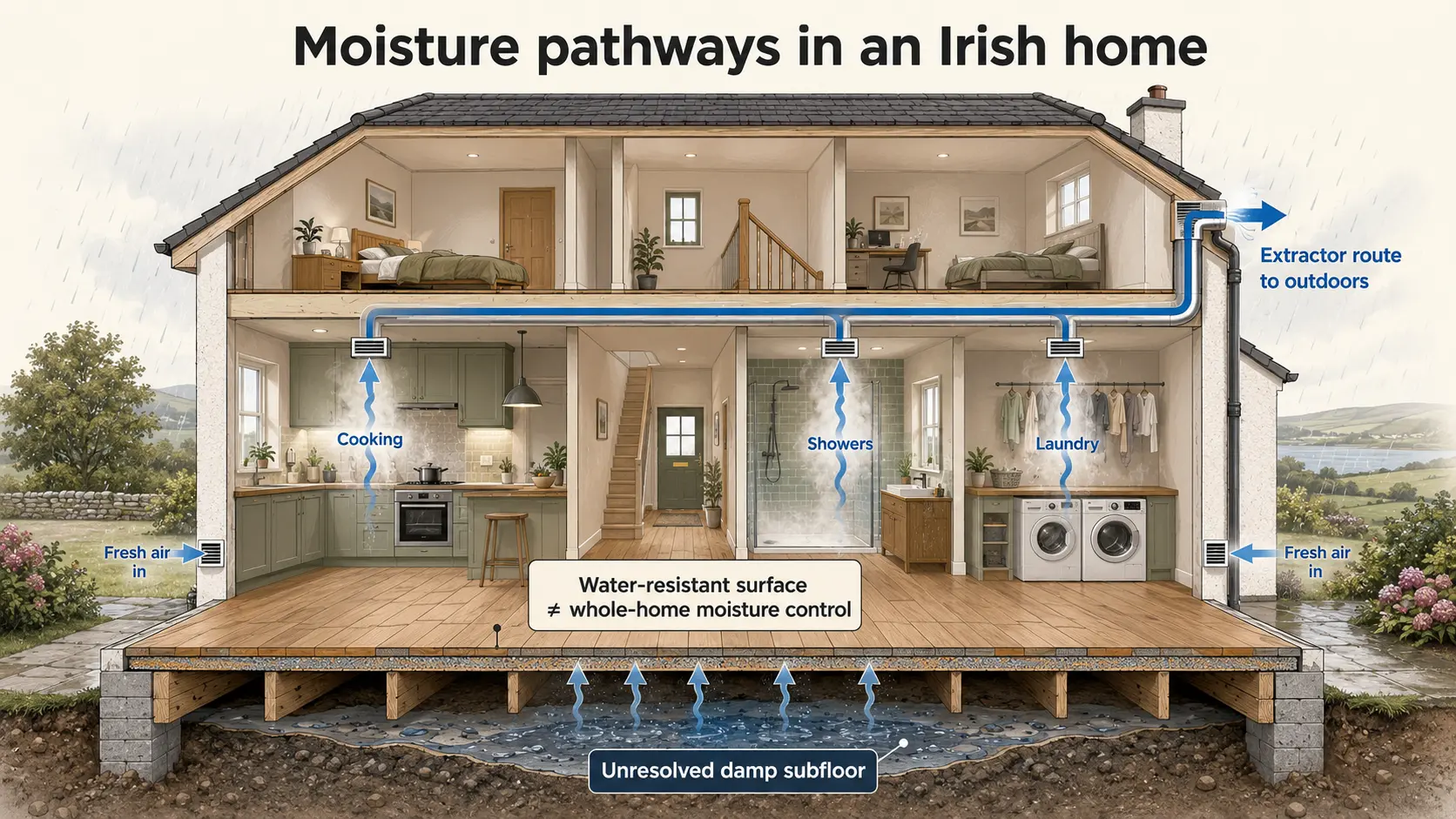
Irish homes gain moisture from cooking, showers, indoor laundry, leaks, cold surfaces and new screeds. Older houses may have cold ground floors, while airtight energy-efficient homes depend heavily on correctly maintained ventilation.
SEAI explains that cooking, laundry and showers increase indoor water vapour and that good ventilation removes moisture and pollutants while reducing condensation and mould risk. Read SEAI’s ventilation guidance.
Before covering concrete or screed, verify the manufacturer’s moisture limit. Investigate mould, persistent odours, condensation, damaged skirting or leaks first. Use vapour-control or damp-proof systems only where the floor specification and site assessment require them.
FBS Flooring’s Irish moisture and humidity guide explains why the subfloor matters even when the visible surface is waterproof.
Which floor works best room by room?
- Allergy-sensitive bedroom: Prioritise a smooth hard floor, simple cleaning and verified emissions information. Laminate, SPC or sealed engineered wood may work; minimise dust-holding textiles.
- Child’s bedroom: Add durability and spill management to the decision. Use a removable play mat only if it can be cleaned appropriately.
- Living room: Any of the three FBS hard-floor families may work. Match the choice to pets, entrances, moisture and desired comfort.
- Hall and entrance: SPC or durable laminate can make outdoor dirt and pollen easier to capture near the door.
- Kitchen or utility: SPC is the practical FBS starting point where surface-water resistance and frequent cleaning dominate.
- Bathroom: Use only a product expressly approved for the room and installation conditions; waterproof boards do not waterproof the entire room.
- Pet household: Choose an easy-clean surface, keep pet bedding washable and follow the person’s individual allergy advice.
- Upstairs floor or apartment: Check acoustic underlay, the whole floor build-up and any management-company requirements before replacing soft flooring with hard flooring.
How should hard flooring be cleaned to reduce dust?
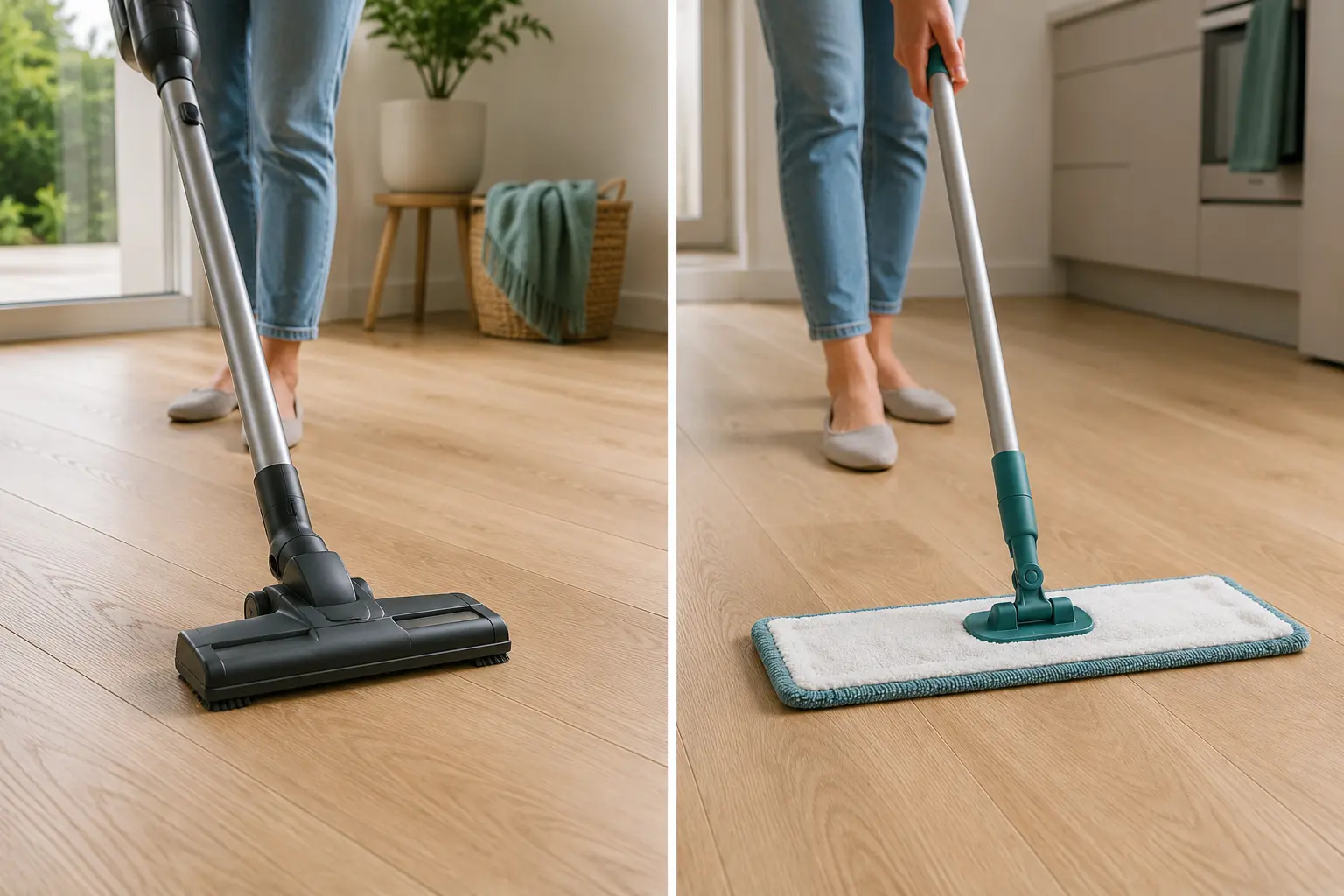
Use a suitable HEPA-filter vacuum with a hard-floor attachment, then a lightly damp microfibre mop if permitted. Damp-wipe nearby surfaces. The HSE notes that dry dusting can spread allergens and recommends HEPA filtration for dust-mite control.
Also:
- clean entrance mats and reduce outdoor dirt entering the home;
- avoid excessive water, which can damage laminate and timber joints;
- use the approved pH and cleaner concentration for the exact floor;
- avoid strongly fragranced products if fragrance is a known irritant;
- clean pet bedding and keep pets out of the bedroom where advised;
- never use a steam mop unless the flooring manufacturer explicitly permits it.
Cleaning frequency depends on pets, occupancy, season and the person’s triggers. A hard floor helps only when its accessible surface is actually cleaned.
Choosing an allergy-conscious floor with FBS Flooring
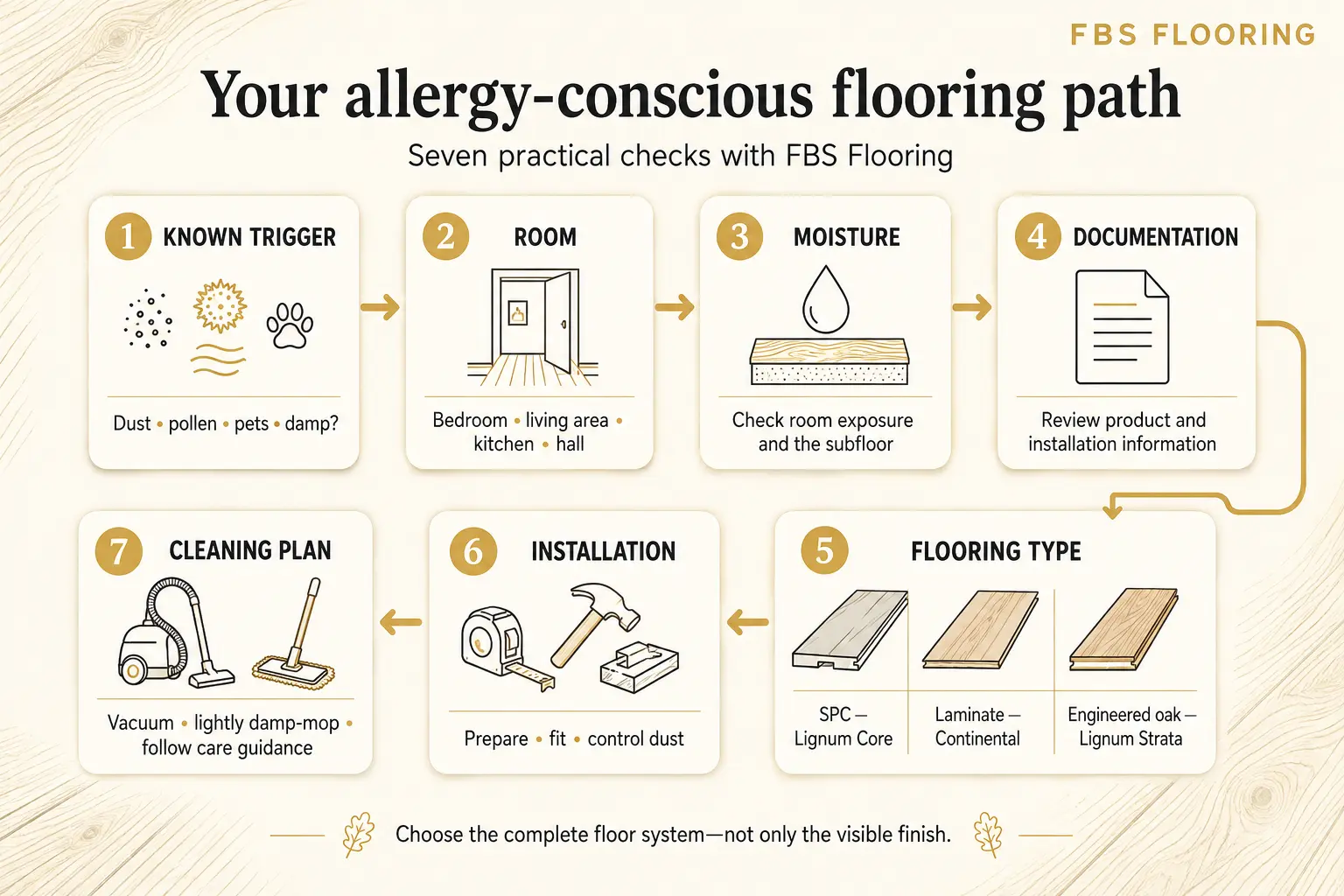
The useful buying order is not colour first. It is:
- Identify the person’s known triggers without attempting a medical diagnosis.
- Identify the room, subfloor and existing moisture risks.
- Check ventilation and resolve damp or mould.
- Compare SPC, laminate and engineered wood by cleanability and room suitability.
- Request the applicable emissions and technical documents.
- Select the compatible underlay, adhesive and installation method.
- Confirm the manufacturer-approved cleaning routine.
- Compare physical samples and obtain a complete quotation.
FBS Flooring can compare its Lignum Core, Continental and Lignum Strata ranges against the room and subfloor instead of treating one material as universally “best”. Browse the ranges, use the cost calculator or request a complete quotation.
The final verdict
For many allergy-conscious Irish households, SPC is the practical leader for cleaning and moisture resilience, laminate offers strong value in suitable dry rooms, and sealed engineered wood provides a premium real-timber surface. Tile remains an easy-clean benchmark, while carpet requires the most deliberate dust control.
The best result comes from combining an accessible hard surface with verified product information, a dry prepared subfloor, suitable installation materials, working ventilation and consistent cleaning.
Frequently asked questions
What is the best flooring for allergies and asthma?
There is no universal winner. Smooth SPC, laminate and sealed engineered wood can make settled particles easier to remove than fitted carpet. Compare emissions information, moisture suitability, installation and cleaning instructions.
Is carpet bad for people with asthma?
Carpet can retain dust and allergens within its pile, so Irish health guidance commonly recommends wood or hard vinyl where dust mites are a trigger. However, individual triggers differ, and carpet does not automatically cause symptoms in everyone with asthma.
Is SPC flooring good for allergy sufferers?
SPC has a smooth, wipe-clean surface and good surface-water resistance, making it practical for many busy homes. Ask for product-specific VOC information, and remember that waterproof flooring cannot correct damp beneath the boards or poor ventilation.
Is laminate suitable for people with dust allergies?
Yes, in an appropriate dry room. Laminate has no textile pile and is straightforward to vacuum and lightly damp-clean. Check formaldehyde-emission information for its wood-based core, relevant VOC documents and the compatibility of its underlay.
Is engineered wood better than carpet for allergies?
A sealed engineered-wood surface is generally easier to access and clean than carpet pile. Brushed textures and bevels require careful vacuuming, while coatings and any installation adhesive should be included in the technical and emissions assessment.
What does low-VOC flooring mean?
It should mean that emissions have been measured against a defined test or certification threshold. “Low odour”, “natural” and “eco-friendly” are not substitutes for product-specific results. Ask which document, standard or independent licence supports the claim.
Can waterproof flooring prevent mould?
No. A waterproof board resists water at its surface under stated conditions. Mould can still develop around walls or beneath a floor when leaks, condensation, damp substrates or poor ventilation remain unresolved.
What is best for an allergy-sensitive bedroom?
Start with a smooth hard floor that suits the subfloor and is supported by credible emissions information. Bedrooms deserve particular attention because of the time spent there. Keep the cleaning routine simple and minimise unnecessary dust-holding textiles.
How should I clean a hard floor to control dust?
Use a suitable HEPA-filter vacuum and hard-floor head, then a lightly damp microfibre mop where permitted. Avoid dry-dusting, excessive water and unapproved steam cleaning. Always follow the exact flooring manufacturer’s care instructions.