Skip to content
Table of contents
Use this guide to understand how long flooring really lasts in Irish homes, which materials perform best, and when replacement makes sense.
The lifespan of flooring across Ireland depends closely on humidity levels, footfall intensity, installation quality, room use, and routine upkeep. Moisture often plays a bigger role than glossy brochures admit, while busy areas wear down surfaces faster than expected. Even premium materials can fail early without proper maintenance, although correct fitting helps them last longer under heavy daily use.
Most people start by comparing shades, textures, and cost, while durability often comes later. Once choices narrow, a different concern appears. What survives daily life in Ireland matters more than many homeowners first expect. Floors face rain, mud, heavy shoes, spills, pets, and constant movement across Irish households. Longevity quickly shifts from a background idea to a central buying factor.
Truth often sits outside glossy pamphlets. Showroom samples shine under controlled lights, yet reality tests them harder. Rain-soaked footwear brings moisture into entryways. Cooking accidents leave liquids pooling near stoves and sinks. Clawed paws mark wood and laminate alike. Children pull toys and heavy objects across floors daily. Foundations settle, leaving uneven bases beneath finished surfaces. Urban flats, rental spaces, and busy family homes all demand resilience from materials.
Five to twenty-five years marks the realistic span most Irish homes see from their flooring. Certain high-end materials, such as solid wood or ceramic tiles, may exceed this range, but they are exceptions. Under everyday conditions across Ireland, most domestic flooring installations sit within this window. Longevity changes with use, but typical patterns remain clear.
Quick answer: how long does flooring last in Ireland?
Most floor coverings in Ireland last between five and twenty-five years. Their lifespan depends on the material, room choice, subfloor condition, installation quality, underlay, moisture exposure, and maintenance. Kitchens and hallways challenge floors more than bedrooms. Cheaper carpets and lower-tier laminates may show wear within eight years, while luxury vinyl, SPC, and engineered wood can last much longer when fitted and maintained correctly.

Moisture weakens materials over time unless proper protection exists beneath. Subfloor flatness matters just as much as the surface product. Careless installation can shorten the life of even premium flooring. Underlays cushion impact and slow wear patterns from daily steps. Longevity improves sharply when upkeep includes timely cleaning, minor repairs, and fast attention to spills.
Why Irish homes are harder on flooring
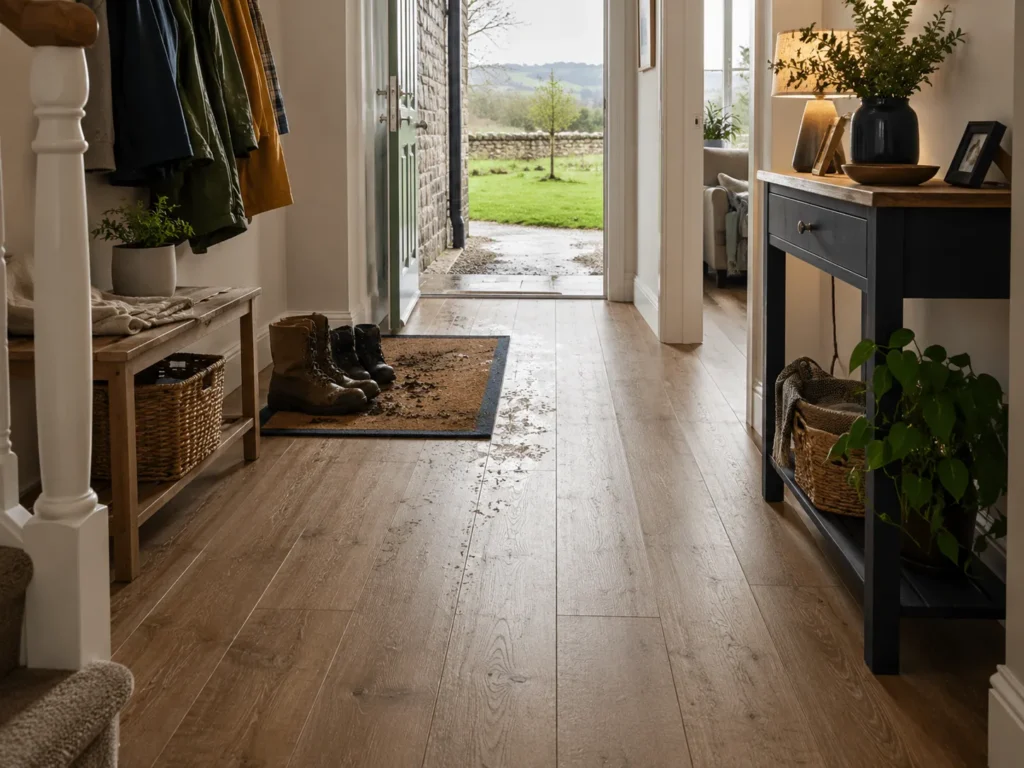
Most Irish households put their floors through tougher conditions than many people realise. Rain, wet footwear, path debris, and repeated washing create steady challenges. Entry areas tend to wear faster because outdoor dampness arrives there first, along with tracked-in soil and grit.
Not every older house behaves the same way underfoot. Floors may combine different materials beneath the surface, including timber beams, patched sections, older repairs, and uneven areas caused by years of settling. Where levels shift over time, problems often begin quietly. A strong flooring choice can still suffer damage if the base beneath it has not been prepared correctly.
Humidity plays a role too. Spills are not the only source of moisture exposure. Rising damp may move up from beneath, while blocked airflow, condensation, hidden drips, and changing room moisture add further risks. Timber-style surfaces need extra attention. When surroundings become too wet or too dry, they may warp, shrink, bulge, or distort.
Footwear also tracks grit indoors, slowly wearing surfaces down. Chair legs drag and leave faint trails. Pets move quickly on hard floors, with claws clicking and scratching during turns. Baby strollers follow uneven paths through entry zones. Toys land heavily after falling from small hands. Rented units change occupants often, increasing the chance of rougher treatment. Large open-plan rooms combine cooking, dining, and living traffic into one shared flooring area.
A surface that lasts two decades in a calm bedroom may survive only eight years where moisture lingers or foot traffic piles up. Wear changes from room to room, so the same material may perform very differently across one home.
The realistic 5–25 year flooring expectancy
Perfect condition over many years is what some people imagine when they hear the phrase “lifetime flooring.” Yet how long floors actually last depends on material quality, room suitability, installation standards, and day-to-day care.
5–8 years: short-life flooring
This bracket usually covers low-cost flooring options. It includes flimsy laminate, bargain carpet, poorly fitted products, and materials forced into unsuitable spaces. Rentals often fall into this range, along with damp basements and hallways worn by constant movement.
Years may pass before the surface looks clearly damaged. Yet signs such as dents, discolouration, warped edges, fading texture, or separating seams usually appear well before ten full years.
8–15 years: average household flooring
This is the common range for many standard floors in Irish homes. Mid-range laminate can handle daily use when installed in suitable rooms. Carpet adds comfort when placed wisely. Vinyl can perform reliably where moisture and foot traffic mix.
Products tend to reach the higher end of this range in bedrooms or quiet lounges. Lower figures are more likely in kitchens, hallways, staircases, or homes with constant movement.
15–20 years: good-quality flooring with proper fitting
Durable laminate, luxury vinyl tile, stone plastic composite, and engineered wood can often reach this range when installed correctly. A firm, level, and dry base matters more than many people think. Moisture levels should be checked before anything goes down. The correct underlay also plays an important role. Expansion gaps at edges help prevent buckling later.
This is where expert guidance matters. Without attention to room conditions and subfloor preparation, even superior products may fail earlier than expected.
20–25 years: premium flooring with better maintenance
Twenty to twenty-five years of service is possible with top-tier SPC, well-made LVT, durable laminate, or strong engineered wood, provided the conditions match the product. Care routines matter just as much as material choice.
Most damage starts small. Water left overnight, rough scrubbing, unnoticed leaks, or heavy furniture dragged across the surface can all reduce lifespan. Buying a floor is not where protection ends. Weekly habits decide how long it truly lasts.
Laminate flooring lifespan in Ireland
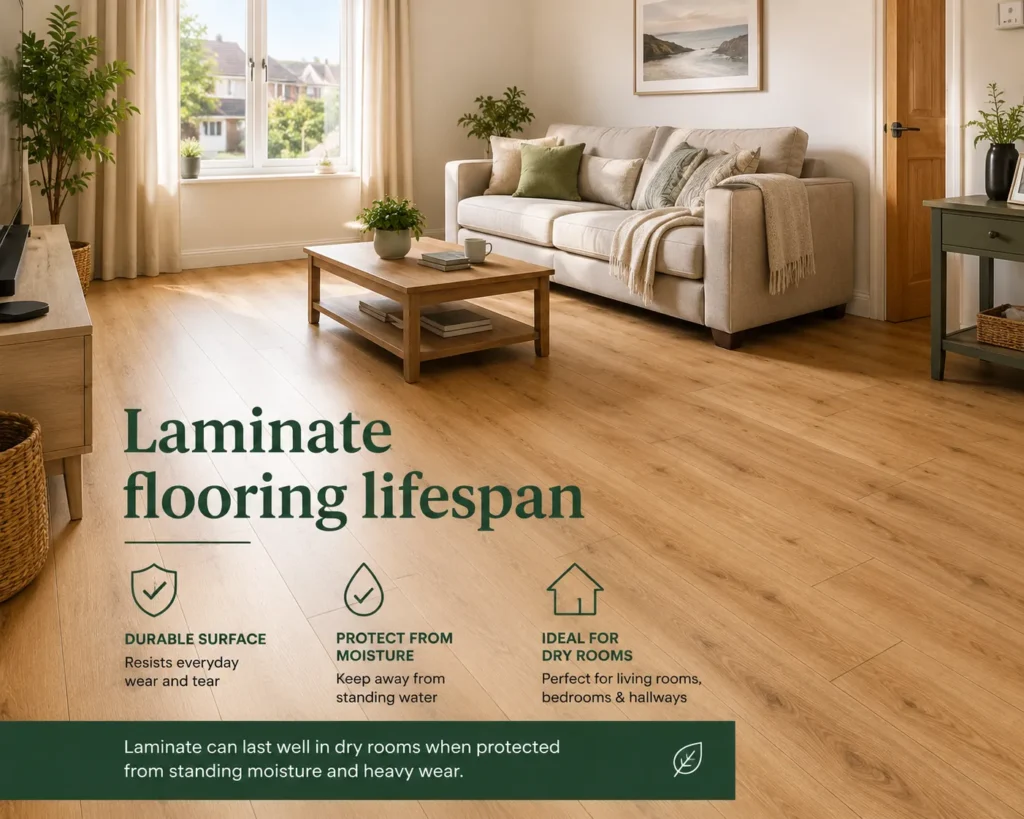
Laminate remains common because it offers a wood-like appearance without the higher cost of real timber. For Irish homes, its durability often lasts between eight and twenty years.
Budget laminate may show wear after roughly six to ten years. Mid-tier versions often last longer and may stretch toward fifteen years. Premium moisture-resistant styles can endure twelve to twenty years when conditions are suitable.
Laminate suits living areas such as lounges, bedrooms, home offices, and dry interior hallways. In cooking areas, bathrooms, utility rooms, and entryways where spills may linger, it often struggles. Certain versions resist dampness better, but they still fall short of true waterproof performance. Expecting complete protection from standing water often leads to disappointment.
Moisture entering the joints creates the main problem. Once expansion begins, stopping it becomes difficult. Choosing where to place laminate matters just as much as selecting the product itself.
Flooring choices in Ireland become clearer when FBS Flooring lays out laminate options based on how each space is used. Traffic patterns matter. Underlay type matters. Subfloor condition matters. Damp exposure matters too. Choosing only by shade rarely tells the full story.
Looking for direction? FBS Flooring gives insight into laminate choices suited to Irish households through its product range and guidance pages. Their advice covers practical details without oversimplifying local needs.
Vinyl, LVT, and SPC flooring lifespan in Ireland
For today’s Irish households, vinyl, LVT, and SPC flooring stand out for resilience. Because spills happen, these materials handle damp areas more reliably than most timber-derived options. Cleaning requires little effort because the surfaces resist stains well. Their usefulness shows especially where humidity levels rise or daily life becomes busy.
Most standard vinyl holds up for about seven to twelve years. Quality luxury vinyl tile often lasts ten to twenty years. Stone plastic composite, also known as SPC or rigid core flooring, can frequently survive fifteen to twenty-five years when conditions are favourable.
These products fit neatly into kitchens, hallways, apartments, family homes, and rental units. Homes with children or pets often see good results. Even with frequent cleaning, their performance stays consistent.
LVT feels comfortable underfoot, offers varied looks, and resists moisture well. SPC has a tougher rigid core, holds its shape better, and performs reliably where traffic runs high. Still, neither product handles weak foundations gracefully. When the floor underneath shifts, problems can follow, including noise, movement, and early damage.
FBS Flooring helps people find vinyl and SPC choices suited to Ireland’s everyday environments. When spills happen, humidity lingers, or daily life gets busy, these materials tend to hold up well. For homes that face real use every day, these solutions often make strong long-term sense.
How long engineered wood flooring lasts in Ireland
Engineered wood offers the feel and appearance of natural hardwood while giving better stability than many solid planks. Most Irish homes see it lasting around fifteen to twenty-five years, sometimes longer with careful maintenance. It handles temperature and humidity changes better than solid wood, although it still needs suitable conditions.
Basic engineered wood often lasts around ten to fifteen years. A better-quality version can endure well into two decades. With consistent upkeep, stable indoor moisture, and good installation, top-grade products may push beyond twenty-five years.
Where moisture stays low, engineered wood fits well. Living rooms, bedrooms, dining areas, and carefully managed open-plan spaces are suitable choices. Bathrooms and wet utility rooms are much more difficult. Standing water can weaken the layers over time.
Many people overlook how much the wear layer affects durability. A thicker top layer can allow future refinishing. Surface treatment also plays a major role because it protects the real wood beneath. Cleaning habits matter just as much. Wet mopping, steam devices, or strong cleaners can shorten the floor’s lifespan.
FBS Flooring gives people clear ways to judge engineered wood floors. Customers can compare surface thickness, coating type, plank construction, room suitability, and upkeep needs. These details make the decision easier, moving the focus beyond first impressions and toward lasting performance.
How long carpets last in Ireland
Carpet is often chosen for bedrooms, stairs, and cosy living spaces. In Irish homes, it typically lasts between five and fifteen years. A soft finish feels comfortable underfoot, but it tends to wear faster in high-traffic areas. Climate, cleaning habits, pets, and daily use all influence how long it stays fresh.
Budget carpet may show wear after five to eight years. Higher-quality versions often last longer, usually between eight and twelve years. In low-traffic rooms, such as guest bedrooms, carpet may last more than ten years with proper care.
Stairs often see carpet give out before other areas. Hallways push wear even harder. Rental units add extra strain over time. Family rooms face constant use, which speeds up damage. Flattening appears where feet pass most. Stains settle in without quick care. Odours can linger if cleaning is poor. Traffic lanes become obvious after months of repeated use. Pets bring claws and accidents into play. Children spill, drag toys, and track in dirt. Each of these factors reduces durability.
Still, carpet serves a purpose. It offers softness underfoot, helps quiet sounds, adds warmth, and improves comfort. It works best in bedrooms and private spaces where dampness, grit, and heavy traffic stay low.
What shortens flooring lifespan?
A poorly chosen material placed in the wrong room often leads to early breakdown. Even elegant flooring can struggle when exposed to moisture near entryways, heavy traffic in kitchens, or frequent tenant changes.
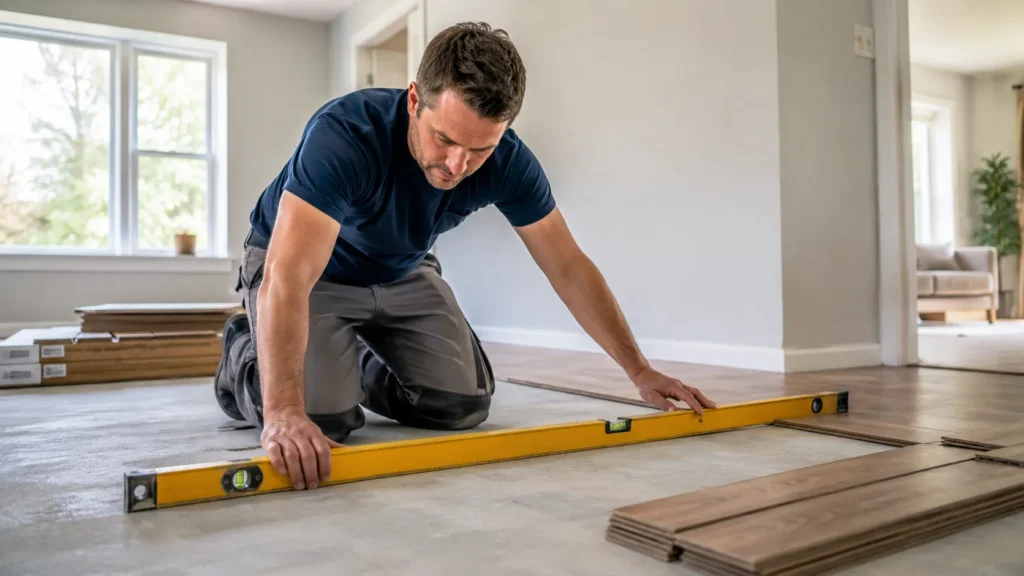
A common problem comes from poor subfloor preparation. When the base is uneven, damp, weak, or unstable, trouble follows above. Movement creeps into boards. Gaps appear between joints over time. Clicking sounds may emerge, followed by lifting and cracks along planks.
A budget underlay can also weaken the result. Comfort, sound control, warmth, support, and damp protection all depend on what sits beneath the visible floor. Matching the base layer to both the flooring type and the room matters more than price alone suggests.
Trapped moisture under the floor can cause major issues. Skipped expansion gaps are also a problem. Poorly fitted sections may shift over time. When installers rush, small errors can grow into larger failures. Manufacturer guidelines exist for a reason, and overlooking them creates avoidable risks.
Over time, small harms build into big problems. Sliding chairs across the floor, moving heavy furniture without protection, applying strong cleaners, using steam devices on unsuitable surfaces, and tracking in sand all wear down materials faster than expected.
Most flooring problems start before installation finishes. The wrong material in the wrong setting sets the stage. Poor preparation invites trouble. Expecting perfection without planning for wear leads to disappointment.
How to extend the life of your flooring
Start at the doorway. Block dirt and damp before they travel through the home. Place sturdy mats outside and just inside entry points. Wipe up coarse particles quickly, because grit grinds against floors when stepped on. Check surfaces often so small messes stay small.
Standing moisture invites trouble. Swift cleanup matters most after liquid lands on laminate or timber-based surfaces. Consistent indoor humidity helps when engineered wood is part of the setup.
Felt pads under chairs and furniture help prevent scratches. Lifting heavy objects is safer than dragging them. In areas with frequent movement, rugs offer protection, but make sure their backing is suitable for the flooring underneath.
Cleaning should match the floor. Unless the product is clearly labelled as steam-safe, avoid steam mops. Gentle cleaners and microfiber cloths are usually better choices. Use only tools and products that suit the surface.
Shorten your pet’s nails regularly. Fix leaks immediately before damage spreads. Choose tougher materials for hallways, kitchens, and high-traffic spaces.
FBS Flooring guides Irish households through selecting surfaces shaped by space, daily habits, upkeep preferences, and durability needs. Not every stylish option suits real living. Function often shapes the better long-term choice.
Best flooring choices by room in Irish homes
Hallways
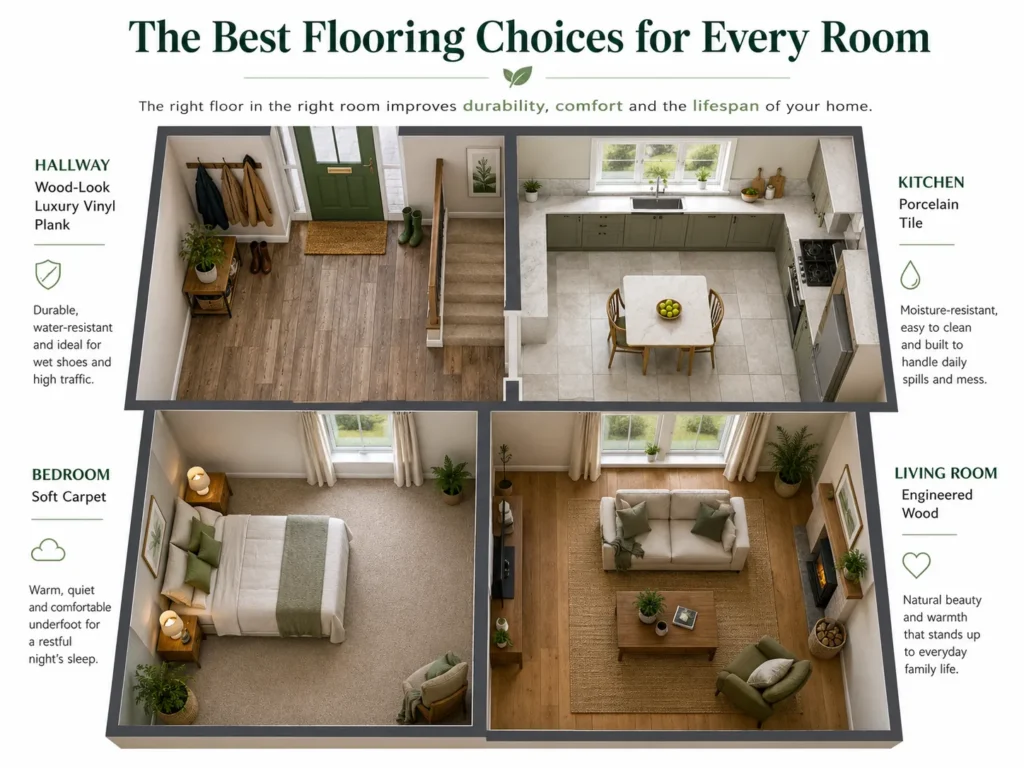
Foot traffic brings mud, damp soles, strollers, pets, backpacks, and daily wear. Tough surfaces must handle all of this without failing early. Vinyl plank performs well when humidity is controlled. SPC handles spills better than many alternatives. Some laminates survive if water does not linger too long. Engineered wood can fit where climate changes are slow and well managed.
When life moves fast in an Irish household, materials like SPC and LVT tend to work better because they endure frequent foot movement and routine cleaning. Durability is not the only reason they fit daily rhythms, but it is one of the strongest.
Kitchens
Spills happen often where people cook, so floors must survive moisture without swelling. Luxury vinyl tile stands out because it performs well under daily stress. Stone plastic composite also holds up when objects fall or liquids spread across the surface. Some water-resistant laminates may suit certain kitchens, but attention near appliances matters. Around dishwashers, taps, sinks, and outside entrances, extra care helps materials last longer.
Wooden surfaces require extra care in cooking spaces. Laminate finishes, while affordable, also need attention when exposed to moisture or heat.
Living rooms
Laminate can suit tighter budgets, while engineered wood brings warmth. Where children or pets spend time, durability matters more. Open layouts connected to kitchens need flooring that handles spills without showing every mark. SPC stands up to moisture better than many options, although some homeowners may prefer the warmer feel of wood or laminate underfoot.
Bedrooms
Bedrooms tend to treat flooring gently. Options like carpet, laminate, and engineered wood usually hold up well in these spaces. With fewer footsteps passing through, practicality can take a back seat to warmth, comfort, and appearance. A softer step often matters more where rest comes first.
Bathrooms and utility rooms
Moisture resistance matters most when choosing floors for bathrooms or utility spaces. Regular laminate may seem practical, but it often fails without special water-resistant features. Materials like LVT stand up well under damp conditions. Tile remains a solid option because of its durability. SPC handles spills without swelling. Products made specifically for wet areas usually outperform general-purpose flooring.
Rentals and apartments
Rental units face heavy use, so floors must resist wear without demanding high upkeep. Vinyl planks, SPC, and resilient laminates often meet budget needs well. With frequent changes between occupants, surfaces should survive shifting furniture, appliance movement, regular scrubbing, and different care habits. Toughness matters most when daily stress comes from unknown sources.
FBS Flooring helps match products to how each room is used. That way, low-traffic areas do not get expensive finishes unnecessarily, while high-use zones receive durable solutions.
Cost versus lifespan: cheap flooring is not always cheaper
Years pass differently for each material underfoot. A floor bought cheaply at first may cost more later. When repairs and replacements add up, short-term savings can disappear. A sturdier surface, though more expensive initially, often spreads its cost across many years. A floor lasting fifteen to twenty years usually offers better value than a seven-year solution that needs attention too soon.
Take Option A. It is cheaper at first, yet likely to need replacement within seven years. Then there is Option B. It costs more upfront, but it may last twice as long. Factor in installation, disruption, waste removal, labour, and time, and durability can tip the balance.
For rental spaces or households with constant activity, flooring changes hit harder. Pulling up old material disrupts daily routines. Downtime affects rentals. Furniture needs moving. Workers need time. All of this adds to the real cost.
Long-term success depends on choosing the correct product, placing it properly, and matching it to a suitable room.
When should you replace flooring?
Worn surfaces often signal age, but deeper damage usually means replacement makes more sense.
Swollen edges may appear first, followed by lifted boards that shift underfoot. Deep scratches can appear alongside soft areas where the material has weakened. Loose planks may accompany cracked tiles, both signalling structural fatigue. Odours can linger when moisture hides beneath surfaces. Worn paths across carpet suggest long-term abrasion. Water damage may reveal itself through discolouration or warping, sometimes after a delay.
New flooring may also become necessary when appearance falls short. A worn surface affects how people experience the space, especially before renting, selling, or renovating.
When damage is minor and contained, repair may work. If swelling spreads across the floor, replacement is usually wiser. Shifting sections often tip the balance toward a full change. Stubborn smells or discolouration also point toward replacement. Structural flaws rarely justify patching. Widespread issues demand a more complete solution.
Long-lasting flooring from FBS in Ireland
FBS Flooring supports Irish homeowners seeking flooring solutions that work in real homes, not just in showroom displays. Helping people choose floors comes down to how spaces are actually lived in. Kitchens deal with spills. Hallways deal with shoes and dirt. Children drop toys. Pets run through rooms. Real use matters most when feet hit the surface every morning.
Choosing the right floor depends on several factors. These include lifestyle, foot traffic, humidity levels, subfloor condition, upkeep effort, appearance preferences, and long-term value. Hallways demand tougher solutions than private bedrooms. Busy kitchens in rented homes require more resilient materials than calm lounges meant for relaxing. What works well in one space may fail completely somewhere else.
FBS Flooring walks customers through common modern floor types, including engineered wood, laminate, vinyl, SPC, and room-specific solutions. This helps people compare how each product holds up, how it looks, how it feels underfoot, and what upkeep it needs before making a decision.
Flooring choices for homes in Ireland become easier when browsing FBS Flooring options and guides. Engineered wood appears alongside laminate, each with distinct traits. Vinyl offers resilience underfoot, while SPC brings a different type of strength. Specific rooms shape what fits best, steering decisions beyond appearance alone. Good flooring solutions match function to form.
Flooring lifespan questions Ireland
What determines how long floors endure across Irish homes?
Most flooring in Irish homes lasts between five and twenty-five years. Material type shapes durability, but environment plays a major role too. Bathrooms challenge floors differently from living rooms. Damp conditions can shorten performance. A weak base layer often leads to early wear, even with strong surface materials. Poor installation can undo good product choices. Care and maintenance also influence how long surfaces survive.
What flooring lasts longest in Irish homes?
Long-lasting flooring materials include tile, high-end SPC, durable LVT, engineered wood, and solid wood. Their performance depends on proper room selection, moisture levels, foot traffic, installation quality, and maintenance.
Is laminate flooring a good long-term choice in Ireland?
Laminate can last years when installed in rooms where moisture stays low. Bedrooms, living areas, and some hallways can handle it well. Spills left sitting can still cause harm, especially where water pools near baseboards, furniture, or doorways.
Is vinyl more durable over time compared to laminate?
In areas where water tends to collect, vinyl, LVT, and SPC often hold up better. Strong laminate can resist wear, but vinyl-based flooring usually manages wet mops, accidental leaks, and damp cleaning routines more effectively.
How long does engineered wood flooring last?
Engineered wood flooring usually serves Irish homes for around fifteen to twenty-five years. When installation is correct and upkeep stays consistent, higher-end versions often outlive standard products.
What flooring works best for damp Irish entryways?
LVT and SPC tend to work well in damp Irish entryways. They resist water, handle heavy foot movement, and endure frequent wiping more effectively than many timber-style surfaces.
Can flooring last 25 years in Ireland?
Flooring can reach twenty-five years in Ireland when the material, room environment, base layer, installation, and upkeep all meet the right standards. If any of these factors fall short, durability drops sharply.
What shortens the life of flooring the most?
Water exposure reduces flooring lifespan. A loose fit causes early damage. Poor subfloor preparation creates problems quickly. Installing flooring in unsuitable rooms invites failure. Thin underlay offers little protection. Grit and sand wear down surfaces. Moving heavy items across planks creates scratches. Strong cleaners can damage finishes.
Is expensive flooring always worth it?
Not every situation demands the most expensive option. What matters most is how well the floor fits its environment and purpose. In high-traffic areas, better materials often last longer and cost less over time. Matching function to design remains key.
How do I choose flooring for a rental property?
Start with flooring that lasts, wipes clean quickly, and can be repaired without hassle. Materials like LVT, SPC, and tough laminate often suit rentals because the price stays reasonable, the appearance holds up, and upkeep remains low.
Conclusion
Most Irish homes see floors last anywhere from five to twenty-five years. This span depends on material quality, room choice, installation preparation, moisture levels, workmanship, and routine care.
A solid floor goes beyond colour or cost. It needs to match how the space gets used, who lives there, cleaning habits, and the long-term plan for the home.
Bedrooms often prioritise comfort and calm. Hallways and kitchens need materials that resist wear and dampness. Living rooms need floors that look good while lasting through daily use.
FBS Flooring guides Irish homeowners through everyday decisions about laminate, vinyl, SPC, engineered wood, and similar materials. With clear direction, premature wear becomes less likely. Good choices made at the start can save money over time and improve how each space functions day after day.